



Who killed the chief sustainability officer? The executive role, once responsible for building an enduring business and making better use of natural resources as capitalism sought a reset with the planet, has been phased out at Unilever and Apple, while HSBC has downgraded its CSO from the executive committee.
Budgets are under greater pressure and targets have been reset, according to current and former CSOs who spoke to The Observer. Sabine Hoefnagel, chief executive at sustainability consultancy ERM, said: “It’s not that there are fewer people involved – but in many companies it’s more fragmented – and many central teams have become smaller and arguably less powerful.”
In most companies, budgets have not been reduced but there is greater scrutiny, Hoefnagel said. “There is more focus on return on investment and less on broad sustainability ambition.”
The obvious culprit is the new occupant of the White House, but executives say the tide turned before the US election.
Magali Anderson, former CSO at the giant Swiss cement company Holcim, said: “There was a moment where in every investor meeting they would ask you about sustainability and companies felt they had to do something about it.
“With the war in Ukraine, there were a lot of problems with the price of energy, and the focus started shifting to revenue.”
At Apple the CSO role has been eliminated, and where the former CSO Lisa Jackson once reported to Tim Cook, the chief executive, the company’s environmental teams now report to the chief operating officer. When Unilever’s CSO Rebecca Marmot stepped down late last year, her portfolio was taken on by the company’s head of corporate affairs and communications.
The personnel changes have been echoed by a shift in corporate language. Since the high point of capitalism’s love-in with the planet in 2022, mentions of “net zero” in FTSE 100 annual reports has dropped nearly 30% while the phrase “climate change” has dropped nearly 20%, according to Observer analysis.
The turn away from sustainability is particularly striking in the language used by FTSE 100 energy companies, where references to “net zero” have fallen 48% between annual reporting in 2022 and 2025 – at a time when energy businesses have largely attempted to go back to their oil and gas roots – but use of the phrase has also dropped 12% in FTSE 100 food companies’ reports.
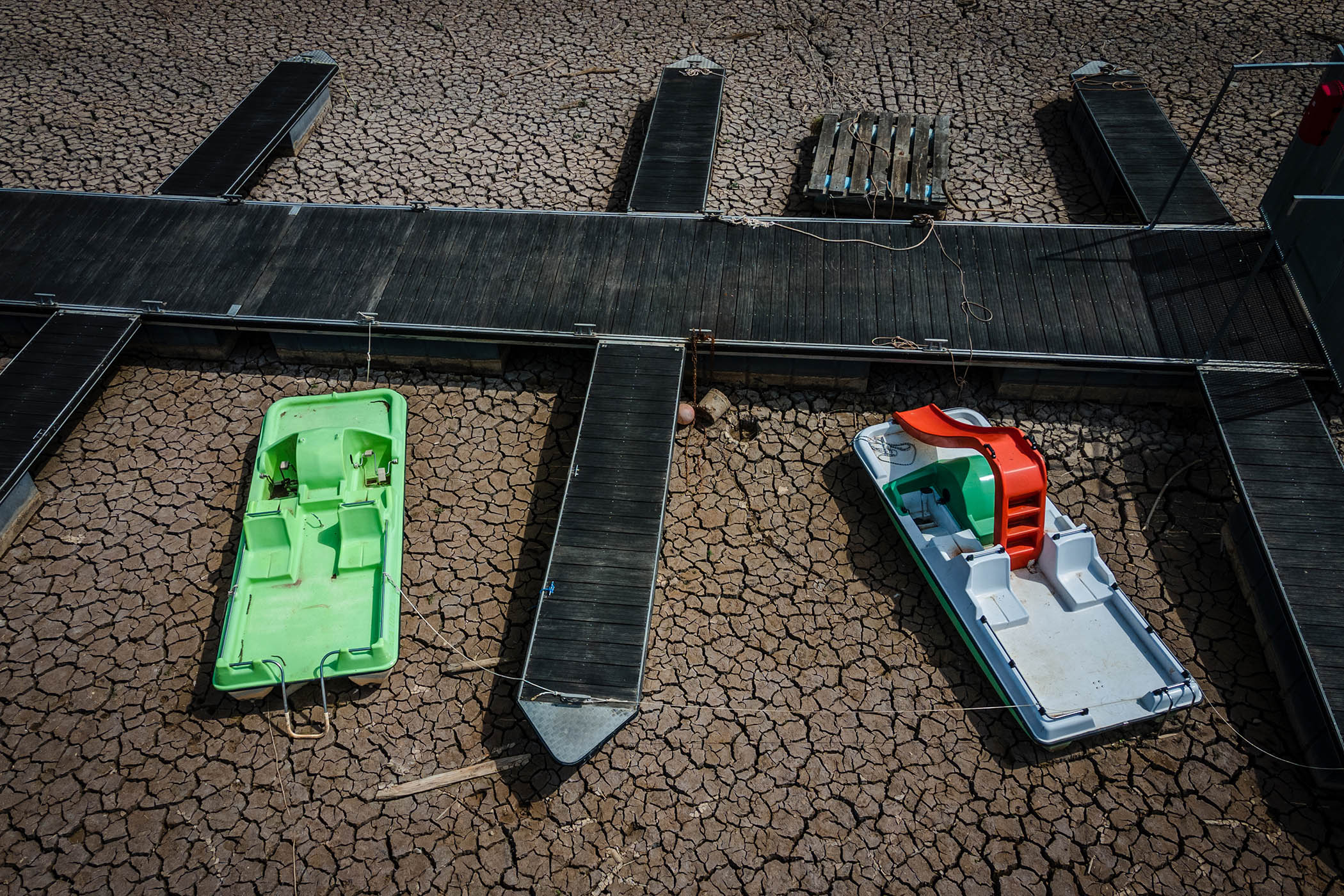
The shift has occurred even though the impacts of climate change are becoming more apparent, with floods in southern Germany hitting the car industry and droughts affecting waterways from the Rhine to the Panama Canal.
Newsletters
Choose the newsletters you want to receive
View more
For information about how The Observer protects your data, read our Privacy Policy
Anderson, now a non-executive director at Anglo American, said the trend is to bring in new CSOs below the C-suite. “When you sit on the executive committee you are part of every single decision – sustainability is not a topic on the side. It becomes embedded. That’s what you really want.”
The positive gloss on downgrading or eliminating CSOs is that responsibility is diffused through the business. Malu Pinto, CSO at Brazilian paper and pulp business Suzano, said: “My agreement with the CEO was that I would approach sustainability as cultural change, so that my peers would be able to lead sustainability issues in their areas by themselves. I started to call myself a ‘biodegradable professional’.”
The resetting of targets can also reflect pragmatism. Anderson said: “Quite a few companies have gone back to their [sustainability] targets and changed targets. I would rather have a less ambitious and more realistic target with an action plan. It’s not all bad.”
But in other businesses the reduced status of the role has had strategic consequences. One former sustainability executive, who asked to remain anonymous, said major changes at the company where they worked – such as developing new business opportunities based around catering for customers with disabilities – were no longer possible once outside the executive suite.
They said: “I tried to explain this [business opportunity] to the executive board and they decided the return did not justify the investment. The only way to really have impact is to have real power.”
‘Some words have become forbidden in the US. You can’t use climate, gender, diversity. If you look at US-centric companies, most of those words have disappeared’
‘Some words have become forbidden in the US. You can’t use climate, gender, diversity. If you look at US-centric companies, most of those words have disappeared’
Magali Anderson, former CSO at Hoicim
The change in the prevailing political wind has not helped, with the US securities regulator proposing to scrap a climate risk reporting rule while the EU has scaled back sustainability legislation.
“Some words have become forbidden in the US,” Anderson said. “You can’t use climate, gender, diversity. If you look at US-centric companies most of these words have disappeared from websites. It doesn’t mean that people stop straight away. Like renewable energy, even if you can’t do it for sustainability reasons, you do it for business reasons.”
In some cases, CSOs have responded by emphasising de-risking and building corporate resilience rather than loftier social or environmental goals. That change is reflected in the language used in FTSE 100 annual reports, Observer analysis shows, where use of the phrase “transition risk” is up nearly 40%.
“When the CSO is removed, teams have to do a big job of convincing boards that they are useful,” Anderson said. “Once you put it as a strategic removal of risk, people listen to you.”
Thank you for reading. Tell us what you think by writing to letters@observer.co.uk
Photograph by Bloomberg via Getty Images