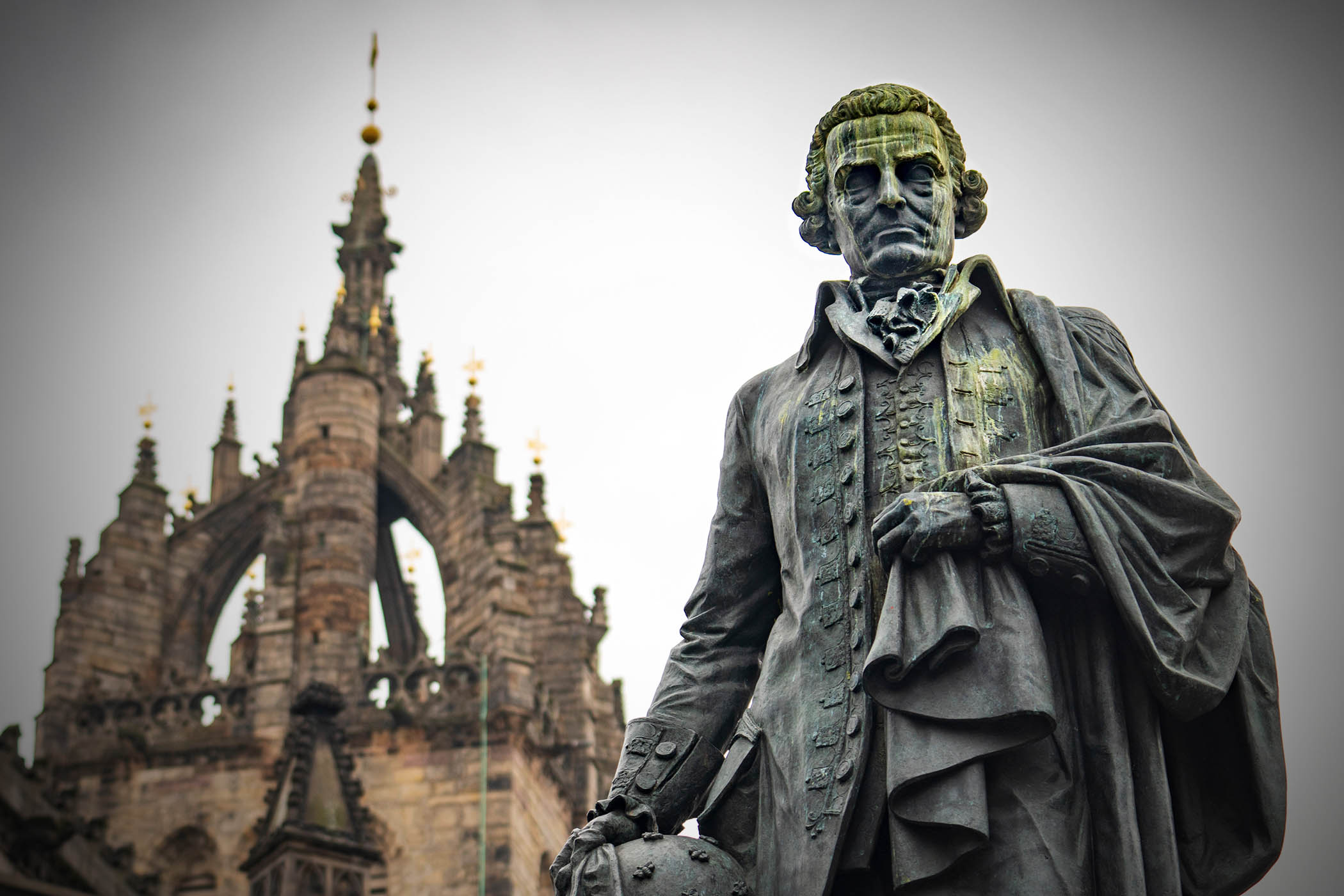



On 9 March 1776, arguably the most influential of all books on economics was published: The Wealth of Nations by Adam Smith. To mark the 250th anniversary of the tome that famously described market forces as an “invisible hand”, celebrations are taking place around the world.
In his native Scotland, Glasgow University, where Smith taught, is hosting an exhibition, conference, walking tours and an interactive game. Last week in Edinburgh, where the great man is buried, a series of Smith Conversations, exploring the contemporary relevance of his ideas about inequality, wealth, power, capitalism and education, was hosted by the city’s Library of Mistakes, which is dedicated to learning from the financial errors of the past.
Ironically, some of the biggest recent financial mistakes can be attributed, in part, to the widespread adoption by governments in the past half-century of an overly simplistic view of Smith’s work, which was used to justify a free market agenda that ignored some of his clear warnings about the dangers of capitalism unbridled by moral responsibility. After the financial crisis of 2008, even the then prime minister of China quoted Smith (albeit his other great book, The Theory of Moral Sentiments, published in 1759) to argue against too much economic deregulation and capitalistic laissez-faire.
Not everyone is celebrating. Some slavery activists claim Smith implicitly supported the role of slavery in the economic system of his day. They want his memorial on Edinburgh’s Golden Mile to reflect that or be removed – though by late 18th-century standards he was an outspoken abolitionist.
The policies of the Trump administration have made Smith’s writings highly relevant again, especially his warnings against the economic costs of using tariffs and other barriers to trade, and the risk that they could result in corrupt government.
Photograph by Alamy
Newsletters
Choose the newsletters you want to receive
View more
For information about how The Observer protects your data, read our Privacy Policy