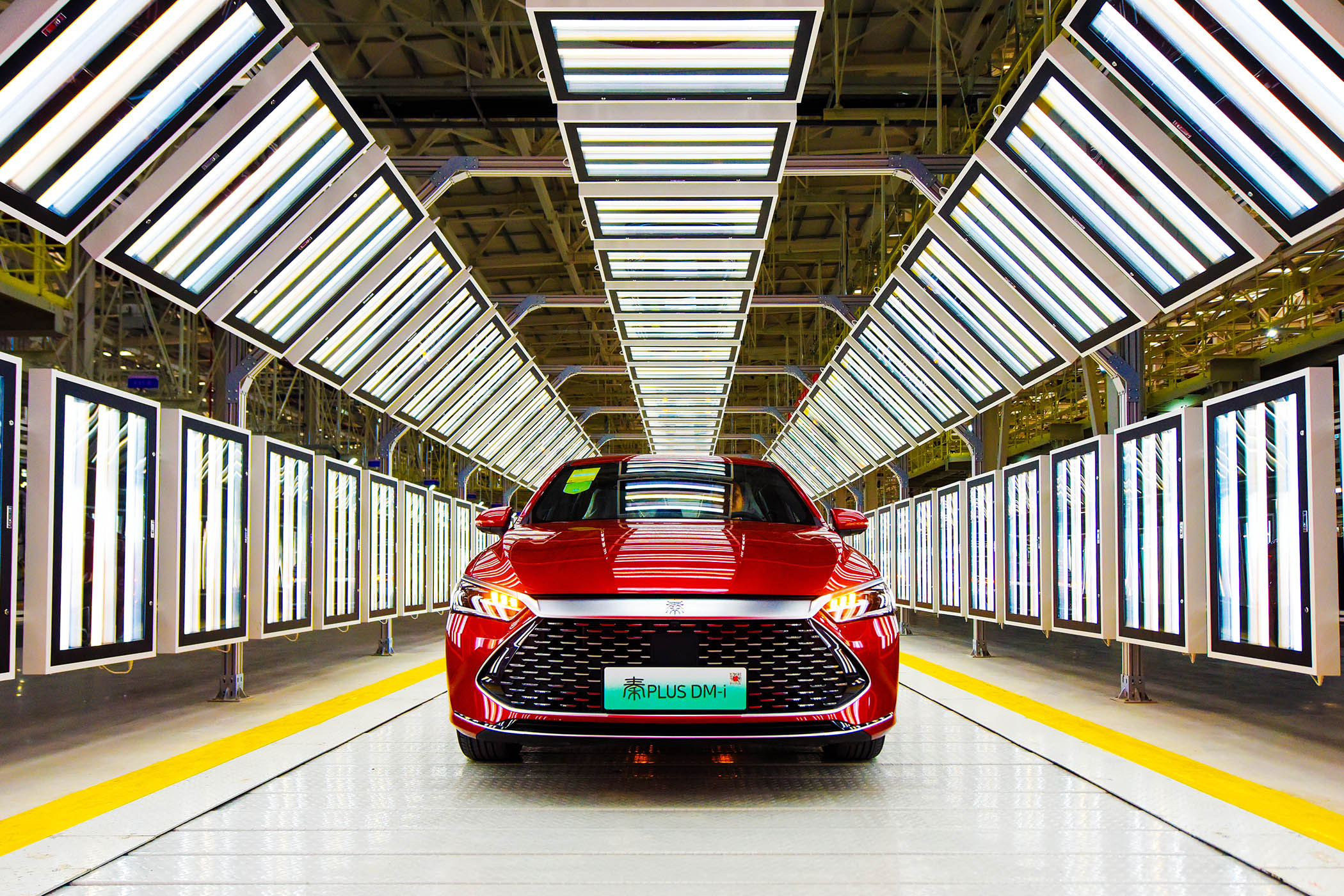


Chinese carmaker BYD’s European sales have nearly tripled in the past year, according to new data published last week.
As well as leaving Tesla in the dust, BYD’s advance raises questions about the retreat from electric vehicles (EVs) announced by other manufacturers in recent months.
Stellantis, which owns Jeep, Peugeot and Vauxhall, last month announced accounting losses of €22.2bn. The bill included the cancellation of products such as an electric pick-up, as well as costs tied to shrinking its EV supply chain, such as reducing battery manufacturing capacity in line with lower demand.
GM recorded a $7.1bn loss this year, mainly related to EV investments, and Ford a $19.5bn loss in December. It plans to expand production of hybrids and shift to “extended-range” electric vehicles with an internal combustion engine that charges the battery rather than powering the wheels directly.
Slower-than-anticipated adoption of all-electric vehicles is acting as a brake on ambition, analysts say. That delay is partly down to cost and partly due to shifts in subsidies (in the US, federal tax credits for EVs were killed off early by the Republicans, while tariffs keep out Chinese competition).
Data for new car registrations in the EU shows hybrid EVs are the most popular choice. Ken Henderson, a director at the consulting firm AlixPartners, said: “That completely changes the supply chain and the pace. It is much cheaper and easier to extend existing platforms – keeping hybrids for a couple of years – and much more expensive to design from the ground up a brand new vehicle.”
Software has become central to the automotive business, which is where traditional carmakers have struggled. Volkswagen has pushed back launches including the Audi Q6 e-tron SUV, because of software development issues. Henderson said Chinese carmakers “see risk differently”, adding: “They will launch a car when it’s not quite ready – better than not launching at all – and mop up issues afterwards. German [makers] have the opposite mindset.”
But they have also hit a speed bump. BYD and other Chinese EV stocks have been dropping this year, with weak domestic sales growth, even as car deliveries rise in Europe and other markets. So why are western carmakers retrenching just as public barriers to adoption are dropping? Over the past three years, the number of public EV chargers in the UK has nearly doubled to 116,000, while battery technology has improved to allow faster charging.
Johann Beckford, senior policy adviser for transport decarbonisation at the Green Alliance, said: “Upfront price is still a challenge, but in leasing arrangements you can often get close to parity… we will probably hit that point soon.”
Photograph: CG via Getty Images
Newsletters
Choose the newsletters you want to receive
View more
For information about how The Observer protects your data, read our Privacy Policy