


People hate change. There are people who win the lottery and then get divorced or lose friends. And we have more change happening now than any of us have seen in our lifetimes.”
That warning came from Dan Schulman, CEO of Verizon, speaking at a crowded breakfast event in Davos last week. He was talking, inevitably, about artificial intelligence, and the social dislocation and joblessness many business leaders now expect to ensue from its rapid rollout.
At Davos, where corporate purpose can be as flaky as the slightly stale mini-pastries, Schulman’s call for candour was refreshing. He said that CEOs needed to be “upfront” that AI is “on the precipice” between assisting in our jobs and replacing them.
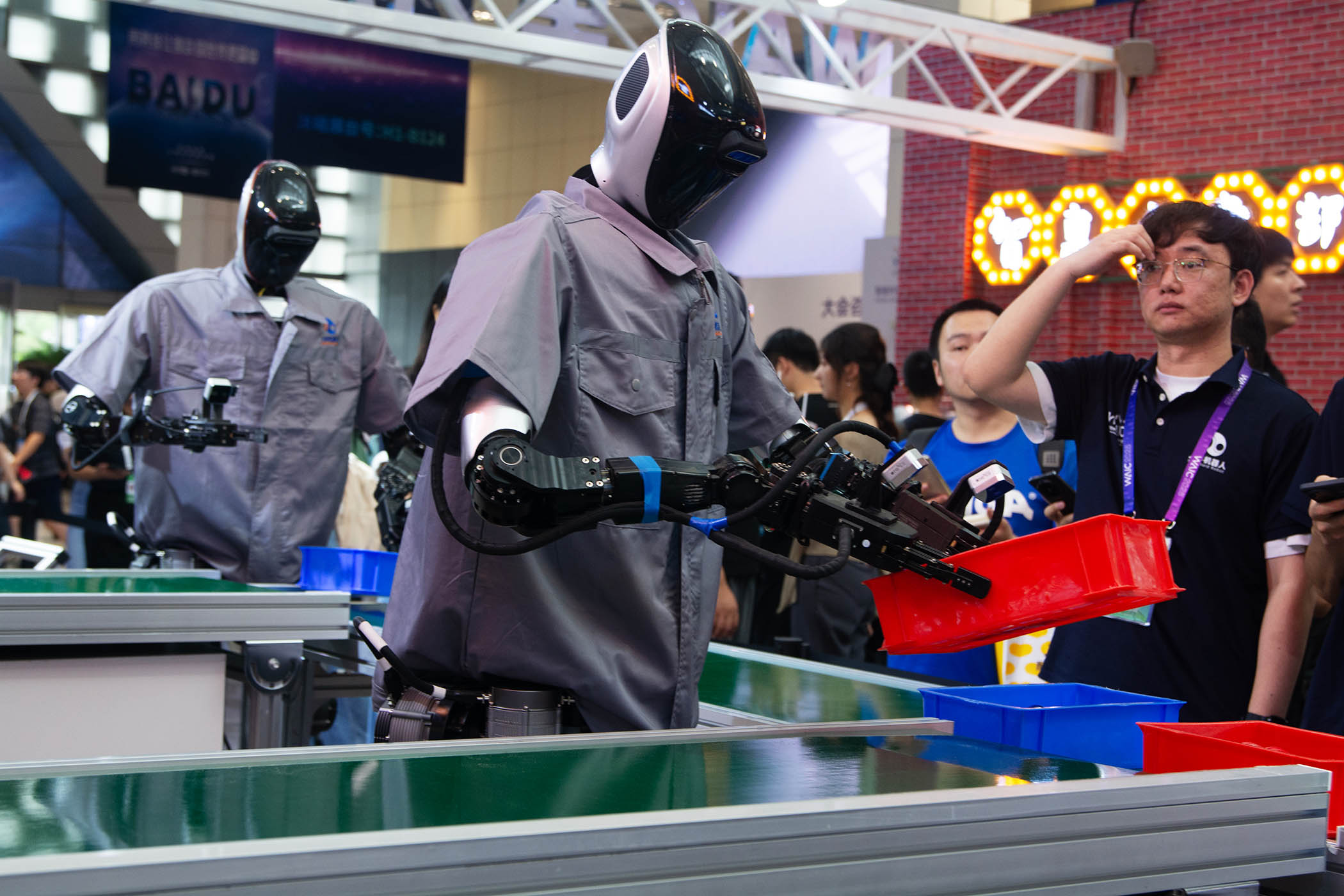
He estimated that artificial general intelligence – the stage at which machine learning can match human cognitive abilities across most tasks – is two to three years away; and wide-scale humanoid robotics will arrive in seven to eight years. Such predictions might be dire, but a failure to speak up can come with future cost for companies (case in point, Brexit).
Data supports the thesis that AI job destruction is quickening. A recent survey of 18,000 tasks and 1,000 jobs by US tech company Cognizant found that the average “exposure score” across all jobs is 39% today, but rising an alarming 9% a year. “Knowledge work is not disappearing, nor is manual work completely insulated,” reads the report. Roles in computer and mathematics, once seen as highly exposed to AI, are no longer top the table while even construction jobs saw a jump in exposure, from 4% in 2024 to 12% in 2025.
Schulman isn’t alone in feeling that society is underprepared. “Jobs will be created but not at the same speed as job elimination. That’s a challenge the world needs to get its hands around,” says Mario Amitrano, a senior partner at PwC UK.
Could we see a return to debates about universal credit? Or reskilling initiatives to bridge the gap?
Could we see a return to debates about universal credit? Or reskilling initiatives to bridge the gap?
White-collar industries, such as audit, have been at the the vanguard in dealing with AI redundancy, with countless headlines in the last year highlighting how cohorts of graduates are being slimmed. This has led some to posit that the future big four org charts will be “diamond shaped” – a large middle management that thins out at the bottom and top.
Amitrano rejects this. “I don’t believe in this diamond structure. With access to AI, what the first year now does is what a manager used to do. So it’s a pyramid that’s shifted upwards. The challenge is to ensure that as the pyramid moves up, the rate of growth of a business copes with the shrinking of that pyramid.”
The creators of large language models themselves are approaching the challenge with varying degrees of openness. The chair of one FTSE 100 firm compares the comments of Dario Amodei – CEO of Anthropic and darling of this year’s Davos, who has warned AI could push unemployment up to 20% – with more ostrich-like Google execs, who say the potential for new jobs to be created is vast.
What is clear is the need to work on a coordinated policy response. “I don’t see any way you have more employment. This is a big issue from a public-private policymaking perspective,” said Schulman. Could we see a return to debates about universal credit? Or reskilling initiatives that bridge the gap between business and government?
Newsletters
Choose the newsletters you want to receive
View more
For information about how The Observer protects your data, read our Privacy Policy
At the same breakfast, PR firm Edelman launched its yearly Trust Barometer, the key theme of which was “insularity”. The exclusive ski resort of Davos is often regarded as a prime example of that trend. But on the issue of AI and jobs, the conversation has at least started.
Photograph by Ying Tang/NurPhoto via Getty Images