
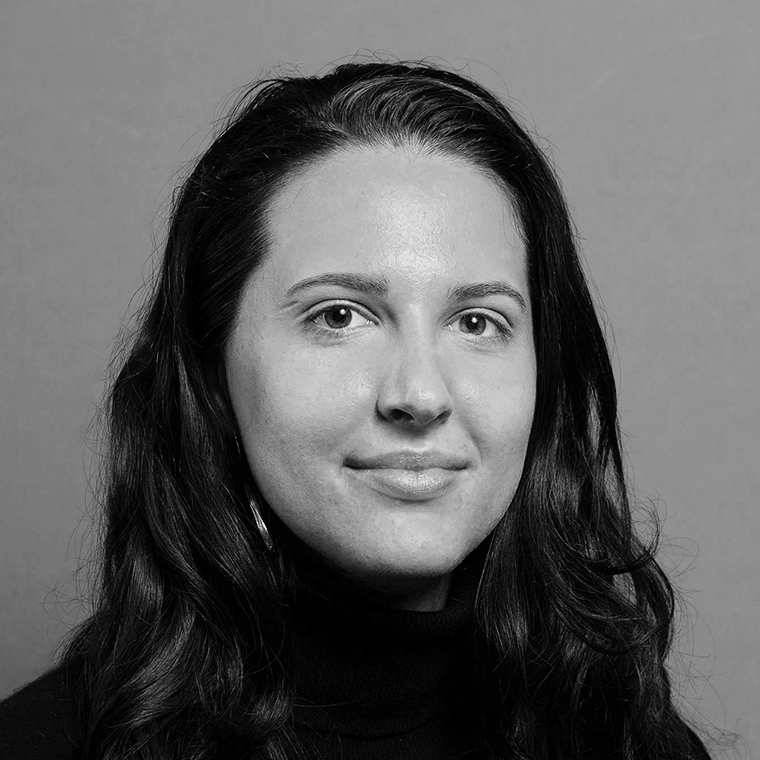


Tom Pickett is not, by his own admission, “a regulation-forward guy”. After nine years in the US navy, the chief executive of the mental health app Headspace forged a career in the move-fast-and-break-things world of big tech, with senior roles at Google and the delivery company DoorDash. But today he is calling for the regulation of his own industry.
The reason? Headspace is betting its future on AI.
Founded in Britain in 2010 by Richard Pierson and Andy Puddicombe, a former Buddhist monk, the company was once famed for offering its users guided meditation via an app. But after a move to the US and a 2021 merger with the telehealth company Ginger, Headspace has remade itself as a broader mental health platform, and its newest product is an AI companion called Ebb, which the company says has been used by more than half a million people.
That transformation has left Pickett watching nervously as a succession of mental-health-related lawsuits and safety scandals cast a shadow over the AI chatbot industry. In the most extreme cases, vulnerable users have been drawn into delusional spirals, and OpenAI, Character.AI and Google are facing alleged wrongful death lawsuits brought by the families of people, some of them teenagers, who allege that the chatbots acted as a “suicide coach”.
“The narrative in the market is that chatbots are dangerous,” Pickett says, dialling in over Zoom in a neat zip-up jacket, with AirPods in and a wellness-tracking smart ring on his index finger. “That is not helpful to what we’re doing.”
Since the public release of ChatGPT in November 2022, millions of people have begun confiding in chatbots. OpenAI estimates that about 342m conversations a week concern personal relationships or reflection, while Anthropic, its rival, has found that roughly 3% of interactions with its Claude chatbot are for therapy, counselling or companionship. Both companies are at pains to stress that their general-purpose models were never built to provide emotional support.
“We’re not trying to diagnose, or go deep into your past and figure out the underlying cause,” Pickett says. “We’re trying to give you tools in the moment.”
“We’re not trying to diagnose, or go deep into your past and figure out the underlying cause,” Pickett says. “We’re trying to give you tools in the moment.”
Pickett says the use of general-purpose chatbots for therapy is a symptom of “pent-up demand” in a mental health system that has failed to keep pace. In England, where one in seven Headspace users are based, an estimated 1.7 million people are waiting for mental health support, while in the United States more than 122 million people live in areas with a federal shortage of mental health professionals. Mental healthcare, Pickett argues, has barely evolved in decades, a one-size-fits-all model in which “you say mental health, I say therapy”, when in fact “not everybody needs a therapist”.
Ebb, Pickett says, can fill the gap. The chatbot was designed by clinicians and trained in motivational interviewing, a counselling technique that prompts people to talk through their own reasons for change rather than dispensing advice. Ebb is built for what Pickett calls “subclinical” use – the everyday stresses of difficult relationships or poor sleep, rather than serious mental illness.
Unusually, conversations are capped at 30 minutes, “the opposite of driving engagement for engagement’s sake”, Pickett says. “We’ve talked to folks at OpenAI, and the problems really tend to arise when people spend a lot of time with these chatbots,” he says. The longer a session runs, he argues, the easier the model is to confuse or manipulate. As Ebb approaches the half-hour mark, it nudges the user towards something else, like a walk, a meditation, or a conversation with an actual person. “We’re not trying to diagnose, or go deep into your past and figure out the underlying cause,” he says. “We’re trying to give you tools in the moment.”
Regulation, he suggests, could reassure a wary public about the benefits of AI for mental health and weed out reckless rivals. In October 2025 Headspace backed California’s Senate Bill 243, the first state law to regulate “companion” chatbots, which requires operators to disclose that users are talking to a machine, to maintain protocols for handling talk of suicide and self-harm, and to refer those in crisis to support services.
Pickett argues that all companies operating in the space should be subject to these basic standards. At the same time, he believes that policymakers are paying too little attention to the largest AI companies. “Everybody’s focused on these new mental health companies,” he says. “Yet the large LLMs are operating outside the system. That’s where we’re seeing a lot of the bad outcomes and the risk.”
A chatbot that goes quiet or keeps a careful distance could be experienced by the user as rejection or abandonment
A chatbot that goes quiet or keeps a careful distance could be experienced by the user as rejection or abandonment
But the CEO stops short of calling for Ebb to be regulated as a medical device in the UK, a classification, overseen by the Medicines and Healthcare products Regulatory Agency, that applies to software intended to diagnose or treat illness. This would subject Ebb to clinical evidence requirements, independent assessment and ongoing safety monitoring, with penalties for failure. “It’s pretty obvious that they’re not clinical use cases,” he says. “We’re operating very clearly in the wellness space.”
That distinction is likely to come under scrutiny as AI systems become more deeply embedded in people’s lives. “The boundary between wellbeing support and mental healthcare is often blurred in the digital space,” says Dr Hamilton Morrin, a psychiatrist at King’s College London. A user who starts a conversation about loneliness or stress, he notes, may later disclose suicidal thoughts or delusional beliefs, and a chatbot that goes quiet or keeps a careful distance “could be experienced by the user as rejection or abandonment”.
This mental health minefield is one reason companies such as Headspace are careful to position their products as workplace wellbeing tools rather than clinical treatments.
As consumer growth slowed in the decade after Headspace was founded, the platform shifted towards selling its products to employers and insurers that subsidise access for large groups of users, providing them with a tiered service. Ebb and meditation content are the first, low-cost layer. In the US, human coaching, therapy and psychiatry are available for those who need more.
While Headspace did not provide exact figures, the company says its app now serves more than 4,000 organisations, among them the US navy, the service in which Pickett spent the first nine years of his career.
It is a model that investors are watching closely. In its outlook for 2026, the financial data firm PitchBook named Headspace among a handful of digital-health companies it expects could feature in the next wave of stock-market listings. (The company says it has no news to share about an IPO at this time.)
Pickett believes that millions of people want something between a meditation app and a therapist – and that AI can fill the gap. Whether regulators agree may determine whether Headspace’s reinvention succeeds.
Thank you for reading. Tell us what you think by writing to letters@observer.co.uk
Photograph by Alamy
Newsletters
Choose the newsletters you want to receive
View more
For information about how The Observer protects your data, read our Privacy Policy