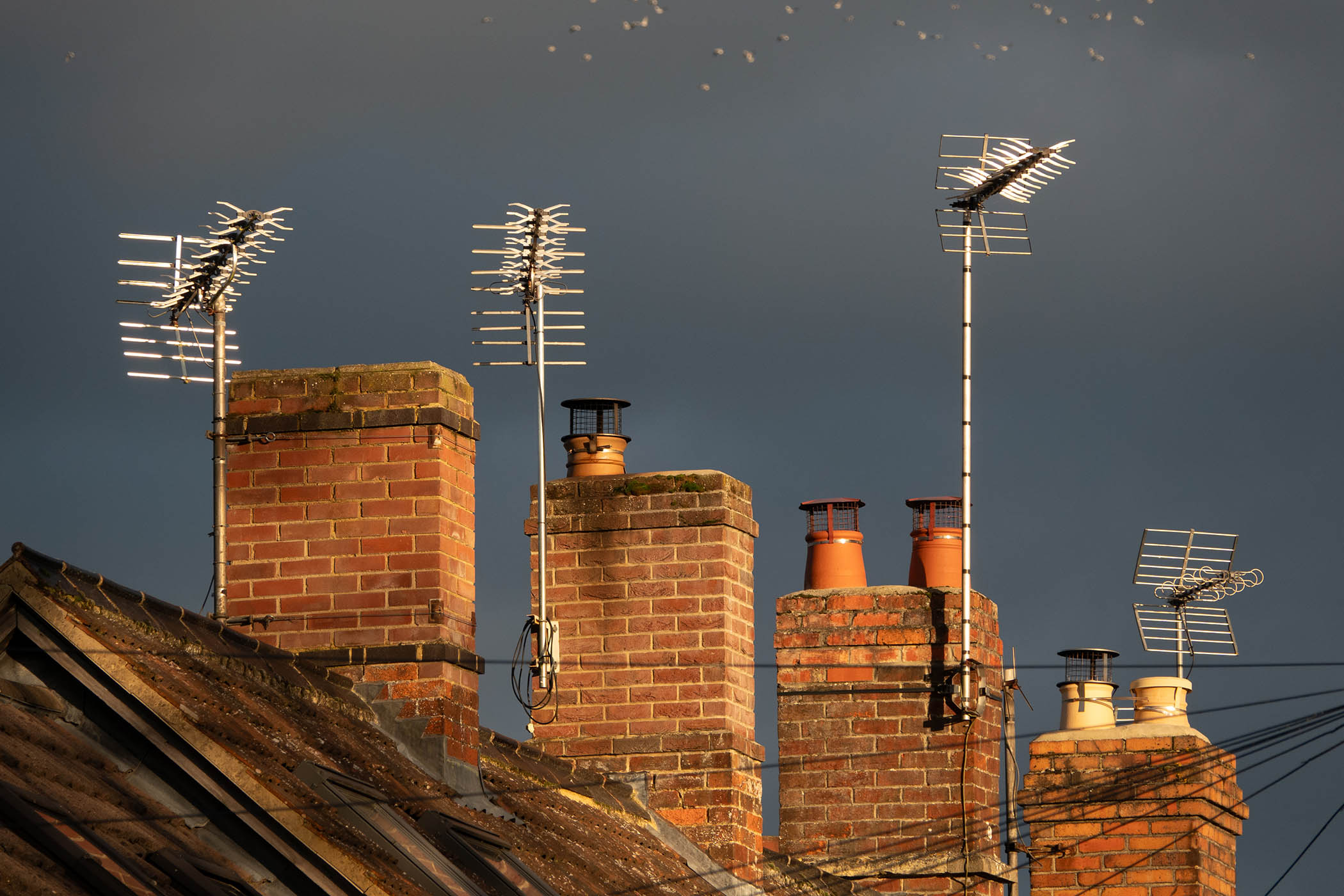
The government has defended its plans to switch off television transmitters, potentially within the decade, and has compared the transition to internet TV to the switch from analogue to digital.
“There were concerns about people losing access, yet the switchover was carefully planned, phased gradually by region, and supported by targeted assistance and public information campaigns,” Ian Murray, minister for creative industries and media, told The Observer.
Labour and Conservative MPs alike have expressed disquiet at the proposals that were outlined in Tuesday’s media green paper on the future of the UK media sector. Seventeen Labour MPs signed an open letter to the prime minister warning that an early digital switch-off could cost the party critical marginal seats at the next election.
“The households who depend most heavily on terrestrial TV are disproportionately older, female, on lower incomes, and in the towns and coastal communities where our majorities are thinnest,” the letter said. “Asking them to take out a broadband contract they cannot comfortably afford, in order to keep watching the television they already have, is not a transition. It is a charge. And it will be read as one.”
Anti-poverty activists are also concerned about the plans, despite the paper outlining government plans to reach every household with gigawatt broadband by the time of the switch over.
“Millions of people across the UK still rely on Freeview as their primary or only means of accessing news, public service broadcasting and trusted information,” said Elizabeth Anderson, CEO of the Digital Poverty Alliance. “The future of television should be more accessible, not less. Ensuring no one is left behind must remain at the heart of any long-term strategy for the UK’s media landscape.”
Murray said the government recognised “that not everyone has an internet-ready television... But we are determined to make sure that nobody is left behind as TV moves towards an internet-based future, whether that’s in 2034 or 2044. The government believes there is a compelling case to make this change in 2034, but we are asking now what the public think.”
‘We are determined to make sure that nobody is left behind as TV moves towards an internet-based future, whether that’s in 2034 or 2044’
‘We are determined to make sure that nobody is left behind as TV moves towards an internet-based future, whether that’s in 2034 or 2044’
Ian Murray, minister for creative industries
The paper outlines a bold interventionist policy to ensure prominence for “trustworthy news”. To date, public service broadcasters (PSBs) have carried news and other public service programming as part of a compact – they appear at the top of Freeview’s electronic programme guide (EPG), ensuring prominence.
The paper suggests PSBs be given prominence on platforms like YouTube and Meta, and moots a restructure of Ofcom to regulate a wholly digital environment. This would potentially place YouTube and the BBC on a level playing field in content regulation, although the government hopes PSB prominence would be secured by voluntary agreement.
The Future TV Taskforce, made up of the BBC, ITV, Channel 4, Channel 5, STV in Scotland and S4C in Wales, said it supports a carefully managed shift to internet-delivered TV in 2034. Meta and YouTube did not respond to requests for comment.
Newsletters
Choose the newsletters you want to receive
View more
For information about how The Observer protects your data, read our Privacy Policy
Analysts said they are concerned about the light touch approach to a set of revolutionary decisions. “The as yet incomplete cost benefit analysis in the green paper shows it’s cheaper to leave the transition to 2044,” said Mathew Horsman, founder of Mediatique.
“Meanwhile, they have not yet quantified the trade-offs that would justify a 2034 switch,” he said. “They note several unmonetised impacts, things like the cost of IP delivery in the absence of Freeview, or the impact on advertising if they move early.”
Horsman points out that the government is not planning to pay for the transition in 2034. He says this “means that there will be some people who won’t be able to watch television, if the industry has to pay for it. ITV is not going to pay, Channel 4 is not going to pay”.
He said: “So finish your modelling. Tell us what the non-monetised impacts are. Do your sensitivities around whether it’s five million, three million, or one million people who rely on Freeview – because right now it’s 10 million – and then let’s have the debate.”
Thank you for reading. Tell us what you think by writing to letters@observer.co.uk
Photograph by Matt Cardy/Getty Images