

It’s the world’s biggest island, but as a producer of natural resources – oil, gas, metals and other critical minerals upon which the global economy runs – Greenland remains a minnow.
With only two active mines and zero oil and gas production, the territory is thought to hold great potential – one reason President Trump has been pressing Denmark so hard. Dr Kathryn Goodenough of the British Geological Survey says its unique geology is likely to support major deposits – of hydrocarbons, rare earths, copper, zinc, copper, gold and other materials – but the practicalities pose big challenges.
“Greenland is relatively underexplored, although areas that are not permanently covered by ice are geologically highly prospective,” she says.
One 2023 study said 25 of 34 minerals described as “critical raw materials” by the European Commission exist in Greenland. They include rich deposits of rare earth elements (REE) like neodymium, praseodymium, dysprosium and terbium in the southern Gardar province. These alone are thought to represent up to 20% of the world’s REE, essential for the permanent magnets used in electric vehicles and wind turbines.
An estimated 270,000 tons of uranium lie in Kvanefjeld, making it the world’s eighth largest uranium deposit.
Meanwhile, other significant deposits of lead and zinc are found in the north at Citronen Fjord as well as copper, graphite, iron ore, coal, diamonds and rubies.
“Greenland is exciting because resources have been depleted in other parts of the world,” says Diogo Rosa, senior researcher and economic geologist at the Geological Survey of Denmark and Greenland (GEUS). “The potential is pretty high.”
‘Greenland is pretty exciting because resources have been depleted in other parts of the world’
‘Greenland is pretty exciting because resources have been depleted in other parts of the world’
Diogo Rosa, the Geological Survey of Denmark and Greenland
Greenland’s potential has attracted some big name backers, including Jeff Bezos and Mark Zuckerberg – billionaires seen as close to President Trump. Both have invested in US firm KoBold Metals, which has been prospecting for rare earths used in AI data centre infrastructure.
Another Greenland-focused firm, Critical Metals, has been backed by US commerce secretary Howard Lutnick.
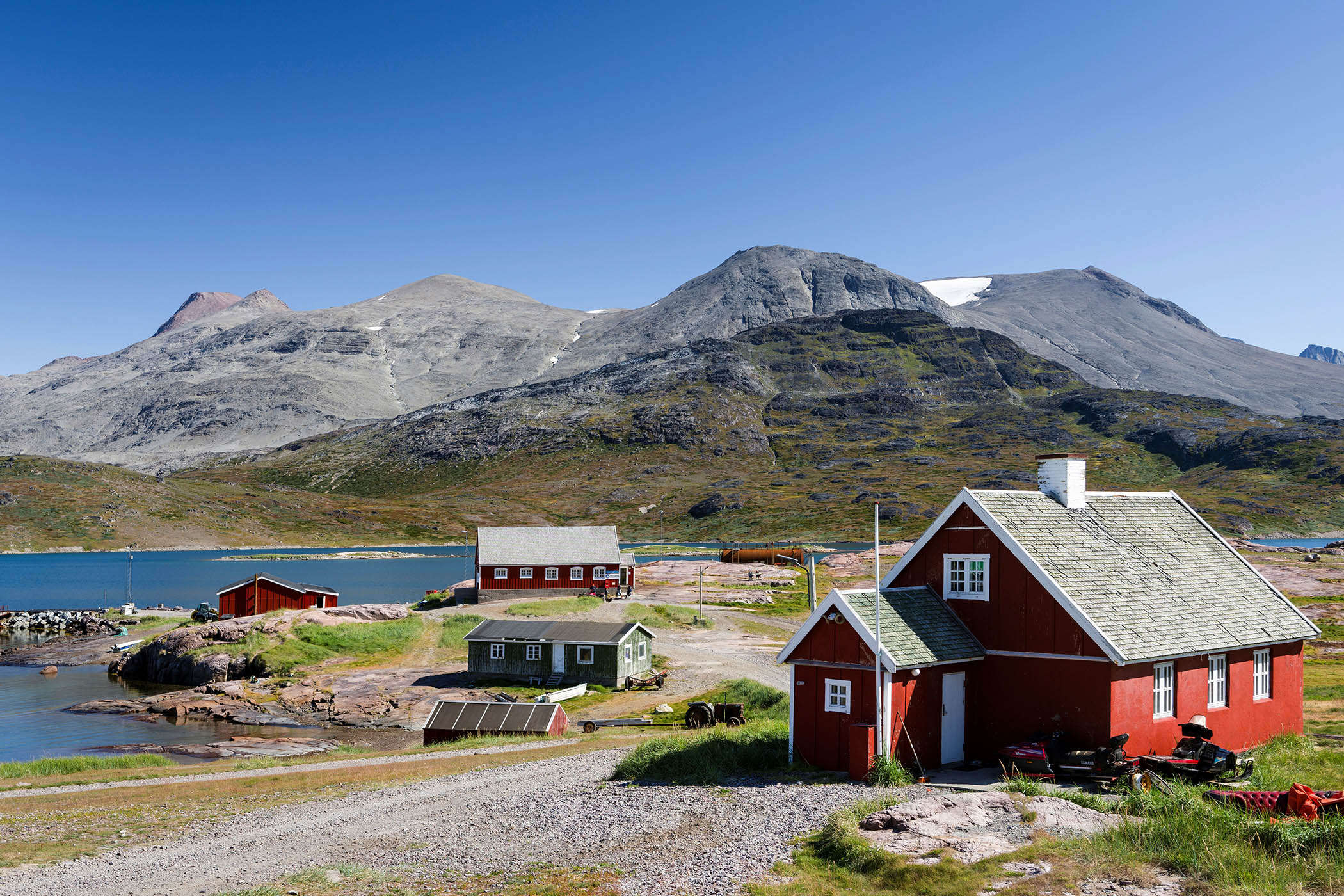
The challenges, however, are obvious. Greenland’s ice sheet covers 80% of the island up to 3km thick, making it difficult to study the underlying rocks. That ice is retreating, but the rate of melting is too slow to expose much new land. Currently about 400,000 sq kilometres of Greenland’s more than 2.1m sq kilometre total are ice free – an area equivalent to Sweden.
Newsletters
Choose the newsletters you want to receive
View more
For information about how The Observer protects your data, read our Privacy Policy
Greenland’s 4bn year geological history – which has similarities with the North Sea – also offers promise for oil companies. In 2007, the US Geological Survey estimated there may be 31bn barrels of undiscovered oil in Greenland. For comparison, the US – the world’s largest producer – has an estimated 46bn barrels of proven reserves.
Oil exploration in Greenland has a patchy history though. Five wells were drilled in the 1970s amid rocketing oil prices, but exploration ceased when they came up dry. Another was abandoned in 2000, and a British company, Cairn Energy, also called a halt to drilling in the territory in 2011 after finding only thin oil deposits offshore.
It’s unclear how much money has been spent so far in Greenland drilling dud wells, but Cairn alone had spent at least £750m when it pulled out. At the time, drilling costs were estimated to be around £75m per exploration well and perhaps £4.5m to develop a complete oilfield.
Since 2021, new oil exploration licenses have been banned, although some companies continue to explore under existing permits. They include Britain’s 80 Mile, which plans to start drilling later this year in Jameson Land, eastern Greenland.
The challenges of operating in such a remote territory with minimal infrastructure are huge. With no existing oil infrastructure – pipelines, refineries or maritime export facilities – and minimal domestic demand, industry experts believe Greenland oil projects today would require big discoveries and higher prices of perhaps £75 per barrel to be profitable. That compares with current prices of about £48 for a barrel of benchmark Brent North Sea crude.
Miners in the territory face similar challenges. “There are hardly any roads, no railways, few harbours and no national grid so you have to produce your own power,” says Rosa, who is based in Copenhagen but spends summers in Greenland.
That explains why only one gold mine in south Greenland and an anorthosite, or feldspar, mine in the fjord of Kangerlussuaq, west Greenland, are currently active. “The scale of a gold mine is much more suited to remote areas,” he adds. “You can just take it out by helicopter.”
Photograph by Martin Zwick/Universal Images Group via Getty Images