
What do you think caused the stock to surge?
I think there was a tweet by somebody in the WallStreetBets world, promoting the idea that there is a trade here. Obviously, there’s some froth right now about local agents. It’s something which is very new and a little bit unproven. But if this is a thing with the enthusiasts now, that might be a canary in the coalmine that the future of AI, on an industry level, might be more about what you do locally, at the edge, in a low-latency, low-cost, privacy-aware and security-aware way. It might be as much about that as it is about building massive data centres.
So the appetite for mini-computers is driven by safety concerns?
It’s scary for individuals and companies if people decide they want to run these quite insecure platforms on shared hardware that you also do other things with. Maybe you connect it to your WhatsApp or email account, or your bank account. That’s what’s motivated this idea about people buying Mac minis or buying Raspberry Pis in order to run OpenClaw.
What do you think about the recent Bearish predictions by Citrini Research that AI agents will eat the lunch of software companies and cause unemployment to surge?
I don’t know whether it’s more illiterate about technology or about human beings… My feelings are that the technology is not that good. It’s useful, but not omniscient at computer programming, which is probably the environment you would expect it to affect most. It’s not going to immediately come and eat all other fields of intellectual activity… There are certainly white-collar jobs that will be under some level of threat. But remember, a lot of these are already under some level of threat from offshoring. One of the small number of plausible stories in that Citrini piece was about the impact on India. You can imagine that it might be most disruptive as a substitutive good for offshore engineering.
These days there’s a temptation for scaling tech companies to stay private. Why did you decide to IPO in 2024?
It’s no longer obvious that ambitious technology businesses should visit the public markets relatively early in their growth. I’m still a believer in it. We’ve met a community of very supportive institutional and retail shareholders by going down this road. We benefited from the discipline of being a public company – you’ve got to armour your balance sheet to buffer against the inevitable cyclic nature of the business. People say the problem with public companies is they are too focused on this year’s profits. I think there’s nothing wrong with being focused on this year’s profits.
And London over New York?
I was always an instinctive sceptic that there’s a large valuation gap between London and New York… You might get 13x instead of 12x just because of [America’s] general tiggerishness. The record of British companies choosing New York as a listing venue, for all sorts of reasons, is not especially glorious… Even if we grew to the $50-$100bn market cap scale, it’s hard to imagine that day when you go to get up in the morning and say: “Come on guys, let’s dual list, or let’s relist.”
What’s the mood music been around UK tech in the last few months?
AI plays to our strengths enormously. The King’s Cross universe is fascinating. For the first time we have, outside of Cambridge, a global scale technology asset in London… we’ve managed to get that kind of self-reinforcing, accelerating feedback loop between business success and academic success. We continue to have this angst about the idea that we sell our assets too soon, and to America too cheaply. I think that’s fine. You could take that description and apply it to Israel, right? There’s no Israeli Google. But there’s a lot of companies that start up and do amazing, innovative work, are acquired and move on… I don’t think we need to stress too much if 90% of our technology ends up being a division of an American hyperscaler, that’s absolutely fine. We should lean into the things we’re good at as a country, and have just a bit more self-confidence.
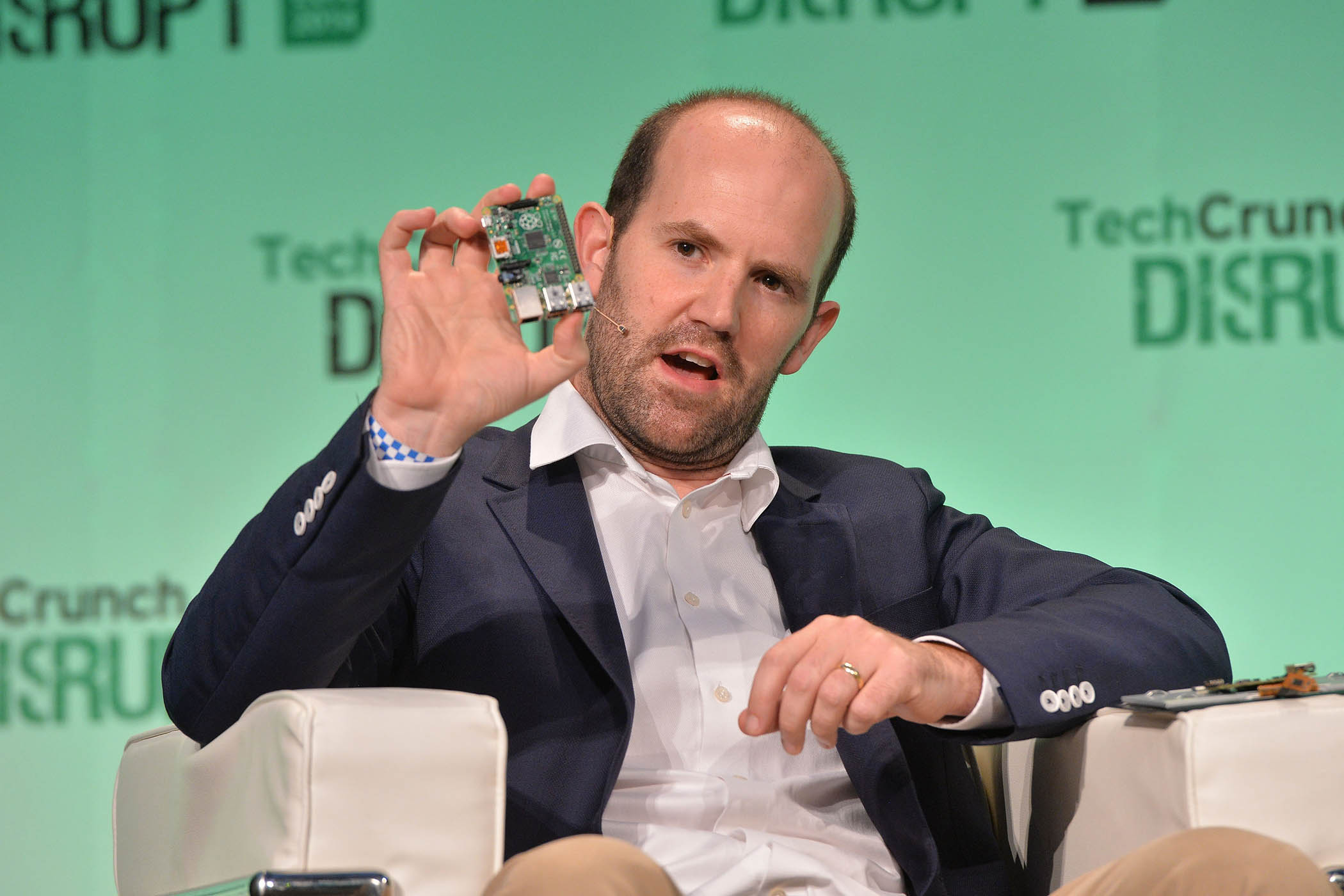
Photograph: Anthony Harvey/Getty Images for TechCrunch
Newsletters
Choose the newsletters you want to receive
View more
For information about how The Observer protects your data, read our Privacy Policy