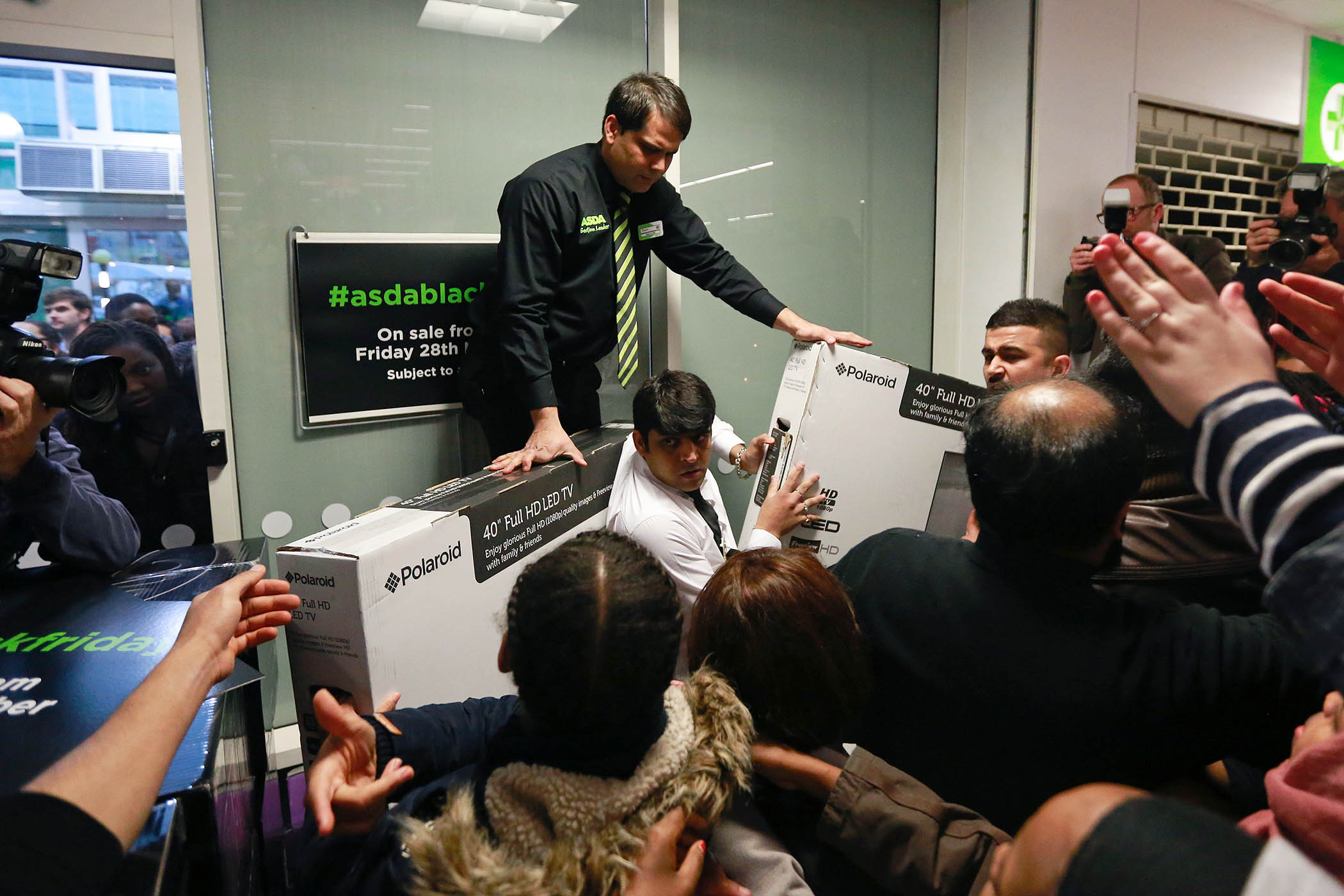


It’s more than a decade since the first Black Friday fights broke out over heavily discounted electrical goods at UK supermarkets. But 2025 might be the year the annual American-imported shopping frenzy peaks. As retailers gear up for the last weeks of festive shopping, there are signs that not only they are growing tired of Black Friday – consumers are too.
Research by the British Independent Retailers’ Association has found that 77% of independent shops shunned Black Friday this year, up from 69% in 2024, and some larger brands are snubbing it too, including the clothing retailers Me+Em and Reiss. While Dr Martens is still taking part, the company said in its first-half results statement that it would henceforth reduce “promotion of seasonal lines and the depth of the discounts offered”, while the online clothing retailer Asos also announced plans to “lower discounting”.
Will Sheane, chief executive of the outdoor brand Finisterre, which has 15 stores around the UK including one which opened this week in Leeds, said although the brand has previously “participated to a degree” in Black Friday discounting, in 2021 it launched its own version, “Blue Friday”, where instead of discounting, it donates a portion of profits generated over the traditional Black Friday period to an ocean-themed charity.
“Black Friday is predominantly about driving consumption,” he said. “My sense is that, a couple of years ago, it felt like there was a jump [in other brands] stepping away from it. I think, generally, people are feeling a bit tired of it.”
For some retailers, which have been hit by increased energy costs, rents and an increase in the minimum wage, Black Friday no longer makes sense. The most recent figures from the Office for National Statistics show retail sales volumes fell 1.1% in October, the first month-on-month fall since May, with supermarkets and clothing retailers hit particularly hard. Discounting is just another squeeze on margins, said Katy Lassen, who runs Harbour & Tide, an independent clothing and homewares retailer.
Lassen said that although she does discount occasionally, she prefers to find other ways to entice shoppers. “I offer things like giveaways, [such as] a free tote bag when you spend £50.”
Shoppers may also be getting wiser to larger retailers’ discounting strategies. The consumer group Which? tracked prices for 175 appliances across eight retailers, including Amazon, AO and John Lewis, over 12 months, and found that none of the items were at their cheapest on Black Friday.
“Consumers have a lot of concerns around affordability, they’re fairly price sensitive,” said Harvir Dhillon, an economist at the British Retail Consortium. Because of that, he added, some retailers are discounting for longer periods.
Photograph by Simon Dawson/Bloomberg via Getty Images
Newsletters
Choose the newsletters you want to receive
View more
For information about how The Observer protects your data, read our Privacy Policy