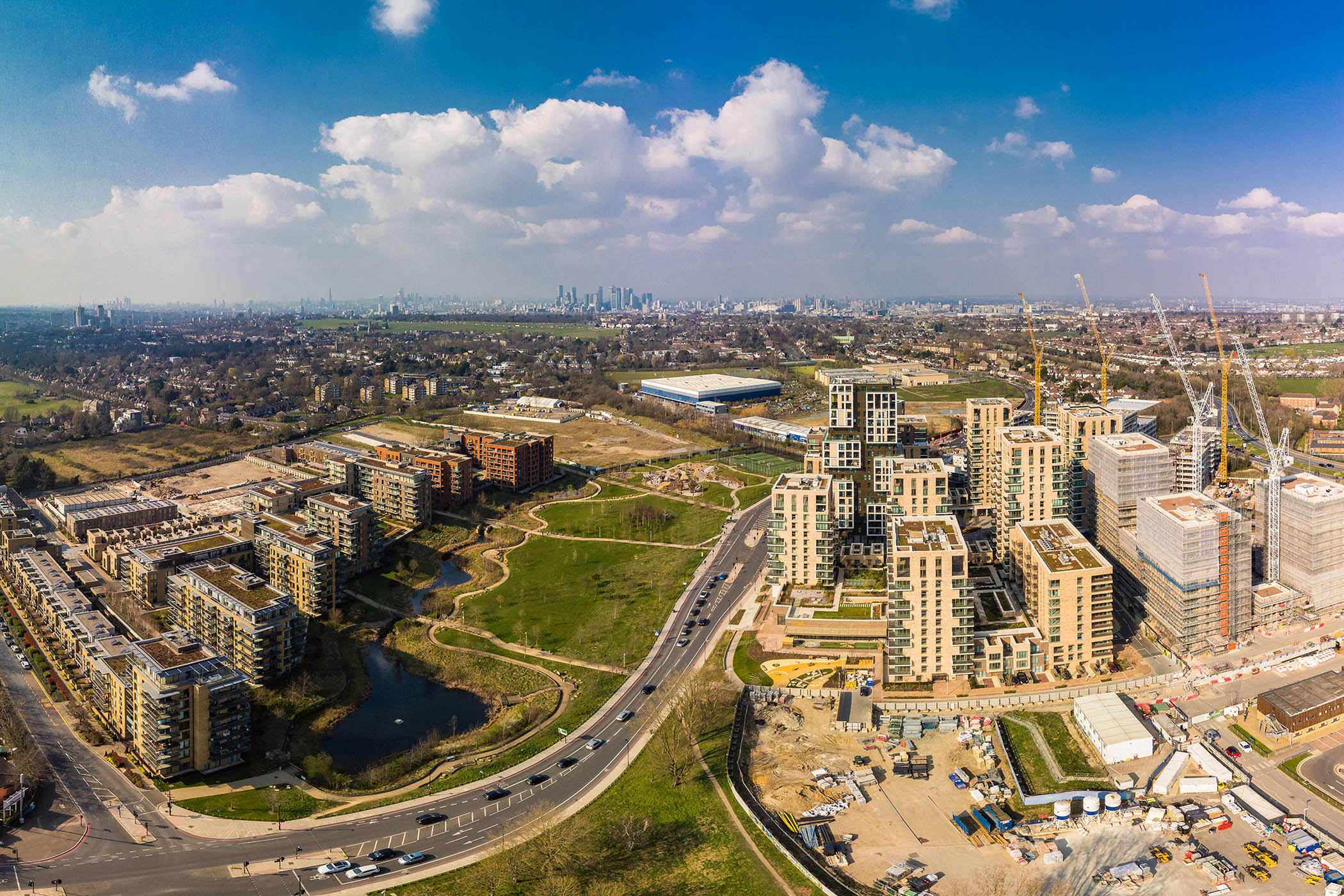



It’s no secret that the capital’s housing system is broken. What isn’t so widely known is how quickly that crisis is getting worse. The government has said London needs 88,000 new homes a year to keep up with demand. However, figures published by the London housing data specialist Molior last year showed that in the first nine months of 2025, developers began building just 3,248 new homes for private sale in the capital. For affordable housing, that figure was even lower: data from the Greater London Authority shows that between April and September, builders broke ground on just 1,239 new affordable homes.
Last year the Labour government unveiled a revised National Planning Policy Framework, a shake-up of the planning system designed to speed up housebuilding. But developers are still suffering from the combination of Brexit, the pandemic and elevated interest rates having pushed up the cost of building a new home by as much as 20% since 2020.
In November’s budget, Rachel Reeves revealed a package of support for London’s housebuilders, including relief from certain levies and a £322m City Hall fund for developers. Will it be enough to fix London’s housebuilding crisis in 2026? Experts say the only way to do that will be to help developers buy new land, come up with a way to stimulate demand, and make tough decisions around affordable housing requirements.
The cost of land is one of the biggest factors slowing housebuilding in the capital. Growth in London house prices has been sluggish since 2020, with average sold prices rising just 0.7% in 2025 – but landowners, developers say, are still expecting the rapid rises of the early 2010s. Steve Turner, executive director of the Home Builders Federation (HBF), said many owners of potential development sites were content to wait for the good times to return. “If you’ve got a piece of brownfield land and you’re parking 100 cars on it at a tenner a day, you’ll just keep doing that until the price of land goes back up again.”
The cost of land is such that “there are many, many sites where you physically can’t make any money on them, and so they don’t get built,” said David Fell, lead analyst at the London estate agency Hamptons. Since the economic uncertainty created by Brexit, this has had a tangible effect: a senior source at one major developer said that several years ago it was buying large sites in London every six months – but it hasn’t bought one in several years.
“The land seller can only sell that piece of land once,” said Turner. But the government could combat this by easing taxes applied to residential developers.
After taxes, there is often “no money left to build out” a development, said Richard Dudzicki, a developer and the founder of RDA Architecture & Interiors.
The building safety levy, which will add as much as £2,500 to the cost of each home in some developments, according to the HBF, is one such example. “The answer from politicians and officials for many years when introducing new taxes and policy costs has been ‘Take it off the land value,’ said Turner. “At some point, that no longer works as land sellers want a certain price for their asset.”
This article has been amended since publication
Newsletters
Choose the newsletters you want to receive
View more
For information about how The Observer protects your data, read our Privacy Policy
‘For the first time in 60 years, you've not got any support scheme in place to help young buyers get on to the property ladder’
‘For the first time in 60 years, you've not got any support scheme in place to help young buyers get on to the property ladder’
Steve Turner, Home Builders Federation
For now, though, the prices landowners expect and the amount developers have to spend remain mismatched – which means the price of new-builds will stay high. Turner suggested a new incentive to buy might help after the London version of Help to Buy, which helped people get on to the housing ladder with government-backed loans, was withdrawn in 2022. “For the first time in 60 years, you've not got any support scheme in place to help young buyers get on to the property ladder,” said Turner.
Mark Farmer, founder of the consultancy Cast and an industry veteran who has written major government reports on construction, said that by the mid-2010s, price growth in London had caused its market to become a “victim of its own success”, with the cheap loans pushing up price growth.
Now price growth had slowed, the likelihood was, he suggested, that the government would need to introduce something similar in 2026: “Everyone at the moment is expecting there to be an intervention.”
Last year the Freedom to Buy scheme was launched, which provides government-backed guarantees for mortgages with up to 95% loan-to-value ratios – but the scheme has yet to take off. A London-specific scheme would help buyers in the capital.
Meanwhile, developers say affordable housing is hampering progress. Housebuilders have always complained about the capital’s affordable housing requirement, which was reduced last year from 35% of developments to 20%. But they may have a point: housing associations, which have traditionally bought affordable homes from developers, are struggling. The latest figures by Axxco, a social housing investor, found that housing associations in England reduced their planned spending on new affordable homes by 9%, or £1.5bn, in 2024.
Fell said subsidies for social housing providers need to rise. As it stands, housing associations are “not in a position to step in and ramp up numbers”. The senior source at the major housebuilder agrees: “To guarantee the price of the affordable housing would dramatically de-risk these projects.”
This will be a crucial year for London’s housebuilding sector. Ultimately, what will ramp up development is market confidence. “Something will have to give,” says Farmer. “In London, people don’t just need homes – they need affordable homes. For that, we need to get the economy going.”
Photograph by Martin Valigursky/Alamy