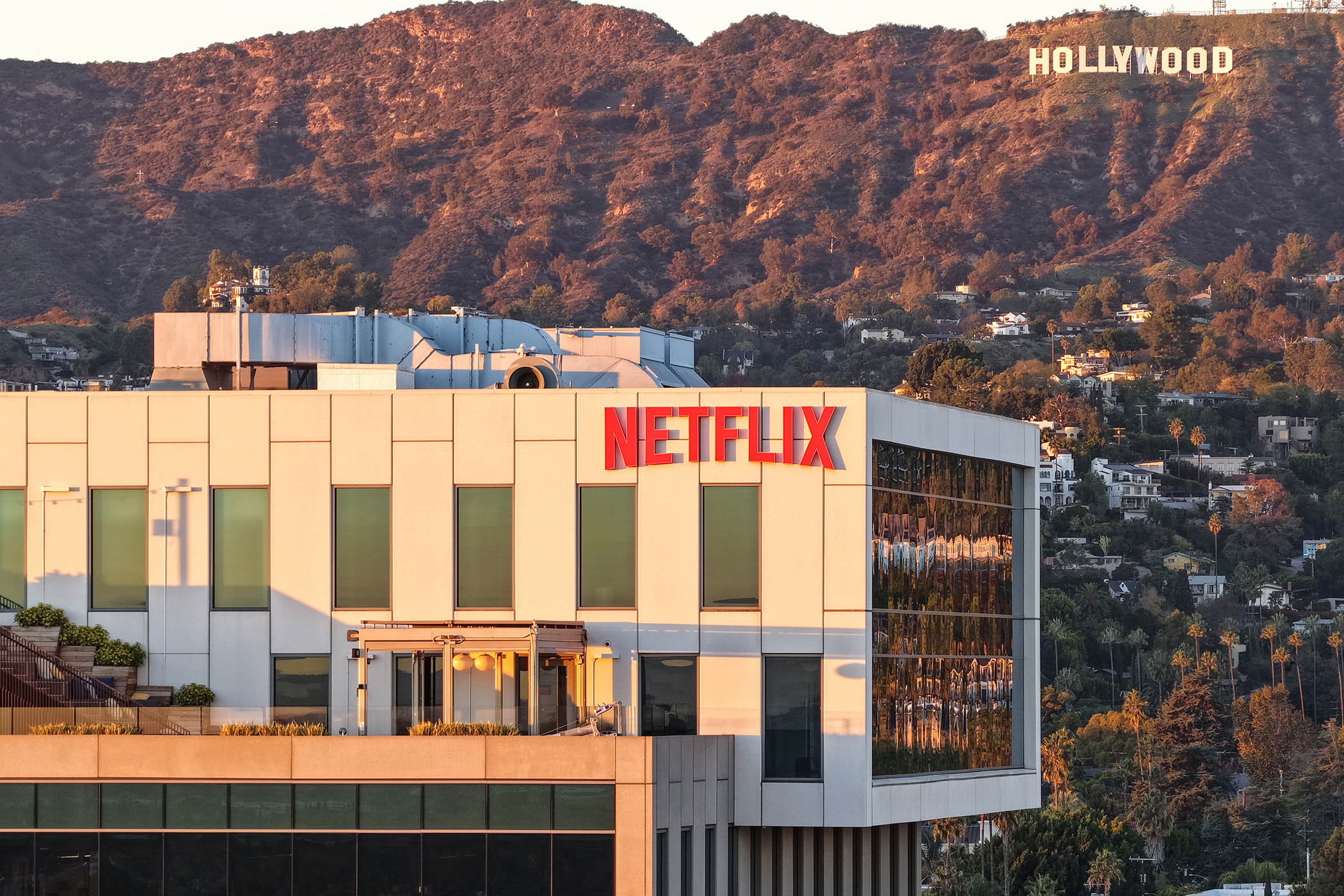



Netflix wants to grow its film production. That’s evident from plans to change its $83bn bid to buy Warner Bros Discovery to an all-cash offer, luring shareholders to reject a hostile bid from Paramount. Lesser known is Netflix’s quiet bid to conquer the podcast world.
Last week Netflix started streaming podcasts from the Ringer Podcast Network, a Spotify-owned company headed up by sportswriter and critic Bill Simmons. It’s the first of three exclusive deals the company signed in December with podcast suppliers as the streamer takes on YouTube.
YouTube’s 2.7bn monthly viewers is considerably more than Netflix’s 300m-plus subscribers, but thanks to those subscribers’ fees and the streamers’ ad-funded tier, Netflix is projected to overtake YouTube in revenue for 2025, with both companies’ earnings forecast at $40-45bn.
One billion YouTube viewers watch podcasts on the platform. But Netflix’s bid for HBO Max and Warner Bros, if successful, could lead to domination in premium content, as well as big name podcasters. CNN, which is owned by Warner, also inked a deal this week to bring several podcasts from Lemonada Media to its new streaming offer.
Over the next week, 16 podcasts from the Ringer will begin exclusive streaming, ranging from sports to true crime. A similar deal with iHeartMedia starts soon with 14 podcasts moving exclusively to the platform, including Dear Chelsea with Chelsea Handler. That’s followed by three podcasts from Barstool Sports, a US-focused sports podcast company.
“The buying-up of vodcasts is a direct response by Netflix to the threat of YouTube, by providing more ‘ambient’ or background content to its subscribers,” says Tom Harrington, analyst at Enders Analysis. He suggests it will also help answer a few nagging questions about podcasts.
Data on podcast usage is rudimentary. Do people actually watch them on YouTube or are they just listening to them? It’s unlikely that people will choose to access podcasts on Netflix just for the audio. This should help give a measure of the value of vod v pod, which is fundamentally important for advertisers who don’t want to pay the same for an ad listened to but not watched.
Video podcasts, or vodcasts, started in 2020 with Spotify pioneering the medium, then grew rapidly, with YouTube overtaking Spotify as America’s number one podcast platform in late 2023. By 2024, US YouTube vodcasters like Joe Rogan and Theo Von, whose podcasts have more viewers on YouTube than listeners on Spotify, were credited with swinging the young male vote to Donald Trump in the US presidential election. Rogan averages an audience of around 16m on YouTube and less than 14m on audio platforms.
YouTube now accounts for 31% of US podcast audiences over Spotify’s 27%, and Apple Podcasts 15%. In the UK, Spotify still has a healthy lead with 33%, followed by YouTube’s 20%, BBC Sounds 15% and Apple Podcasts 13% – and while under 5% of podcast listeners in the UK report they only watch, never listen, YouTube’s overall rise continues. Last week, the official TV audience research company, Barb, reported YouTube had reached 51.9m people in December, more than the 50.9 million who tuned in to the BBC. The public sector broadcaster has agreed a deal to make bespoke TV shows for YouTube.
The podcast audience in both countries tends to be younger, better educated and have a higher income than non-listeners, and while the global ad revenue going to vodcasts in 2026 is predicted to reach $5bn, according to Digital Context Next, predictions for 2030 vary wildly. Podcast advertising is expected to reach between $40bn and $100bn, however, those podcasts with video, currently take twice as much in memberships and bonus/premium content than audio only.
Newsletters
Choose the newsletters you want to receive
View more
For information about how The Observer protects your data, read our Privacy Policy
In the UK, Global Media – owner of Capital, LBC and The News Agents – recently bought podcast network The Fellas Studios and launched Global Studios, a vodcast arm. Shortly after that, Global bought a majority stake in Gary Neville’s YouTube-based The Overlap podcast business, known for shows like Stick to Football and Neville’s eponymous show, which has 38m views on YouTube. Gary Neville now co-chairs Global Studios with Global Group CEO Simon Pitts.
Neville will have some competition in the field. In December, former England teammate Gary Lineker’s podcast company Goalhanger signed a £14m deal with Netflix to create World Cup episodes of his Rest is Football podcast/vodcast during the 2026 tournament, pitching Lineker against the BBC.
Goalhanger’s traditional TV production arm – which made programmes like Football, Prince William and Our Mental Health for the BBC, and Keane & Vieira: Best of Enemies for ITV – shuttered in 2024 and now focus on vodcasts for The Rest is Politics, The Rest is History, The Rest is Entertainment and The Rest is Football. In January, Goalhanger launched a new weekly vodcast series Premier League Greats: The Moments That Made Them, with authorised footage from the Premier League.
“The lines between podcast and talk shows are getting pretty blurry,” Netflix co-CEO Ted Sarandos said last year. “Podcasts have become a lot more video-forward.” And a lot cheaper than premium TV. Netflix deals for vodcasts have been in the six- to low-seven figures while some podcast, like All the Smoke, a sports podcast hosted by former basketball players Matt Barnes and Stephen Jackson, turned the streamer down purely on price.
‘Big podcasts are pushing the boat out in terms of video production… everything is television now’
‘Big podcasts are pushing the boat out in terms of video production… everything is television now’
Tom Harrington, analyst
This has changed the tone of podcasts, which broke through with narrative shows like Serial in 2014. Today’s vodcast features lively chats with guests, which is easy and cheap to film, often with famous hosts. This year’s Golden Globe awards included vodcasts for the first time. Good Hang with Amy Poehler, which launched 10 months ago, won the award for best podcast. In her acceptance speech, Poehler mocked celebrity vodcasts, saying: “I have great respect for all the people I am nominated with. I am big fans of all of you except for NPR [National Public Radio]. Just a bunch of celebs phoning it in. So try harder.”
Video also allows podcasters to use social media platforms for marketing – podcast clips posted as Shorts, Reels, and TikTok increased by 77% in 2025, says video company Zebracat, which claims 58% of podcast discovery now comes from short-form video content.
“Big podcasts are pushing the boat out more in terms of video production, which means they are turning into TV shows,” Harrington says. “Everything is television now.”
Photograph by Mario Tama/Getty Images