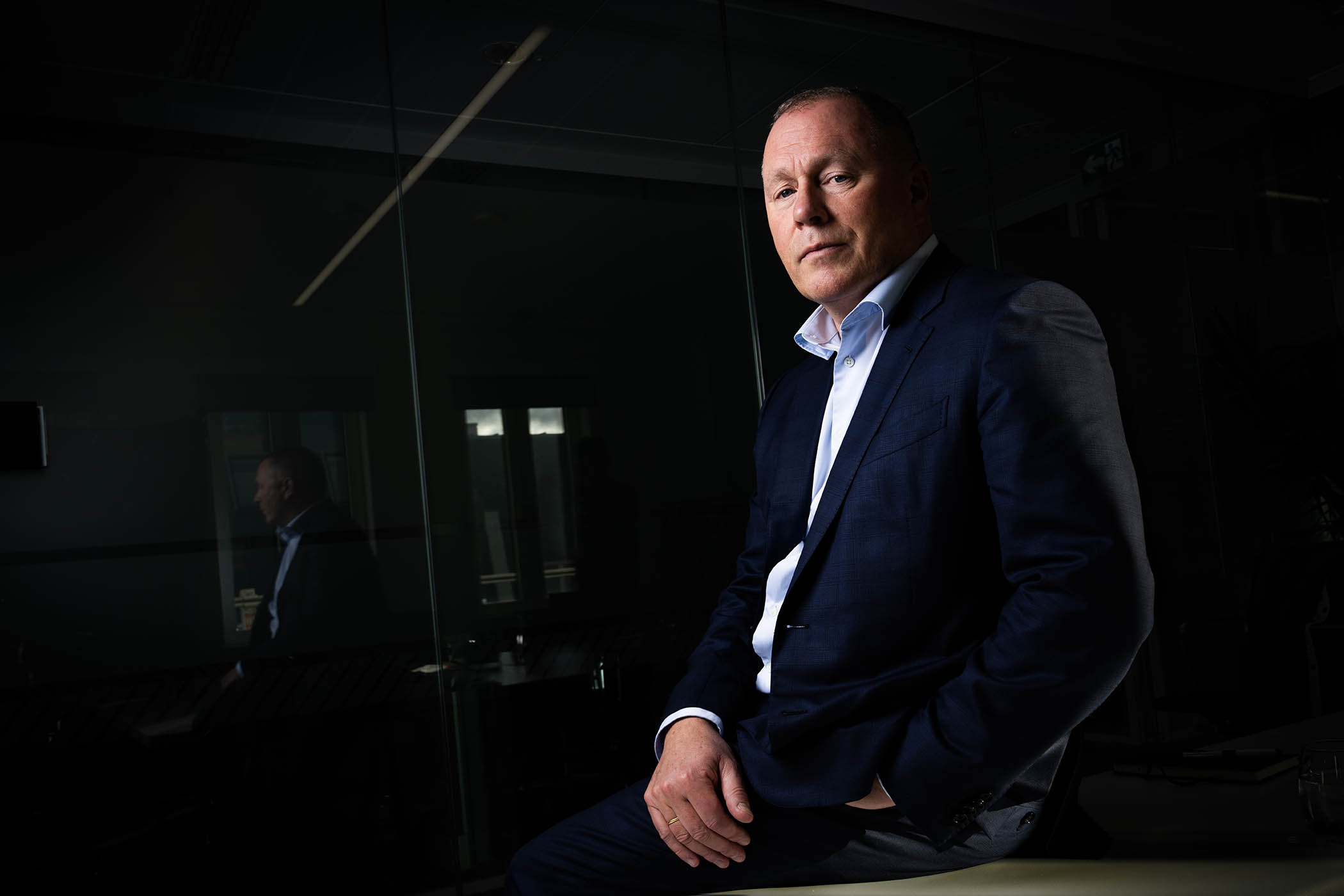

Portrait by Antonio Olmos for The Observer
Nicolai Tangen, the man in charge of the world’s largest sovereign wealth fund, heads to a Norwegian mountain lodge each year with a bunch of old friends. Sitting in front of the fire, they make predictions on the year to come. It sounds like a version of Mountainhead, Jesse Armstrong’s film about cocksure tech bros boasting about their billions and the dystopian AI future. But this snowy get-together was more Scandinavian – and self-deprecating.
“We were just completely wrong,” he says. “So this was a few weeks before the US election – we got that one wrong. Nobody predicted the tariffs, or the situation between the US and Europe... anything that was going on in China, India… It’s just futile trying to predict anything.”
The irony is that financial markets, technology companies and governments look to Tangen to get a sense of where the world is going.
He is chief executive of Norges Bank Investment Management, referred to outside the country as Norges. In Norway, they call it Oljefondet – the oil fund. In 1969, Norway found oil in the North Sea. Lots of oil. In order to avoid corruption and share the wealth, the Norwegian government put the first 2bn Norwegian kroner (equivalent to $310m at the time in 1996) of oil and gas revenues into a sovereign wealth fund. Today, it’s worth $2.1tn and owns shares in nearly 9,000 companies, a stakeholder in business everywhere.
Norges is also generally seen as capital with a conscience. As other fund managers have turned against supposed “wokery”, Norges has continued to champion investments in renewables, opposed gargantuan pay deals and relentlessly topped the transparency rankings; it updates its website 13 times a second with a ticker that tells the world the fund’s market value. It is the most looked-at number in Norway.
Tangen is at pains to insist the fund is not political or purpose-driven; its only job is to make money for the Norwegian people. Roughly 3% of the fund is paid back to the Norwegian finance ministry each year, which now accounts for roughly a quarter of government revenue.
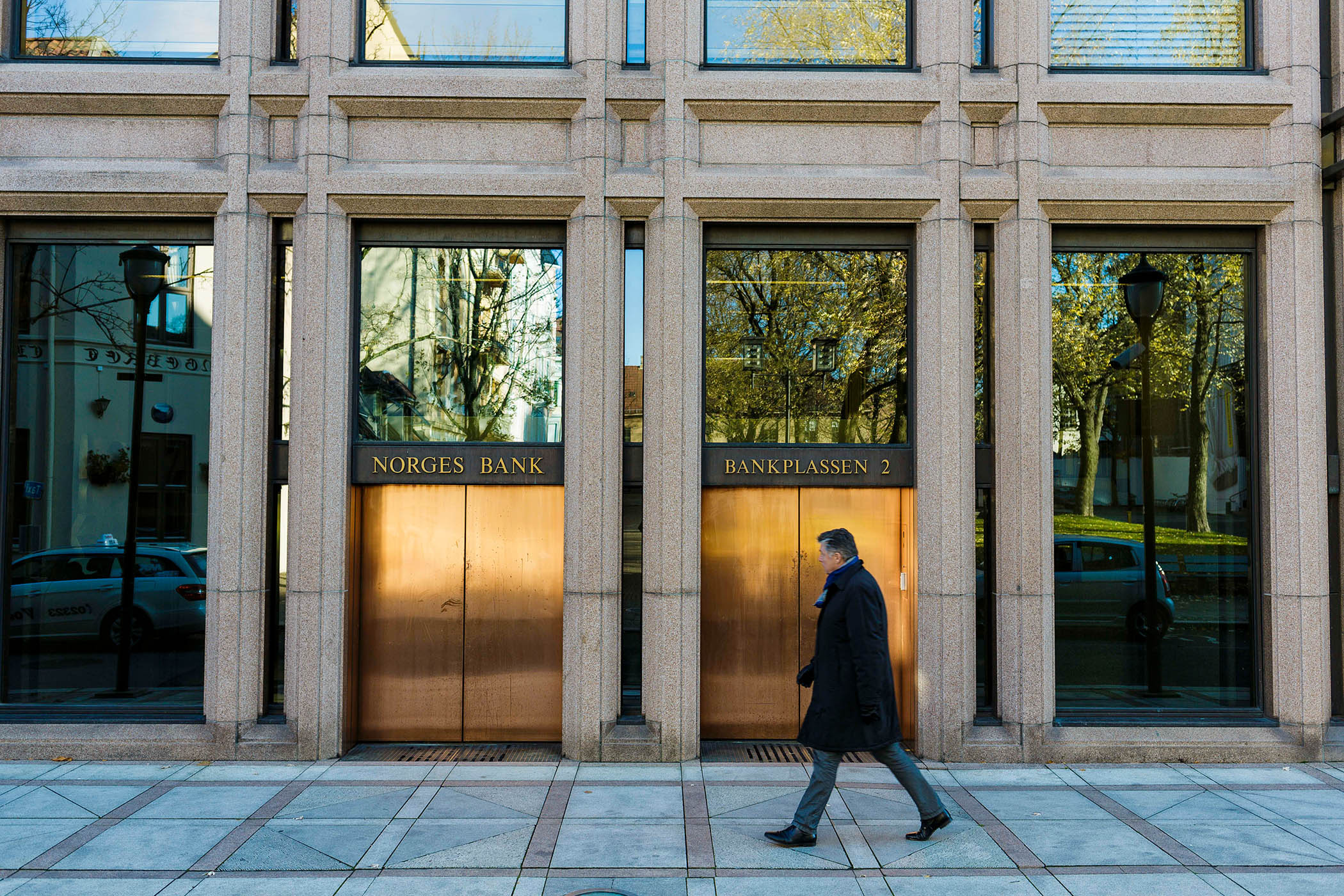
For decades, he lived in London, having bounced between finance and acquiring master’s degrees in art history from the Courtauld and social psychology from the London School of Economics. He founded and ran a hedge fund, AKO Capital. He made a fortune and, while others have taken their wealth to the hotter weather and lower tax climes of Dubai, Tangen chose a return to Oslo and its bracing winters and tax rates. When we meet, it is at the Norges offices in London’s Mayfair – the fund owns a chunk of the neighbourhood – and he is just back from a month in New York where he met 70 chief executives.
So what does he see coming? The biggest question on the minds of investors today is whether the AI boom is a bubble.
“It’s clearly very hot,” Tangen says. Increasingly, people in the financial markets are questioning whether stocks such as Alphabet, Microsoft, Meta and others are riding for a fall. They warn that valuations are not sustained by visible returns. They point out that there is a circularity to the money moving between the tech giants. And they fear that, if China moved on Taiwan, the world’s essential chipmaker, then the AI supply chain that sustains the “hyperscalers” – large tech companies – may crack.
Newsletters
Choose the newsletters you want to receive
View more
For information about how The Observer protects your data, read our Privacy Policy
‘The end clients of AI are very rich. Microsoft’s got a lot of money. Google’s got a lot of money. This is not like Pets.com [in the dotcom bubble], which didn’t have any money’
‘The end clients of AI are very rich. Microsoft’s got a lot of money. Google’s got a lot of money. This is not like Pets.com [in the dotcom bubble], which didn’t have any money’
Nicolai Tangen
Tangen marvels at a recent episode when Jensen Huang, chief executive of Nvidia (the fund owns 1.32% of the world’s most valuable company) shared fried chicken with executives at Samsung and Hyundai. It triggered a frenzy in the Korean stock market, as investors rushed in to buy up anything AI-related – and also anything chicken-related.
The chicken restaurant itself is not a listed company, but everything else soared, including Neuromeka, a company that makes robotic chicken fryers. “That indicates that it’s a pretty hot space,” Tangen says. “On the other hand, the end clients are very rich. Microsoft’s got a lot of money. Google’s got a lot of money. This is not like Pets.com – [the company that embodied the dotcom boom and bust] – which didn’t have any money.”
“Even if it’s a bad bubble,” he adds, “it is allocating capital towards change.” It is a transformation that will lift entire societies. He points to Iceland, which has just launched one of the world’s first pilots in using AI tools in education. Teachers there will have access to the Claude chatbot to create personalised lesson plans for students.
But there will be losers too. “It will increase inequality in societies and between countries,” he says. Within countries, those with a technical background and skills are better able to use AI tools. Poorer nations with less developed digital infrastructure will lag behind rich ones.
“You have [this] at the company level, society level, and then at the country level – some countries are better than other countries at utilising that.” Perhaps he is wise to insist on the futility of prediction. Whatever happens next – a shuddering market correction or an AI-fuelled acceleration – it seems likely that those who already have the least will suffer the downsides most.
What matters, he says, is the willingness to adapt to change. “The only thing that matters is culture; that’s becoming more and more true, because you need to have speed in the organisation, speed in the decision-making, become more agile and more resilient to cope with these big swings.”
Within the fund he runs, Tangen has been “carpet bombing” staff with AI initiatives. He is zero-sum about adapting to the age of thinking machines.
“If you have the wrong compliance officer, they can hold it back, and so you can kill a company now. If you are two or three years late in implementing this, you are going to lose, and I don’t think you are ever going to catch up.”
Other companies may be reducing graduate hires, but Tangen says the young are driving the fund’s transformation. Before AI, they used to be a “drag” who had to be trained before they could turn to useful output. “Now they are in production within 30 minutes.” Employment is stable and the fund will not hire more on a net basis, but AI will enable productivity gains with its existing numbers. Every employee is using an AI assistant, but more surprisingly, nearly two-thirds are using an AI tool to write code.
Norges itself is now “roughly neutral” tech. That is, neutral compared with the index. The oil fund operates according to a detailed mandate from Norway’s ministry of finance, which does various mundane things such as setting the split on equities and bonds. The strictness of the mandate means: “Basically, my job is not very important.”
The divide is 70% equities and 30% bonds, and of that 70%, the default is to own “roughly one and a half per cent” of all the companies in the world. In Europe, that share skews closer to 3%. Roughly a fifth of Norges’s share holding is actively managed, rather than just tracking the index, with portfolio managers who try to outperform the market.
The goal is to generate 25 basis points (0.25%) a year in excess returns above the index and, on average, the fund has achieved that over the last 30 years.
The fund’s only goal is to “make money”, a point Tangen repeats several times; these days, it’s both unfashionable and unhelpful in the US to overclaim for the social responsibilities of business.
But at a time when other asset managers are muted, Norges has a distinct voice. Last month, it rejected Elon Musk’s $1tn pay package, expressing concern about the size of the award and “lack of mitigation of key person risk”. It is a top 10 investor in Tesla. Other shareholders have supported the proposed deal.
The fund has excluded holdings of Israeli companies and sold shares of US company Caterpillar, referring to an independent Norwegian ethics council’s recommendation, which said that Caterpillar’s bulldozers are being used in the unlawful destruction of Palestinian property.
On Israel, and whether there was internal dissent over the decision, Tangen says: “We are an apolitical institution. They [employees] are free to have whatever opinion they want.” Norway’s parliament has since voted to put the work of the ethics council on hold, averting the risk of being forced to sell out of US tech companies that work for Israel’s government.
Tangen does not mince his words on the climate crisis. The fund is entitled to a view as its goal is to make money with “acceptable levels of risk”. Tangen says: “Climate risk is financial risk because it impacts harvests and prices. We have seen [that] this year for instance: cocoa, beef.” When he meets companies, he talks to them about expectations for their behaviour in the fields of human rights, climate, water, biodiversity and more.
Politics is more of a consideration in finance and technology than ever before. After his month in New York, he shared 10 lessons on LinkedIn. One of them was simply this: “Washington is the new full-time job.” All chief executives are spending a lot of time managing what is coming out of DC.
At the same time, “tech has never been more integrated in geopolitics than today”. It is built into the defence industry, self-driving cars and healthcare. And geography matters more than ever.
“There was a positive mood about America, about business, despite of course things like the environment being more uncertain and more difficult to plan,” he says. When it comes to Europe, by contrast, American chief executives had no plans for new “greenfield” investment. Their view of China has shifted from being just a place of cheap manufacturing to a source of innovation in sectors such as pharma and cars.
And London? He lovesthe capital, loved living in the city. When invited to talk about the budget, the apparent exodus of non-doms and the direction of the country post-Brexit, he leaves a long pause: “London is a strong financial centre.” He smiles.
In the first half of the year, the return on the fund’s investments was 5.7%, which missed its benchmark by 5 basis points. Underperformance in the US was tempered by strong returns from Europe, chiefly from European banks. After slumping with tariffs, the markets are buoyant once again, with the S&P gaining 17% so far this year.
‘Companies that make fast decisions make better decisions. I believe that. I believe speed in decision-making can be good’
‘Companies that make fast decisions make better decisions. I believe that. I believe speed in decision-making can be good’
Nicolai Tangen
Asked how the fund weathered tariff uncertainty, Tangen cast his mind back to the mountain retreat a year ago. “If you had told me: ‘So this is what’s going to happen over the next 12 months, where do you think stock markets are?’ Oh my, I would expect them to be down 25% – now they are up, like, 15-20% instead.
“Why? That’s the big surprise, driven by the technology companies and the financial [services].”
Norway’s behemoth fund has a 100-year investment horizon, but its chief executive is gripped by the speed of change. “Companies that make fast decisions make better decisions. I believe that. I believe speed in decision-making can be good.”
He knows that not everyone likes how fast things are moving. He does. “You have to love change. I like change,” he says. Do you know, he asks, when we’re happiest on holiday? He cites an academic study: “Hour 42. That’s when you start to get used to the new place, so then the newness starts to fade.”
Other pictures by Krister Soerboe/Bloomberg via Getty Images