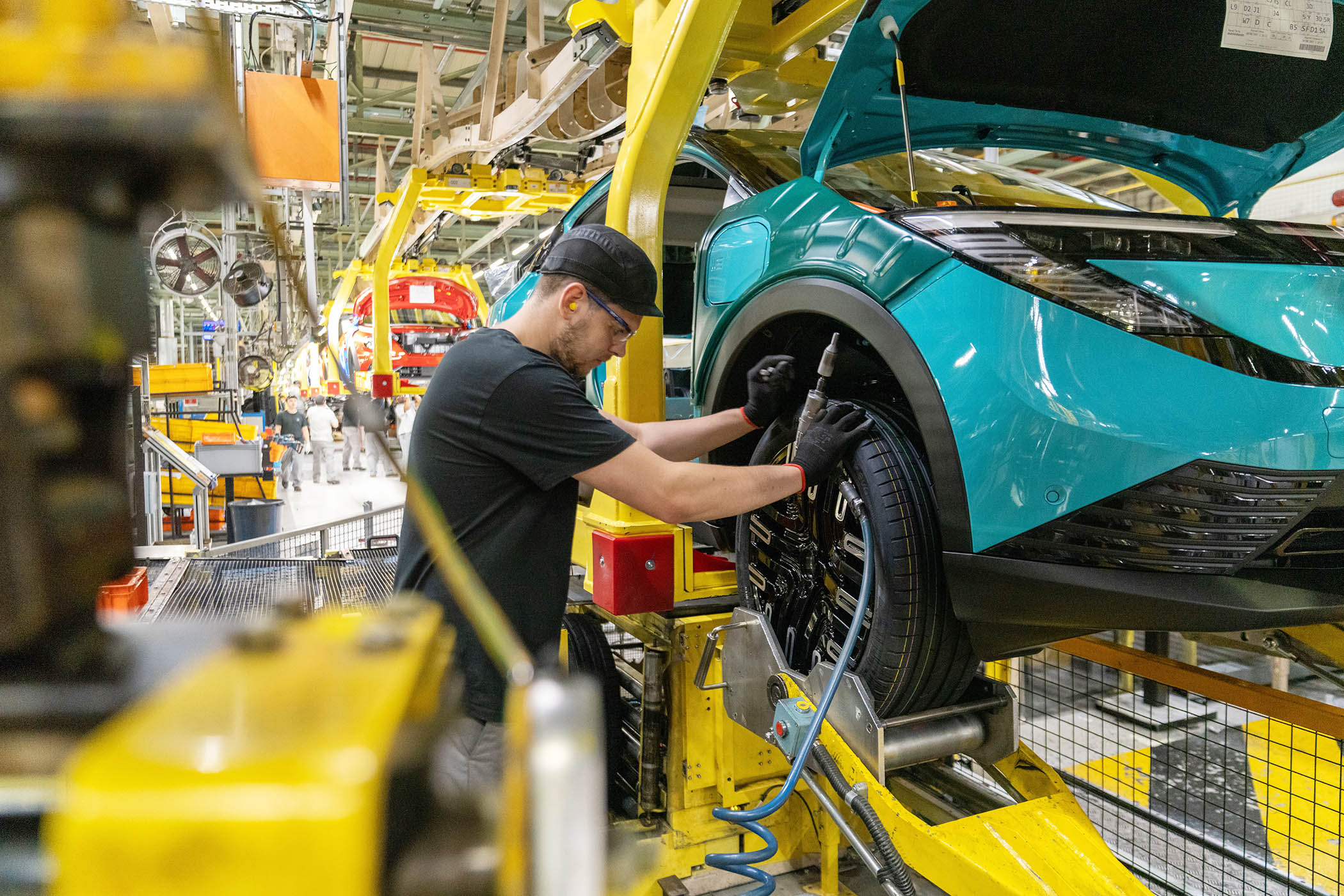


An agreement signed last Wednesday between Nissan and Chinese carmaker Chery is non-binding. But the mere possibility that Chery’s vehicles will soon be assembled in the Japanese carmaker’s Sunderland plant has given much-needed hope to Britain’s car industry.
Fears have been growing that there will be significant jobs cuts – or worse – at what is now the country’s largest carmaking site. Nissan has been struggling for years and is currently undertaking serious cost-cutting consolidation. Chery’s imported cars, especially the Jaecoo 7 plug-in hybrid, are already selling like hot cakes, so producing them here looks like it could be good for both companies, and keep the Sunderland plant working at something close to current levels.
Ever since it opened in 1986, the Sunderland plant has played an outsized role in Britain’s economic narrative. For Margaret Thatcher, who officially opened it while prime minister, it symbolised the possibility of reviving the country’s manufacturing base, with a mixture of uncharacteristically proactive industrial policy and enthusiastic recruiting of foreign competitors who had been outdoing Britain’s domestic incumbents. The Nissan deal kickstarted a wave of foreign direct investment across many industries, from Japan and beyond.
Over the years the plant also became a symbol for how Britain could thrive within the EU, as the most attractive place to anchor a supply chain through which foreign companies could enter the single market. However short the list of Thatcher’s greatest achievements, securing Nissan’s commitment to build the plant ought to be on it.
It was corporate Japan to the rescue then. Now it could be the Chinese state, which is a part-owner of Chery. Hopefully, the current British government, too, will do all it can to turn Chery’s exploration of possibilities into a firm commitment.
Gold surge belies strength of dollar
Gold has overtaken US Treasuries as the top global reserve asset held by central banks. Cue newspaper editorials that suggest central banks have started to “diversify away from the dollar”. Actually, the shift in the composition of reserves probably says more about how strongly gold has been performing than about changes in central bank thinking about US assets.
According to a report this week by the European Central Bank (which was actually focused mostly on the international use of the euro, which hasn’t changed much), at the end of 2025 gold represented 27% of global central bank reserves – gold and foreign currencies held by central banks – and US Treasuries, hitherto the largest slice of these reserves, 22%. A significant shift, taken at face value – although when other US dollar assets are added to Treasuries they together still make up 42% of total reserves.
Face value may not be the best lens, though. Since the end of 2023, gold’s price has soared – up 30% in 2024, and a further 60% in 2025. Most of the growth in gold’s share of reserves is due to the “valuation effect” of these higher prices; collectively central banks have not been selling Treasuries to fund a massive gold-buying spree. Had the gold price stayed where it was at the end of 2023, the value of the physical gold holdings of central banks at the end of 2025 would represent just 16% of reserves and US Treasuries 26%, the ECB points out. There is less diversifying away from the dollar than meets the eye.
The ECB also notes that Tether, the leading stablecoin provider, purchased 100m tonnes of gold in 2025. That seems an awful lot of a very volatile asset to use as backing for a supposedly riskless digital currency product.
Newsletters
Choose the newsletters you want to receive
View more
For information about how The Observer protects your data, read our Privacy Policy
FCA warns clubs not to bet shirts on crypto
Kissing the badge on their shirt, especially after scoring, is a popular way for footballers to show pride in their team. Whether they should feel good about the other stuff adorning their shirt nowadays is another matter. Last Wednesday the Financial Conduct Authority wrote to every Premier League club warning they could face legal action over “questionable” sponsorship deals with cryptocurrency firms not licensed to operate in the UK. (OKX is Manchester City’s “sleeve partner”, for instance.) This follows years of pressure on clubs to remove gambling firms from matchday shirts, to which they have now partially succumbed.
Monetising kits is big business, though all too often the firms willing to pay most to occupy a piece of shirt are flogging things that may be harmful to fans, especially younger ones. The voluntary agreement (struck under threat of government action) by Premier League clubs to remove gambling companies from the front of their shirts starting next season is hardly the strongest of ethical stands: the firms’ logos can still appear on sleeves, training kits and so on. Clubs can also continue to sell these firms’ ad space on stadium signage.
The clubs estimate this will cost them a combined £80m, even though many other companies seemingly stand ready to fill the gap. Crystal Palace has already replaced its gambling shirt-front sponsor with an AI company.
The Netherlands recently banned all sponsorship of professional sports by gambling companies. A similar ban here would hit clubs hard financially. Yet there may be creative alternatives. The Scottish giant Hearts has long featured charities on its shirts, paid for by anonymous wealthy supporters. Premier League teams have plenty of rich fans who might be persuaded to do something similar, and so expand the area of their team’s shirt worth kissing.
Photograph by Matt Walker/Getty Images