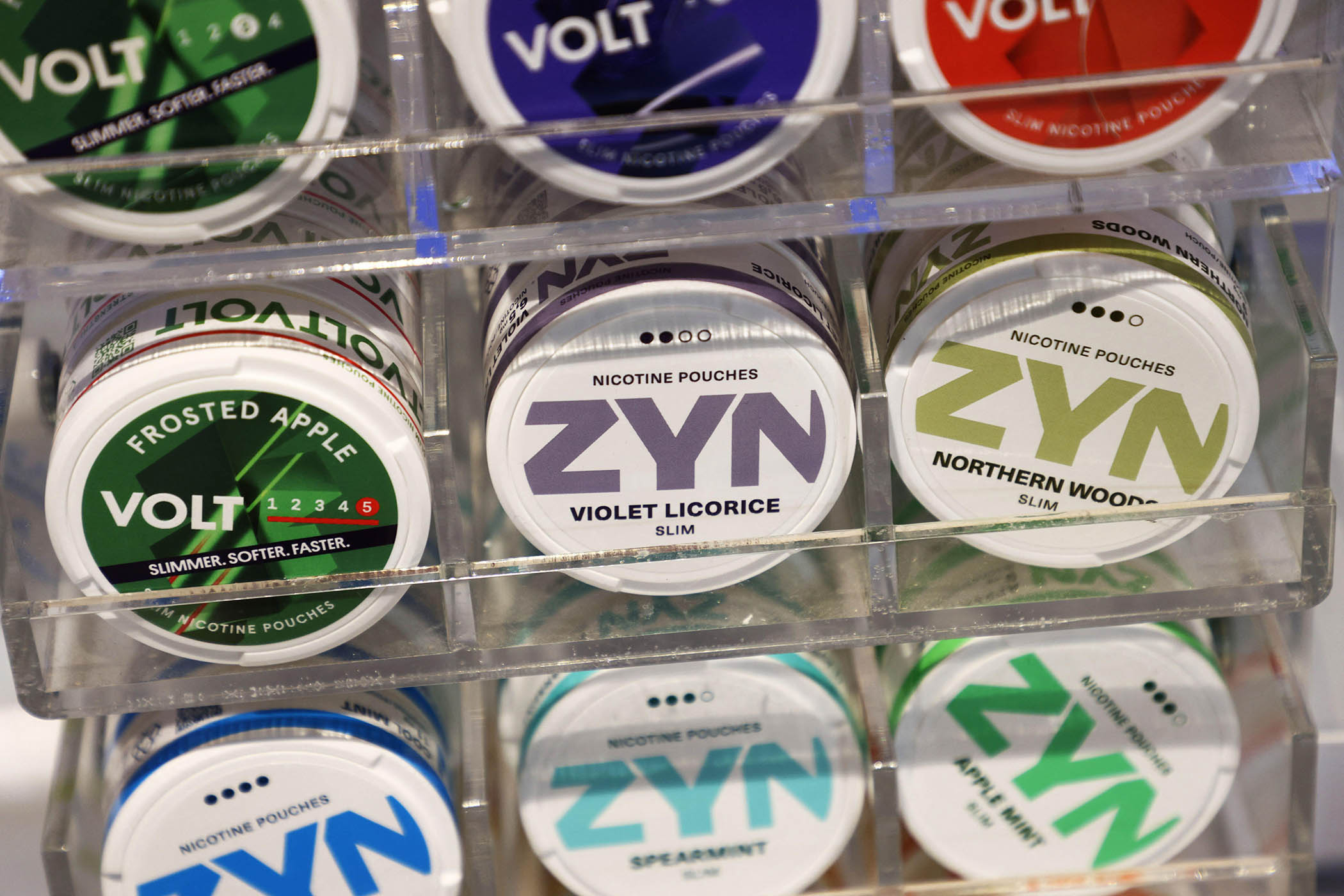



Swedes have been placing snus under their top lips for more than two centuries. A modern-day iteration of the powdered tobacco – white, tobacco-free nicotine pouches – was developed in Sweden in the 2010s as a safer alternative, but restrictions across Europe are threatening a market overhaul.
Earlier this year France imposed strict regulations on nicotine pouches – most recognisable in cans from the brands Zyn and Velo – sparking the Swedish trade minister Benjamin Dousa to accuse his fellow EU member state of “an attack on the Swedish way of living”. He compared the sweeping ban on sales, imports, possession and personal use of pouches to “prohibit[ing] French baguettes or French wine in Sweden” in comments made to the Financial Times.
The European Commission is now preparing a third revision of the Tobacco Products Directive, which could result in tighter controls on nicotine pouches and minimum excise duties.
Tobacco industry watchdog Stop (Stopping Tobacco Organizations and Products) estimates that worldwide sales of nicotine pouches have grown 660% since 2020 and are projected to reach £17bn by 2028. This boom has been catalysed by big tobacco’s aggressive marketing push and investment into pouch brands, along with minimal regulation.
Pouches have become more popular than smoking in Sweden. The national public health agency found that more than 15% adults use nicotine pouches or snus every day, including almost one in five 16- to 29-year-olds. This is hailed as having helped Sweden to reduce daily smoking rates to below 5%. Nicotine pouches are particularly effective in supporting women to quit smoking, according to campaign group Smoke Free Sweden. Critics warn that nicotine pouches are still highly addictive, and point to the risks of excessive nicotine consumption.
Philip Morris International (PMI), one of the world’s major pouch players, acquired Zyn in 2022. Last month Zyn became the first nicotine pouch to win approval from the US Food and Drug Administration to be marketed as reducing the risk of smoking-related diseases, and the US is PMI’s fastest-growing market.
Recent legislation gives the UK government the power to restrict pouch flavours, and an advertising ban comes into effect next year. Critics argue that restrictions could have an adverse impact on public health goals. “The UK says it wants to create a smoke-free generation, and that goal becomes harder to achieve if policymakers make it more difficult for smokers to choose products that eliminate the smoke responsible for almost all smoking-related diseases,” said Delon Human, leader of Smoke Free Sweden and former secretary general of the World Medical Association.
Sweden’s 30-year “live experiment” in driving down smoking should be enough proof of the power of pouches, said Patrick Strömer, secretary general of the Association of Swedish Snus Manufacturers. “I cannot think of any other policy decision where the solution is so simple.”
What are your thoughts on this? Send us a letter to letters@observer.co.uk
Photograph by Jeppe Gustafsson/Alamy
Newsletters
Choose the newsletters you want to receive
View more
For information about how The Observer protects your data, read our Privacy Policy