

Two months ago, Scott Galloway launched a movement. Resist and Unsubscribe is an effort to get consumers to use their economic power to strike a blow against those big companies, mostly in tech, who are too cosy with Donald Trump’s government, by cancelling their subscriptions. But now he has a decision to make. Should he invest in it seriously? Or should he move on to other things, and let the movement “die a slow death”?
“It came out of the gate stronger than I expected,” says Galloway, a prolific American podcaster, author, entrepreneur and academic (sometimes trading as Prof G), who has been living in London for the past four years. In the first few weeks, his media appearances about the movement received 3m to 5m views a week and the website was getting more than 100,000 unique visitors a day, he says. Thousands of people posted screenshots of cancelled accounts: Amazon, Apple, Google, Meta, Microsoft, Open AI, Paramount, Uber and X, as well as eight more consumer-facing companies (from AT&T to UPS) which Galloway has called out as “active enablers of ICE”, the controversial US Immigration Enforcement Agency.
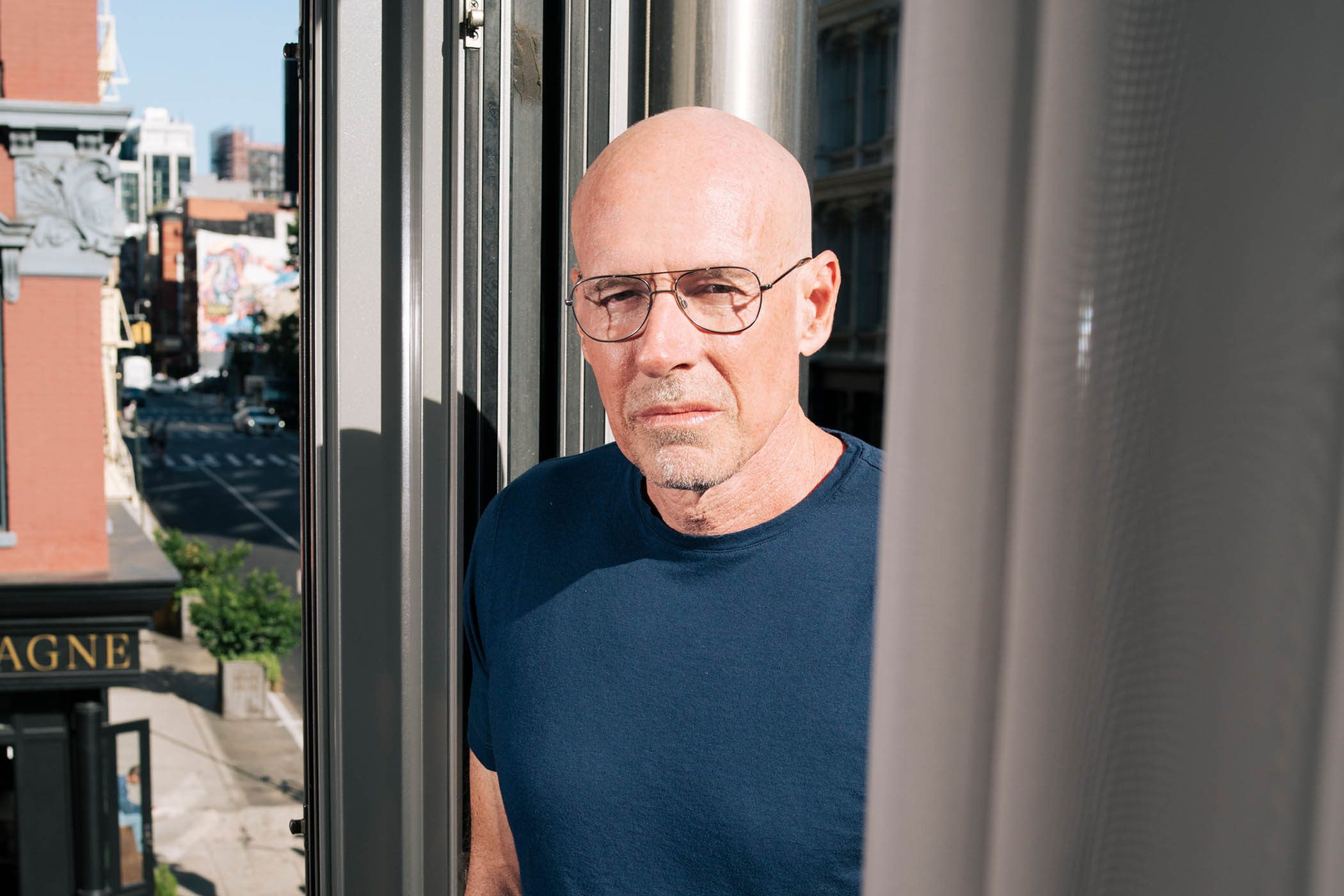
A wiry, shaven-headed 60-something, Galloway’s blunt, often expletive-laden opinions, typically backed up by a mountain of data, have won him considerable influence. His super fans tend to be centrist and left-leaning Americans who like business in general (and often make money from Galloway’s often contrarian investment tips), but detest some specific kinds of corporate behaviour – most recently, the implicit or active support by leading US companies of some of President Trump’s most divisive actions.
Initially, “it was gonna be a one-month thing”, says Galloway, but then he realised that to have real impact an “economic strike has to be sustained, or else it is just an annoyance or symbolic”. That was certainly true of the two examples of consumer boycotts he cites most often, the Montgomery bus strike that helped ignite America’s civil rights movement, and the campaign that helped end South Africa’s apartheid regime.
He concedes he may have made some rookie errors as he diversified into movement building. “I’m very good at getting media. I understand economics. I think I’m creative in terms of the idea. What I’m not good at is organising and collaborating with other like-minded organisations. It’s not my strength.” That said, he has recently started to work with some established protest groups that reached out to him, and the QuitGPT campaign. The challenge is not financial, he says. “I have the money. It’s talented people to run the organisation. There’s no shortage of people who want to advise, but I’m having trouble finding really good people who actually want to do the work.”
Has it been a success so far? Galloway started out with two goals: educate the American public that their spending could be a powerful weapon, and change the behaviour of CEOs by showing “there’s a downside to bending the knee”.
He feels good about raising awareness of the potential power of individuals moving their money away from firms. Small actions can collectively do real damage (he likens them to the emergence of low-cost drone swarms in modern warfare), but the $288m of lost market cap he claims has been scalped from targeted firms seems tiny compared with their valuations in the trillions, in several cases. In truth, he has done better at raising awareness than driving mass action.
As for CEOs, he has “heard from a number who heard of it and wanted to understand it, or why I was doing it. But what I’ve heard from inside the companies is that it’s a conversation among product management teams, but not in senior management meetings.” Some have also cancelled his appearances at their corporate events. Actual traction in the C-Suite would be a reason to invest in growing the movement and Galloway remains convinced that a big economic opportunity awaits CEOs who stand up to Trump: “There are so many people so upset and angry at what’s going on, that if they see a CEO taking a stand, I think they would reward them with exceptional consumer loyalty and spending.”
Dario Amodei, the CEO of Anthropic, could be the poster child for this, having stood up to the Pentagon by limiting the military circumstances in which it can deploy its AI. Since then, consumers have rushed to subscribe, while secondary markets for OpenAI shares are looking unloved.
“All of a sudden, Anthropic is just crushing OpenAI in terms of incremental spend,” says Galloway, “in the past three months going from 40:60 Anthropic to OpenAI to 70:30.” Still, Galloway does concede that the strategy can be risky. Anthropic is now suing the US government to stop it designating the company a “supply chain risk”, which if allowed would cost it many billions of dollars. “I empathise with the typical CEO's position, that nobody wants to go first. We probably have to get a group of them to act together, because if just one raises their hands and identifies himself as going up against the Trump administration, it’s a risk.”
Newsletters
Choose the newsletters you want to receive
View more
For information about how The Observer protects your data, read our Privacy Policy
And, of course, they get handsomely rewarded for keeping their heads down, Galloway points out. The typical big company CEO’s compensation “is basically the following: don’t fuck up and you’ll make tens of millions of dollars. So why would they want to take this type of risk?” Especially, it might be added, as the length of tenure of CEOs has been falling anyway, so what might strike the typical CEO as unnecessary risk taking may be particularly unappealing.
Clearly, one of the factors driving Galloway’s growing activism is a belief that his generation has lived through an economic golden age and now needs to share its good fortune with the generations that follow. He, like many of today's big company CEOs, was born in the 1960s, which he sees as “winning the galactic lottery”; a demographic with “somewhere between 15x and 20x the prosperity of someone born somewhere else in different circumstances. So we have a debt, right?”
Galloway told the Financial Times last year that his own net worth was around $150m; his speaking fees can hit $4m a year and his portfolio of activities generates revenues of around $20m a year, with profit margins above 50%.
While critical of the nastier elements of the manosphere now thriving on the political right, Galloway recently caused a furore due to controversial remarks questioning the value of paternity leave and saying fathers have no place in the delivery room. On one podcast episode, he remarked that fathers are “a waste of time or space” during the first few months of a child’s life. Whatever he thinks about early fatherhood, he professes strong concern for the challenges facing today’s boys and young men. This was the focus of his most recent book, Notes on Being a Man. The solutions are not easily implemented: he is a fan of mandatory national service (broadly defined, not just military), as well as tackling the age biases of a tax and spending system that, in the US, currently gives six times the amount of government support to the baby boomers, than to the “most anxious, depressed and obese generations in history, millennials and gen Z”.
He is also working to identify and support promising Democrat candidates for national office. This is all part of an effort “to get very involved and use my platform, some of my capital and a lot of my time to try and push back against what I'll call low-rent fascism without the charm”.
He will do this while continuing to live in London, about which he says he has “suddenly become very optimistic, although perhaps for the wrong reasons”. Human and financial capital was leaking out of the UK to either the Gulf or the United States. But now, Galloway sees “a lot of Americans moving here” and, as for the Gulf, the Iran war is “going to have a huge impact on the UK”.
He thinks there are thousands, perhaps tens of thousands, of families considering moving (back) to London. “This is going to sound sexist, and it is, but you’re if you're the wife of the head of private equity for the Middle East, living in Dubai, a guy who was educated in the US and maybe moved there from London, if you see an incoming projectile, you are moving out of Dubai.”
He expects London to benefit from this disproportionately, as although it can “feel a bit mediocre, at least it’s relatively sane – there are real issues here, but there’s no argument over assault rifles, there’s no mass secret police here and, so far, there have been no incoming projectiles”. He believes now is the ideal time to invest and has just shelved plans to sell his London home. “I think real estate in London is going to boom in the next two, three years, and there’s going to be a big return.”
Photograph by Peter Fisher / New York Times / Redux / eyevine