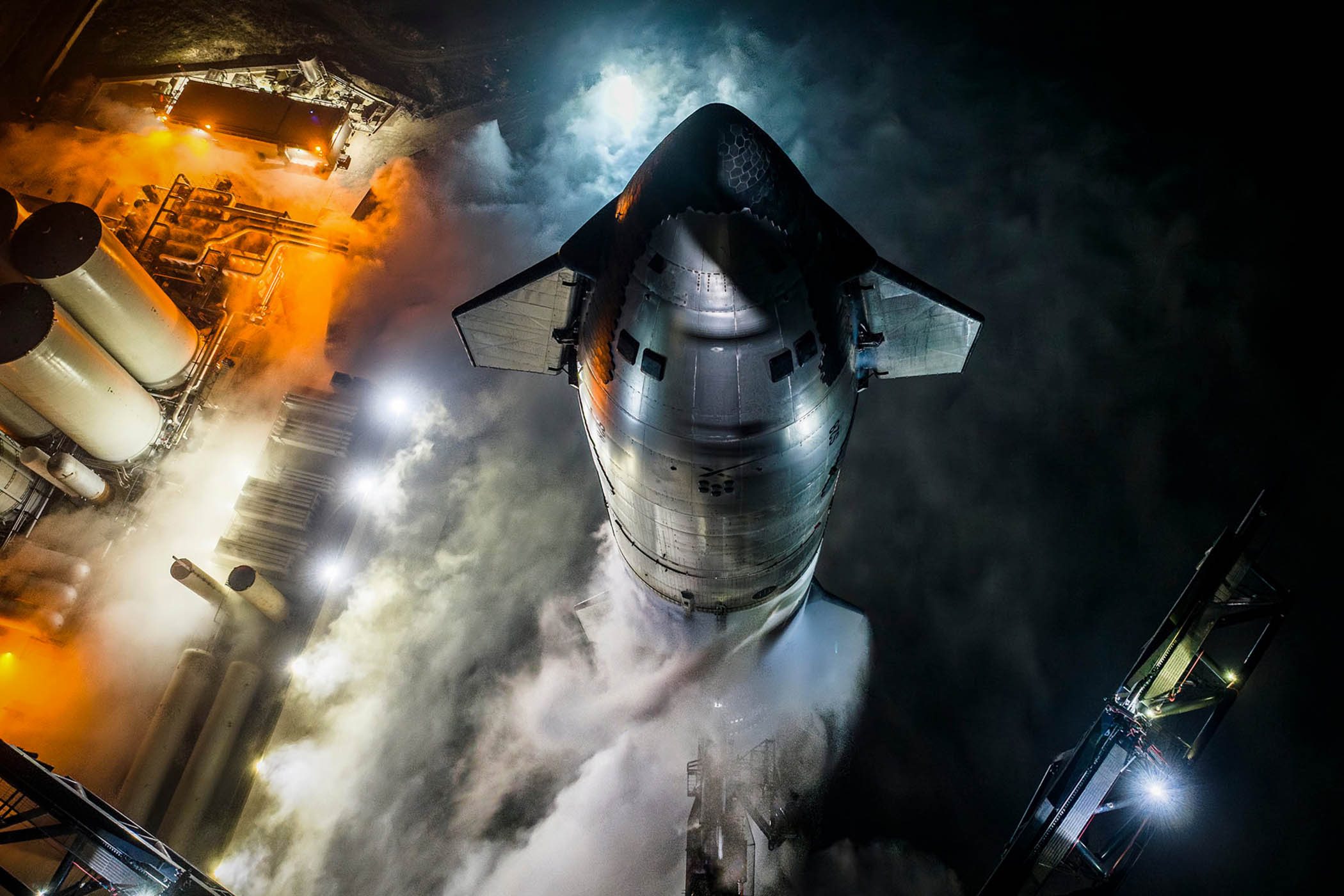


Early next month, SpaceX will attempt the latest launch of Starship, the rocket designed to carry Elon Musk’s ambitions to Mars. Taller than the Statue of Liberty, the vehicle sits at the heart of his most valuable company – and of the most closely watched prospective stock market debut in Silicon Valley.
SpaceX is expected to go public within the coming year at a reported valuation of $1.5tn, which would make it the largest IPO in history. Last week, Musk moved to merge the company with his artificial intelligence venture, xAI, placing the rocket maker at the centre of what investors are beginning to treat as a single “Muskverse”.
AI’s growth into infinity is in doubt. The sector remains ‘long on dreams and short on details’
AI’s growth into infinity is in doubt. The sector remains ‘long on dreams and short on details’
The listing will be the ultimate test of moonshot capitalism, and of whether SpaceX’s revenues are enough to sustain a valuation built on expectations of a much larger scale.
But jitters in recent days have offered a glimpse of what happens when investor faith falters. After big tech firms unveiled plans to invest a collective $660bn in AI infrastructure in their earnings reports, investors recoiled at spending on such a scale.
The resulting sell-off swept through the technology sector and spilled into crypto and other risk assets. Bitcoin fell as low as $60,000 on Friday, its lowest since Donald Trump, who has championed the cryptocurrency, took office for the second time.
The markets began to recover on Friday morning, but shares in Amazon fell about 9% after it outlined $200bn of capital expenditure for 2026 – well above analysts’ expectations – reviving anxieties that the industry is building expensive infrastructure faster than it can prove the returns.
The sell-off capped the most turbulent week for technology stocks since Trump’s “liberation day” tariffs sent markets reeling. But unlike that episode, this was not driven by a single political shock. Instead, as analyst Mike Zigmont of Visdom Investment Group put it, market skittishness reflected an “amorphous concern about the future”.
Investors are afraid that AI will never live up to the lofty promises of big tech executives. And when doubt takes hold in a concentrated part of the market, such as technology, Zigmont said, it prompts investors to trim exposure across their portfolios. As a result, even assets with little direct link to AI have been caught up in this week’s downturn.
That caution came despite underlying results being, by most measures, strong, said Marija Veitmane, an analyst at State Street Global Markets. Alphabet reported revenue and profit above forecasts, while Amazon’s cloud computing division grew by about 24% year on year, its fastest pace in more than a year. Many of the companies reporting earnings this week, including Amazon and Meta, can afford heavy AI investment, the analyst said, even if returns eventually disappoint, because they have enough capital to cover any losses.
While AI company valuations may have been stretched as earnings season approached, Veitmane believes the sell-off has gone too far. She describes it as “overly aggressive”.
Newsletters
Choose the newsletters you want to receive
View more
For information about how The Observer protects your data, read our Privacy Policy
In the end, however, markets are driven by belief. And for all the promises surrounding artificial intelligence, its “growth into infinity is being doubted”, Zigmont says. For now, he adds, much of the sector remains “long on dreams and short on details”.
In the Muskverse, xAI has been burning through a reported $1bn a month as it builds vast computing capacity. Its merger with SpaceX, which according to Reuters generated $8bn in profits last year, makes sense, according to Jan-Erik Asplund of Sacra. For xAI backers, he argues, it offers a “near-term path… to get a decent return” by converting their stakes into shares of SpaceX.
“I’m happy. I think it’s great for me,” said xAI investor Ross Gerber. “But the SpaceX investors may not be as happy.” Musk has said he will use SpaceX’s Starship rocket to support orbital infrastructure, including, eventually, space-based data centres powered by solar energy. He has also floated the idea of closer integration with his electric vehicle company, Tesla, creating a loosely connected technology empire.
Asplund said some SpaceX investors may feel “hard done by” if a profitable company is now underwriting xAI’s massive R&D costs. But he suspects they will be cushioned by the Musk effect. “Across every Elon company, there’s a premium,” he said. “There’s a sort of aura, a public market enthusiasm.”
In a market that is uneasy about AI’s returns, it is a reminder that some founders can command a premium based on belief alone.
Photograph by SpaceX