

These days the principal economic policy obsession is with growth, or the lack of it. In years gone by it was with employment, or, rather, unemployment.
Last week, the level of unemployment in the UK reached 5%, with joblessness especially prominent among the young.
This is dreadful news. No wonder the Bank of England felt it necessary to lower interest rates. There was once an economist, Frank Paish of the London School of Economics, who was considered a pariah by many members of the profession for advocating that policymakers should aim at an unemployment rate of 2.5% in order to contain inflationary pressures.
Those were the days, the 1950s and 1960s, when policymakers were more confident about controlling, or at least influencing, the economy than they seem to be now.
Which brings us back to the quest for growth, a revival of which is needed if unemployment is to be brought down to a less socially damaging level. Paish’s 2.5% would these days seem not outrageous but highly desirable.
Obviously, the after-effects of the pandemic have contributed to the recent rise in unemployment. So has the continuing impact of Chancellor Osborne’s austerity programme from 2010 onwards. More recently, there has been the blow to business and consumer confidence from the inept way in which Chancellor Reeves approached the seemingly endless build-up to her second budget.
But we cannot get away from the fact that, in Lord Kinnock’s so apt metaphor, the “mammoth in the broom cupboard” is Brexit.
Recently, a more accurate picture has emerged, both at the macro and the micro level, of the disruption, time wasting and lost opportunities experienced by individual firms, traders and ordinary citizens. The conclusion of one study from an American university is that output in the economy is about 6-8% below what it would have been without Brexit.
We cannot get away from Lord Kinnock’s so apt metaphor, the ‘mammoth in the broom cupboard’ is Brexit
We cannot get away from Lord Kinnock’s so apt metaphor, the ‘mammoth in the broom cupboard’ is Brexit
And there is more disruption to come, when delayed Brexit arrangements threaten to make what was routine travel for ordinary citizens to the continent into a nightmare from the end of next year.
Although he was once a champion of rejoining the European Union (or at least the customs union and single market), Prime Minister Starmer appears sadly lost in the headlights, when even once passionate Brexiters now regard the event as “a catastrophe”.
Newsletters
Choose the newsletters you want to receive
View more
For information about how The Observer protects your data, read our Privacy Policy
Starmer’s biographer, Tom Baldwin, has suggested that, at a time when some cabinet ministers are reportedly “on manoeuvres” and jockeying for position to challenge an unpopular PM, it could be to their advantage to advocate rejoining the customs union.
Why? The opinion polls now indicate that a majority of the electorate, including hitherto Brexiters, are in favour of rejoining. By contrast, Starmer and his team (but not deputy prime minister David Lammy) go on about the customs union and single market being “red lines”not to be crossed.
Their feeble substitute is the so-called “Brexit reset”.
Even this, exiguous though it is, is conducted on unfavourable terms. It is certainly good that the Erasmus scheme for the young to travel and study on the continent is once again being reinstated, but just as with the fishing agreement a few months ago, the terms are more advantageous to the EU.
This, of course, goes back to the blatantly obvious, known to pro-Europeans for decades, that we are stronger as part of the EU than isolated. Which brings me to a recent point made by former Chancellor Osborne in a conversation at the Wincott Foundation.
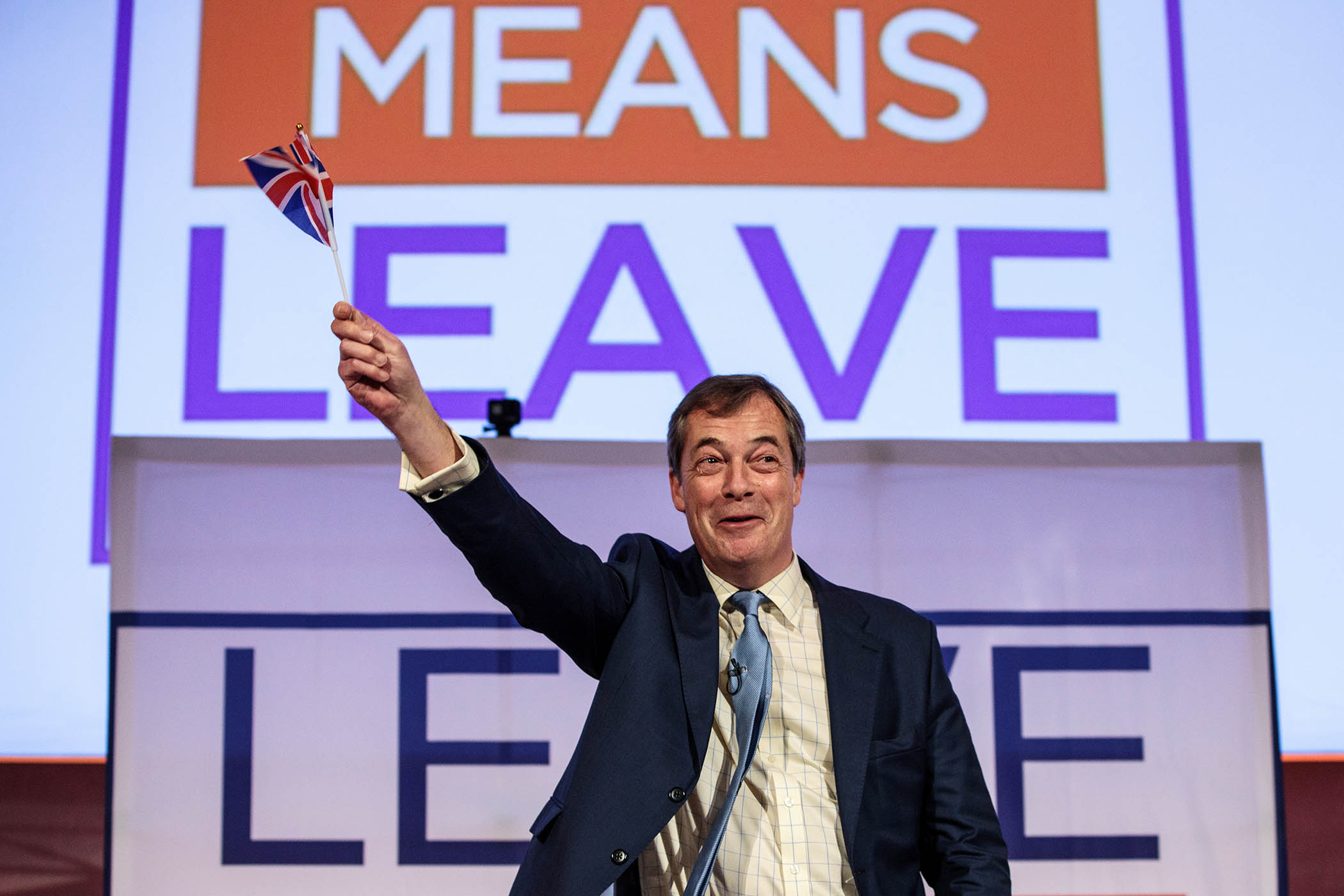
Asked whether he would like to rejoin the customs union, he replied: “I would have thought as a Labour government… you do it, and then get to the general election. OK, Farage will say what he says, but what are the Tories going to say? Vote Tory and we’re coming out of the customs union again? There won’t be a single business in the country that says, by the way, can we have a Conservative government? So even in terms of political strategy, it works for Labour.”
Over to Sir Keir!
Photograph by Andrea Ronchini/NurPhoto via Getty Images