
Before it became synonymous with tax breaks for billionaires and banks, the Channel Island of Jersey was mostly known in the UK for its milk, tomatoes and potatoes.
Now there’s a new crop on the scene: cannabis.
“Our revenue last year was £10m,” said Steven Tan, the CEO of cannabis grower Northern Leaf. “I am already doing a quarter of the entire potato industry – and I am doing it on less than 2% of the land.”
The island stopped shipping tomatoes overseas in 2008, and between 2018 and 2022 the value of all agricultural exports declined by 11%. The largest agricultural export is still jersey royals – up to 20,000 tonnes bringing in around £40m annually – but potatoes too face a downward trend. Cannabis lobbyists say the crop could be the answer to the island’s problems.
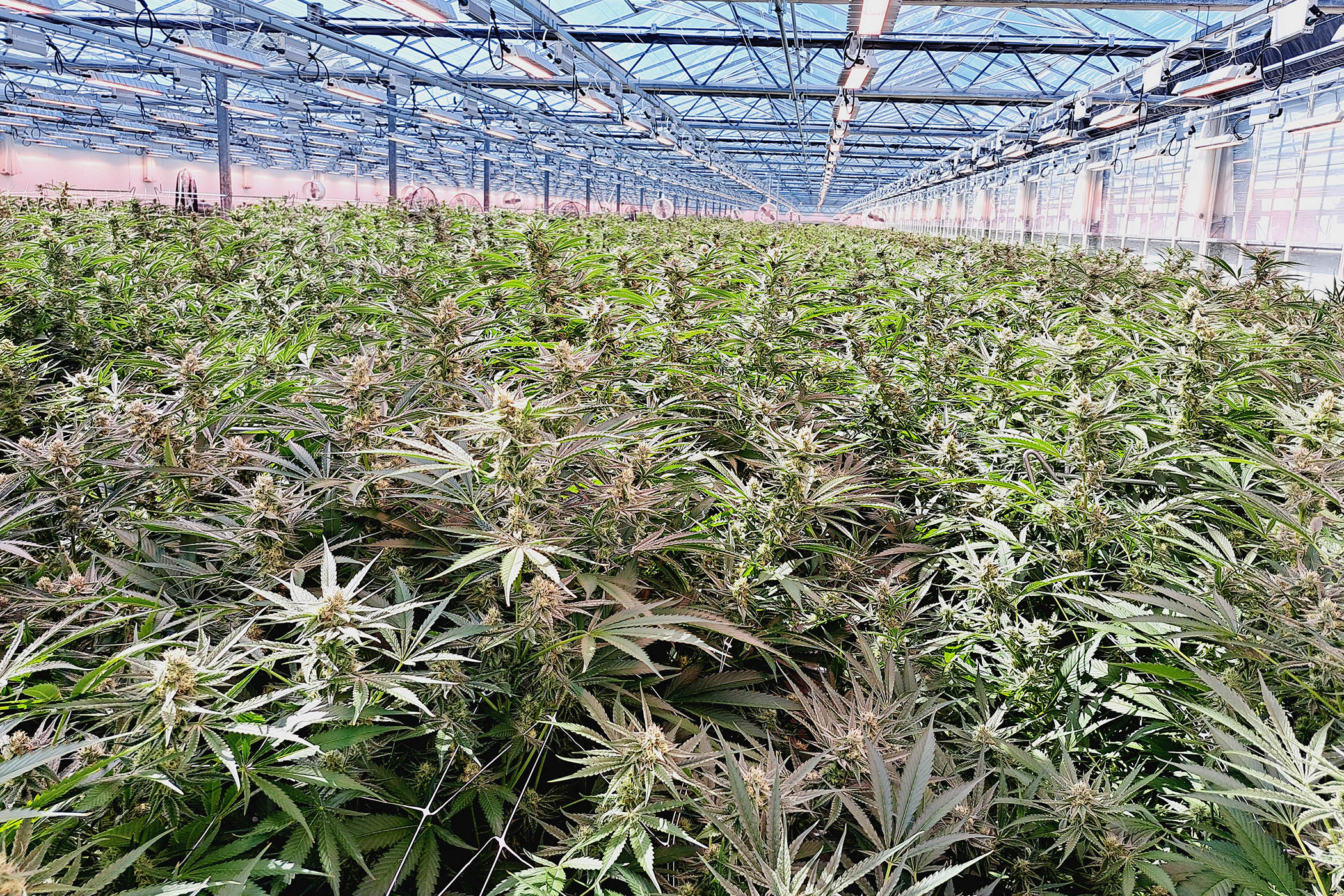
Based at a 100,000 sq ft former tomato farm in the parish of St Lawrence, Northern Leaf is responsible for 90% of the cannabis grown on Jersey and is capable of producing 10 tonnes of dried flower annually. All of the product is bagged and shipped to Europe, where Northern Leaf expects the medical marijuana market to be worth €1.5bn (£1.3bn) by the end of the decade.
A British crown dependency, Jersey has its own government and makes laws independently of the UK. In 2019 it voted to legalise medical marijuana, with chief minister Lyndon Farnham predicting that Jersey could become a “centre of excellence” for medical marijuana production.
‘Jersey has the magic mix: legal, political, demographic, population, geographical location and relationship with the UK’
‘Jersey has the magic mix: legal, political, demographic, population, geographical location and relationship with the UK’
Sarah Clover, Jersey Biopharma Council
Growers such as Northern Leaf set up shop in the glasshouses once used for tomatoes. Although the industry initially struggled, it last year turned a profit for the first time, generating more than £12m and attracting nearly £50m in investment. The marijuana companies are able to take advantage of the island’s low taxes (20%) and government support, as well as the existing farming infrastructure and established workforce.
“Jersey has got the magic mix: legal, political, demographic, population, geographical location and relationship with the UK,” said Sarah Clover, chair of industry lobby group the Jersey Biopharma Council. “It is perfect for this particular industry, and I think people are waking up to that.”
She added that some on the island hope to expand the industry beyond cannabis to include psychedelics such as psilocybin, or magic mushrooms.
“They’ve got huge ambitions,” Clover said. “They want a global biopharmaceutical hub with the reputational cachet of the jersey royal or the jersey cow.”
Newsletters
Choose the newsletters you want to receive
View more
For information about how The Observer protects your data, read our Privacy Policy
Under its 2020 memorandum of understanding (MoU) with the Home Office, Jersey growers can export marijuana under licence – the same as in the UK – but British government representatives make annual visits to the island to check that Northern Leaf’s site is secure. “It is very controlled: I know where every gram is going from now until 31 December,” Tan said.
The Home Office’s concern is that cannabis grown for the medical marijuana market ends up in the hands of criminals. So security is tight – and anything that is not sold by Northern Leaf is destroyed. “I threw away 300kg last year. That is a million bucks’ worth of stuff,” Tan said.
But Jersey is a small, conservative community and not everyone is in favour of its growing reputation in the cannabis industry – or the potential of a move into psychedelics.
Since 2019, more than 20 private clinics have opened on the island and 6% of its 104,500 population is prescribed cannabis (the comparative figure for Germany is about 0.3%). In 2024, a bill to decriminalise recreational marijuana was defeated in the island’s parliament by a single vote. A second attempt, in late 2025, was shelved until after Jersey’s elections in June.
The island’s health minister revealed in its parliament in February that cannabis was a “contributing factor” in 22% of admissions to the island’s mental health ward in 2025.
“We know that it is causing psychosis. We know that prescriptions have doubled since 2022,” said Karen Wilson, a local politician and health minister from 2022 to 2024. She is also concerned about powerful lobbying from within the industry.
“Sophisticated marketing techniques are being used to convince people that cannabis is a wonder drug. I’ve never seen a pharmaceutical product marketed like this,” she said. “I think we’ve completely lost the plot.”