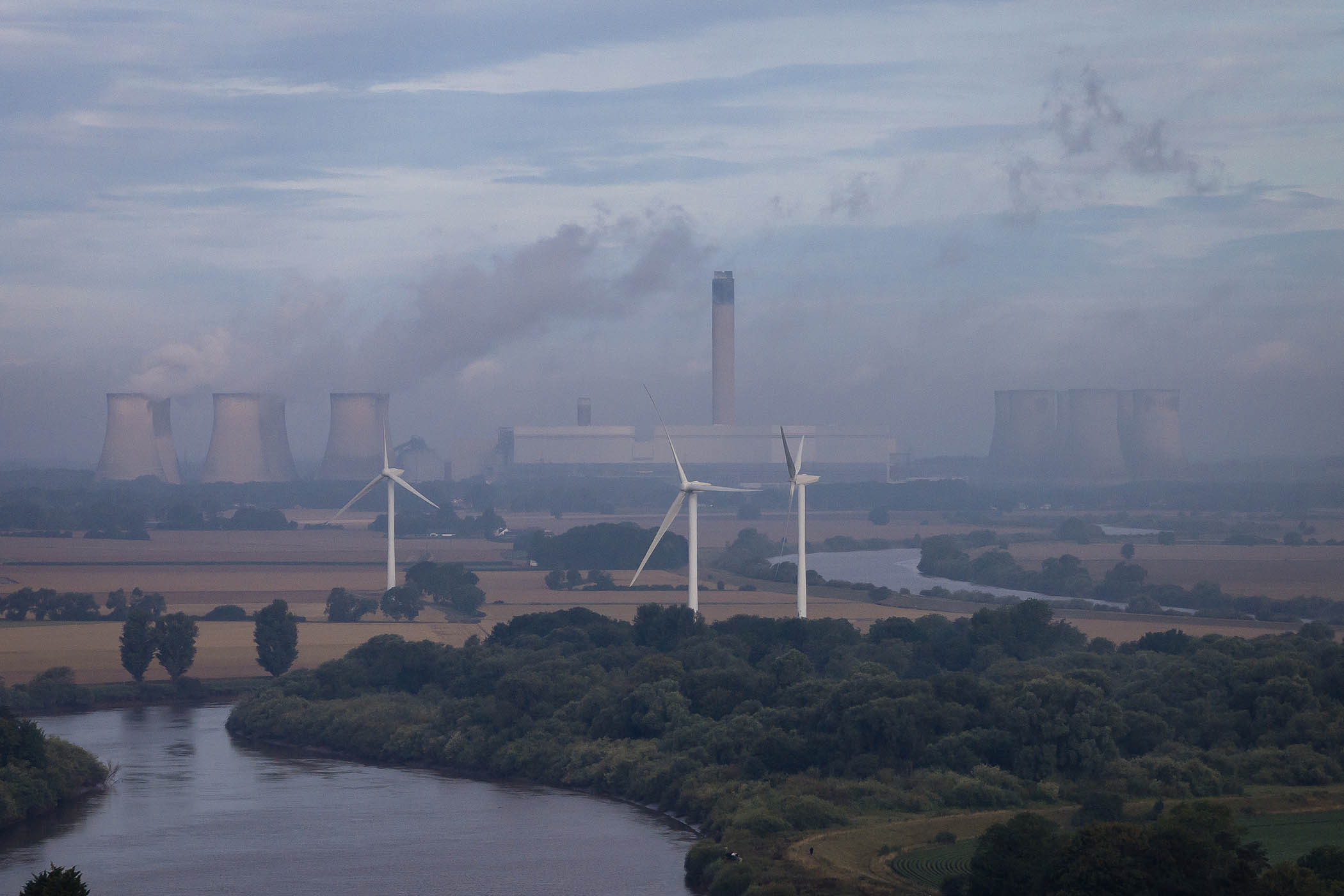



The government has set growth as its defining mission. Even as it has pivoted to tackling cost of living pressures in the near term. It has argued that a “greener economy” is central to growth. That reducing the UK’s reliance on fossil fuels and boosting sustainable energy sources – wind, solar and water – will boost jobs and prosperity.
The Greens’ byelection victory last week in Gorton and Denton has given the agenda new impetus. But the path to growth through greening is not a smooth one, and strategic decision-making on the part of the government will be critical to success.
Arguably, renewables is the area of its domestic agenda where the government has been most energetic: the de facto ban on offshore wind has ended, and there have been myriad approvals for new wind and solar farms.
Examples are the Tillbridge solar farm in Lincolnshire, the largest solar project in the UK, and Berwick Bank offshore windfarm in the outer Firth of Forth, Scotland, set to be one of the biggest of its kind in the world.
However, determined action from the government will be needed to upgrade the grid, ensure fossil fuels are not switched off before renewables come on stream and to design a system for funding the transition that is fair – and seen to be fair.
Since 2019, the UK has had in place a legal mandate to reach net zero by 2050. Today, 47% of the UK's electricity comes from renewable sources, compared with 34% before Russia’s full-scale invasion of Ukraine.
Under its clean power plan, the government is aiming for 95% of electricity to come from low carbon sources by 2030. And the 950,000 people today employed (directly and indirectly) by the renewable industry already dwarfs the 200,000 employed in the domestic oil and gas industry.
The independent Climate Change Committee estimates that 12% of jobs are in sectors likely to expand as a result of net zero; building construction and retrofit, and battery manufacturing.
Another 7% are in sectors that will need some change to the way they operate; energy-intensive industries such as the chemicals manufacturing, cement production and steelmaking.
Less than 1% are in sectors that will be contracting; coal or oil and gas production.
Newsletters
Choose the newsletters you want to receive
View more
For information about how The Observer protects your data, read our Privacy Policy
All that said, will the greening of the economy actually be good for growth, living standards and jobs?
At one extreme, not mitigating the effects of the climate crisis would, in the long term, be catastrophic for the environment, and therefore for the economy and for jobs. However, in the near term, shifting to renewables does not automatically boost jobs and growth.
At a basic level, a move to renewables is simply swapping out one energy source for another in ways that require more resources. Consumers are paying twice over; to develop renewables and to maintain the old gas power stations.
For a green project to be “good”, it needs to reduce energy use, boost reliability, spur technological innovation and bring idle resources into productive use.
Take wind and solar. Both are capital intensive; they employ fewer people for the same amount of energy produced as conventional power, making them more efficient. Wind and solar are about 40% cheaper than the cost of gas for the same unit of energy.
But being weather-dependent, solar and wind are not an “always on” energy source. Battery storage life – capturing energy from sun and wind for later use – is advancing but is not yet a complete solution.
Battery production also carries heavy environmental costs, with the extraction of key raw materials such as lithium being highly water-intensive. Plus, renewable jobs are not springing up in the same places as oil and gas jobs are being lost - and they require higher and different skills.
Getting the transition right is crucial. First, investments in the grid, which connects electricity to homes and businesses, need to keep pace with the growth in renewables. Conventional energy should only be retired once new capacity and the infrastructure to support it are in place.
Here, the UK and much of Europe have a mixed record. The government has recognised this, prioritising “shovel ready” projects that would deliver energy sufficient to power 132m homes for connection between now and 2030.
Second, special attention needs to be given to industries that are intensive users of energy for which transition costs hit hardest. Without it, these industries are at risk of upping sticks abroad, taking their emissions – but also their jobs – with them.
This is the position of the chemicals industry in the UK and Europe, which has lost ground competitively to Asia and the US. Some support is now slated for these companies in April in the form of a discounted rate for accessing the grid.
Third, people need to be trained in new skills; digital, engineering and in AI as an inevitable disruptor. This effort needs to concentrate on fossil fuel-reliant areas such as Aberdeen and north-east Scotland to prevent these communities becoming “left behind”.
More generally, the UK needs to make the right decision about which green technologies to specialise in and which to buy in. We already lead the world in offshore wind and in tidal-stream energy and should double down on these. On the other hand, it is hard to see how the UK – indeed, any country – can compete with China on solar technology, given the scale of its past investments.
The UK is making a big bet that renewables will drive higher growth and living standards. The bet will pay off if the government gets the transition right: investing in the grid, improving skills, and supporting communities and industries heavily reliant on fossil fuels.
Sharon White is the former head of the John Lewis Partnership and chair of Frontier Economics
Photograph by Dan Kitwood/Getty Images