

I’ve been called “Paki”, “wog” and “nigger” more times than I care to remember. Back in the day, I would have decked anyone who spoke to me like that. These days such slurs come mostly from anonymous online trolls.
I have used these words myself, not to express racism but to challenge it – for instance, in telling the history of “Paki-bashing” in this country, a history about which many people are ignorant, or in describing the racist reality that generations of African Americans have had to endure. The meaning of even grotesquely foul words depends on context. Words do not create their own definitions. Rather, meaning is imparted through usage, partly by who says what to whom and with what intent.
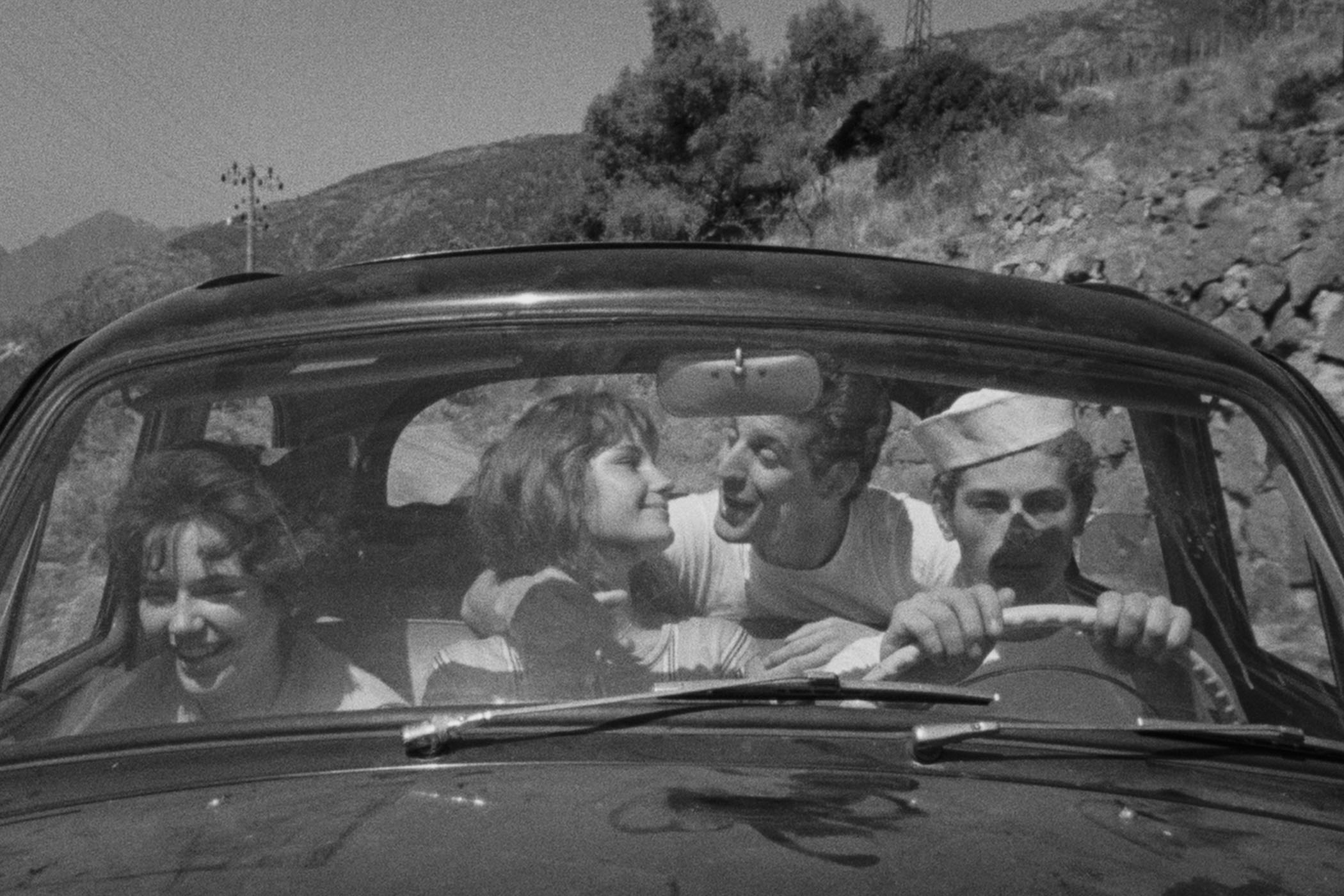
Which brings us to the furore over the racial slur shouted out to Delroy Lindo and Michael B Jordan by John Davidson during the Bafta awards. Davidson has coprolalia, a particularly distressing form of Tourette syndrome that causes involuntary swearing, often highly offensive and inappropriate, and frequently using words considered taboo. People with the condition have no control over their tics. I Swear, a film about Davidson’s life and his struggle to find some social acceptance, was a centrepiece of the evening, winning the best actor award for Robert Aramayo.
The incident involving the racial slur, broadcast by the BBC, generated a huge global backlash. For the American writer Jemele Hill, it revealed how: “Black people are just supposed to be ok with being disrespected and dehumanized so that other people don’t feel bad”. Economics professor Richard D Wolff saw it as exposing, “How deeply racism penetrated into British culture during centuries of Britain's colonial oppression of ‘others’”. While most of the criticism came from America, British commentators also joined in, denouncing Davidson as “a racist white man with Tourettes syndrome [sic]. FACT,” and observing that “subjecting Jordan and Lindo to racial trauma… is UNACCEPTABLE”.
There is some confusion about what BAFTA guests and presenters were told. The audience was informed on the night about Davidson’s coprolalia, although apparently not very clearly. Lindo and Jordan seemed surprised by Davidson’s interjection but handled it with grace.
“Mortified” by his outburst – one of several that night – Davidson questioned why a microphone had been placed close to his seat. He also told Variety that Bafta (and presumably the BBC which was responsible for editing the show) had agreed to edit out of the broadcast any swearing or inappropriate comments. It seems that both organisations wanted to be seen as open-minded and inclusive but did not take seriously enough the need to ensure that inclusion was a concrete reality rather than a rhetorical aspiration.
Whatever the shortcomings of Bafta and the BBC, the debate that followed has been deeply dispiriting. Many have called for the segregation of people with TS, or for them to be barred from such events. “If your Tourette’s makes you say the n-word I think you should just not go to a ceremony,” as one critic put it. Activists from communities that have had to confront brutal forms of segregation and denial of entry into public spaces are now demanding that others face exclusion, too.
The misplaced criticism arises partly from a failure to understand the realities of coprolalia. It arises, too, from the ways in which we now think about racism and diversity.
The meaning of even grotesquely foul words depends on context
The meaning of even grotesquely foul words depends on context
The inability to understand context is very much on show here: the insistence that if something is bad in one context, it must be bad in the same way in all contexts. To maintain that Davidson’s involuntary tics are racist – to blur the distinction between a neurological spasm and the conscious, bigoted use of slurs to dehumanise black people – is to diminish the meaning of racism.
Much of the discussion also reveals an inability to see any interaction between white and black individuals except through the prism of race, combined with a tendency to view racism solely through the lens of whiteness. “I will never put white comfort over Black respect,” claimed one activist in a viral tweet.
Newsletters
Choose the newsletters you want to receive
View more
For information about how The Observer protects your data, read our Privacy Policy
For Davidson, a man who has had to struggle for acceptance far more than most of his critics and who has faced great disrespect, his whiteness may be the least important aspect of his being. Yet many found it difficult to see beyond his skin colour or to recognise that treating him with dignity was a matter not of “comfort” but of offering someone who has been ostracised all his life humanity and, yes, respect.
Even worse was the treatment of black sufferers from coprolalia, many of whom bravely sprang to Davidson’s defence, only to be then told that “It is not your job to defend white people from accusation of Racism. You can always be quiet” , as if only black people with “correct” views should have a voice.
The Bafta episode reveals the limits of many people’s imagining of diversity. To say to people with TS, in light of Davidson’s outburst, that “Your inclusion should not come at the expense of Black people’s humanity”, is to suggest that they should face permanent exclusion – that one group’s humanity must come at the expense of another’s. It is to turn the demand for respect into a form of entitlement.
In embracing diversity, we acknowledge the world as a messy place, full of contradictions and conflicts. We accept, too, the need for a little give and compassion in making space for each other. That so many find this difficult reveals the continuing necessity of a film like I Swear and of a campaigner like John Davidson.
Photograph by Iona Wolff/BAFTA/Getty Images