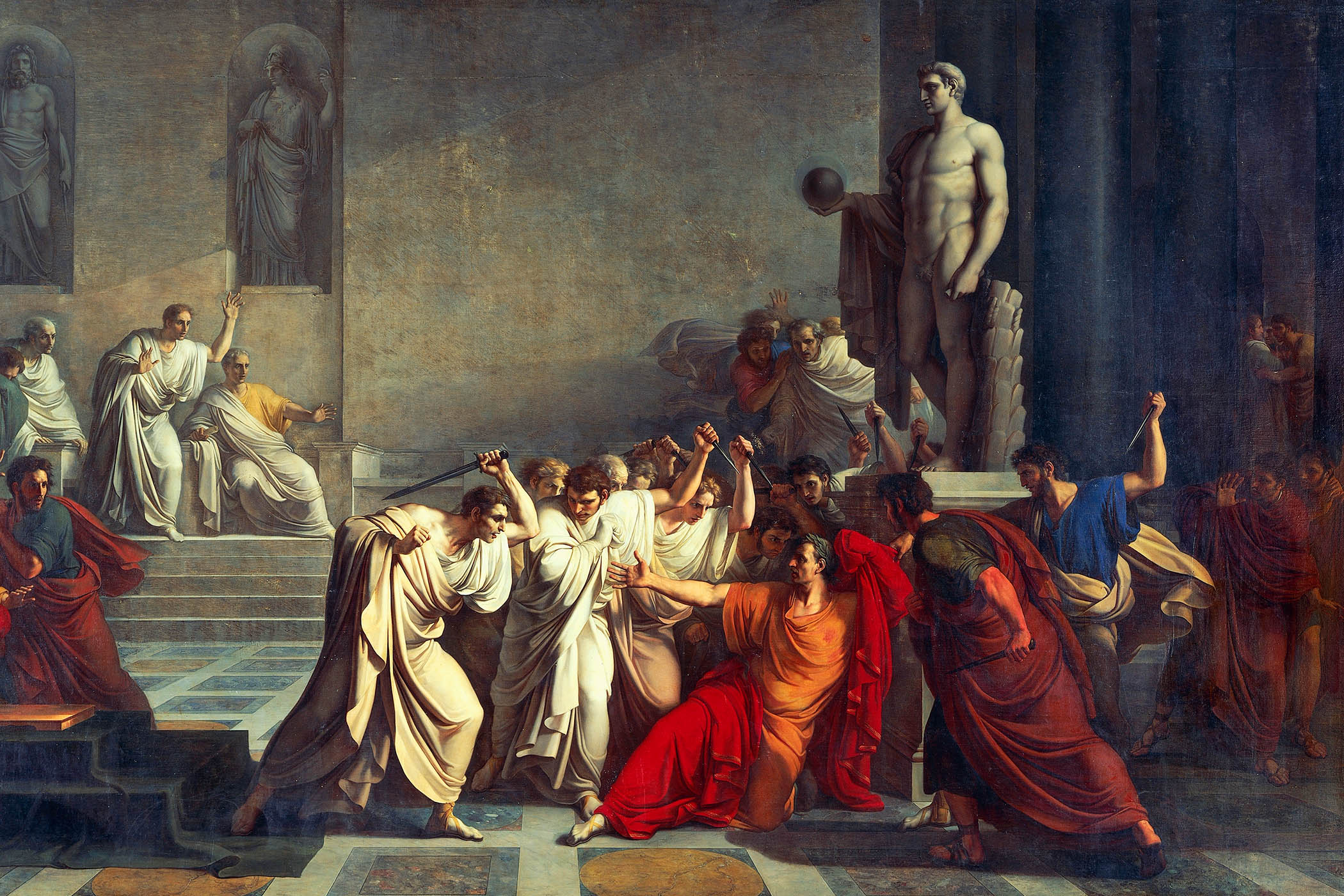

The soothsayer warned Julius Caesar to beware the Ides of March, while TS Eliot reckoned April to be the cruellest month. For Sir Keir Starmer, the moment of maximum peril will come in May. Friday the 8th is tremulously ringed in the Downing Street calendar as the black-letter day when his aides fear the emergence of a visible plot to remove him from Number 10. If all the manoeuvring, backbiting, scheming and venting against the Labour leader is going to come to anything, if all the conjecture about the ambitions of Andy, Angie, Ed, Lucy, Shabana and Wes is to amount to something more substantial than febrile gossip, early May is the period when an attempt at regicide is most likely to manifest itself.
The spring elections are contests for control of the Scottish parliament, Welsh Senedd, all 32 borough councils in London, thousands of other council seats, and six directly elected mayors in England. Millions of voters will be invited to cast a ballot in the biggest test of opinion since the general election. The prime minister implicitly acknowledged that his government is horribly unpopular by ringing in 2026 with a rather downbeat new year message saying he “shared the frustration about the pace of change”. His aides hope that falling inflation and interest rates, combined with cost of living initiatives, will improve the country’s opinion of Labour. There will have to be an unusually dramatic and rapid recovery for the government to avoid diabolical results in May.
Where once Labour had high hopes of evicting the nationalist government in Holyrood, the polls now have Sir Keir’s party languishing in third place, behind the SNP and Reform. It will be quite a feat if John Swinney, the SNP’s unshowy First Minister, wins a fifth consecutive term in office for his party. It will be bleaker still for Sir Keir when, as seems almost inevitable, Labour is trounced in its historic heartland of Wales, where it has governed since the establishment of the devolved assembly in 1999. Rhun ap Iorwerth is on course to be the first-ever Plaid First Minister as the leader of the largest party in a hung parliament. Given there is already a Sinn Féin First Minister in Northern Ireland, all three of the non-English components of the UK could be led by people who want to break it up.
Sir Keir’s woes will be compounded by losses in London, which has been a bastion of Labour support for decades. Sir Sadiq Khan, the capital’s mayor, is sufficiently alarmed by the threat from the Greens to have publicly warned about the fragmentation of the voter coalition that thrice elected him to City Hall.
It won’t be much consolation to the Labour leader that this is also likely to be a dreadful night for his Tory counterpart. Kemi Badenoch ended 2025 on a brighter note than she began it. There’s a bat-squeak of encouragement in Tory breasts about her performances at PMQs, which have improved to the extent that she can now find the net of an empty goal. She’s made some hires designed to sharpen up her backroom operation. The threat posed to her by Robert Jenrick has receded, at least for now. Her personal ratings have bounced up to a dazzling, er, minus 26 points.
Pretenders to the throne will have to persuade their colleagues that the rewards to be derived from changing prime minister would be sufficient to justify all the gore
Pretenders to the throne will have to persuade their colleagues that the rewards to be derived from changing prime minister would be sufficient to justify all the gore
The Tory party’s headline position in the poll of polls remains below its abysmal vote share at the last election. Its best hopes of success in May lie in winning back the councils of Barnet, Wandsworth and Westminster, all lost to Labour four years ago. Elsewhere, the Tories are braced for another kick in the ballots in English local authorities, and for crawling in fourth or fifth in Scotland and Wales, well beaten by Reform in both. Nigel Farage will proclaim that to be further proof that his outfit has supplanted the Conservatives as the principal party of opposition.
The menace of a Faragiste government, so it is speculated by some Labour figures, might persuade Sir Keir to move aside to let someone else see if they can make a better fist of leading Labour. There’s a theory that Jonathan Reynolds, the chief whip, will accompany a deputation of senior cabinet ministers who will tell Sir Keir that he’s lost the confidence of his colleagues, thank him for his service, and then sorrowfully present him with the proverbial glass of whisky and pearl-handled revolver. But that assumes the prime minister wouldn’t chuck the whisky in their faces and turn the gun on the delegation. “He’s a proud man, Keir,” says one Labour figure who recently had an intimate chat with the prime minister. “I don’t think he will accept people saying ‘your time is up’. He can’t see anyone else who would improve our prospects. I didn’t come away from our conversation thinking: ‘There’s a man about to throw in the towel’. Quite the opposite.”
If that is right, pretenders to the throne will have to be prepared to embark on the bloody business of prising him out. That means persuading their colleagues that the rewards to be derived from changing prime minister would be sufficient to justify all the gore involved in ousting an incumbent resolved to stay put. When Tory MPs want to remove a leader, as has been their habit, they submit a secret letter to the chairman of their backbench committee. With Labour, the process is more public and pregnant with risk for challengers. Anyone wishing to compete with Sir Keir for his job would have to put their name on a nomination paper and get at least 81 colleagues to sign it.
Removing a Labour prime minister is not impossible, but it is hard. It has only happened once since the second world war. In 2006, Tony Blair was pressured into announcing his resignation earlier than he wanted to. Even then, he managed to stay on for the greater part of another year and had clocked up a decade at Number 10 before finally departing. There were at least four plots to remove Gordon Brown over the course of 2009 and 2010 as Labour headed very obviously towards election defeat. Every coup attempt spluttered out because the plotters lacked the coordination, cohesion, courage and sheer ruthlessness required to do the deed against an intransigent incumbent.
I do not rule out an attempt to remove the crown from Sir Keir’s uneasy head. I do caution everyone that it is much easier to chatter about dethroning the prime minister than it is to actually do it.
Newsletters
Choose the newsletters you want to receive
View more
For information about how The Observer protects your data, read our Privacy Policy
Photograph by DeAgostini/Getty Images