There is nothing rational about the response to death, it turns out. Not when it’s your partner. Not when it’s the one man who always had your back, who was on your side no matter what. And who, many years ago, in an act of extraordinarily dogged love, stood by you after you broke your neck.
My husband died last month and despite every bit of logic telling me I should have been prepared for it, I still can’t quite believe it. My bewilderment bewilders me, because his dementia was well advanced, his physical frailty terrifying. A proud man, his condition was becoming unbearable for him.
I hadn’t imagined his loss would be as hard as this. Thought I was already halfway through mourning. Indeed, in so many ways, hadn’t I lost him years ago when his lights dimmed and his power faded? Over recent time our relationship roles had switched sides: it was me who cared for him as his illness advanced.
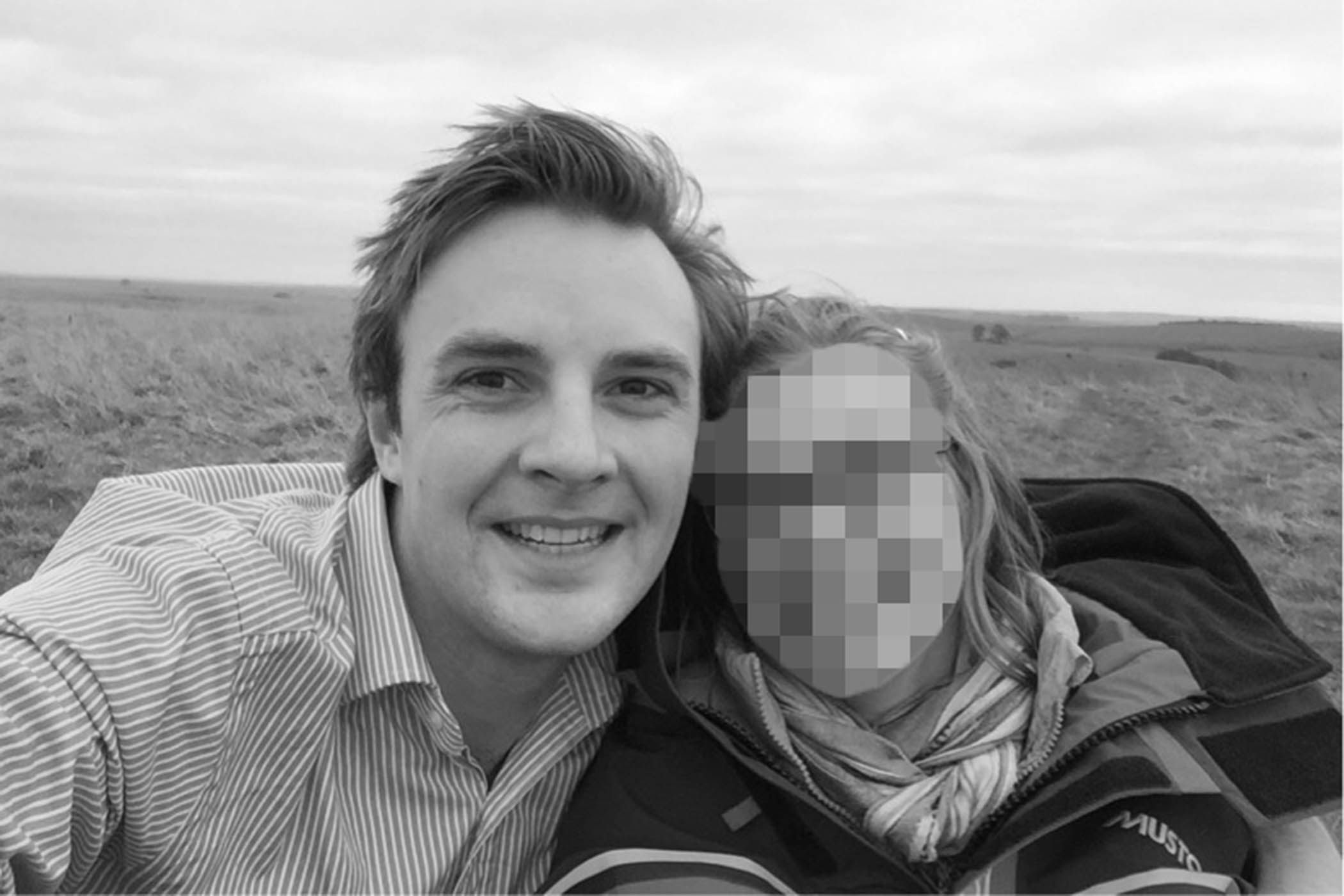
In the photos from our years before my accident, he radiates happiness … to use a sporting expression, we left it all out there
In the photos from our years before my accident, he radiates happiness … to use a sporting expression, we left it all out there
But I was wrong. All the harsh inevitability in the world couldn’t prepare me for this.
David isn’t here any more. That charismatic, charming, funny, incorrigible, hapless life force is gone for ever. My protector, my own personal rottweiler, who went into battle for me without a care. I used to wish I possessed even 1% of his toughness, his bluntness, his ability to handle conflict.
Gone – not really gone, surely? – is the man who could light up a room. Who just wanted people to be happy, who was addicted to company and gossip and fun, who was beloved by men and women alike. Only at Dave’s funeral could the vicar, a wonderful woman called Fiona Newton, recall that Dave always said he wanted every woman who had ever loved him to throw themselves on his coffin … and she was first in the queue.
And only in the lineup after the service could a small, elegant, older woman approach me. “You don’t know me…” she said. “But I used to know David many, many years ago.” She paused, twinkled, let a second or two hang… “I was in the Girl Guides.” I burst out laughing and we shared a lovely warm, unspoken moment of communication.
He’d have loved that. He was allergic only to dull, whatever its manifestation. Frequently he was scatter-brained; boyishly, earnestly eccentric. He always tried his best, although he didn’t always succeed. He liked to buy me special Christmas presents. There was the year he went to a fancy ironmonger in the city centre and bought a pitchfork for the stable, a proper beast of a thing, with a 7ft yellow handle and vicious prongs, the kind an angry peasant would love. He was terribly proud of himself, thought it an inspired idea, and took it into the office pub to show the boys on his way home.
Following the merciless ribbing he received, the following Christmas he tried to be more romantic. He presented me with a heavily embossed official certificate informing me there was now a star in the universe – top of the plough and head left for a thousand light years – officially christened with my name. I stared open-mouthed. We were broke at the time, and either it was authentic and God knows what he had paid for it – or he had fallen for a scam and had in all probability wasted just as much money. What an adorable wally he was. He was so pleased with himself, I had to pretend to be thrilled.
In the photos I have found from our years before my accident, he radiates happiness. Recent times, especially since Dave’s dementia, have been so painful, I had forgotten how happy we were. And we were. To use a sporting expression, we left it all out there.
We had an amazing, fun-filled, loving life together in our cottage in the hills. My son and David bonded, less as stepfather and stepson, more as lion cub and old lion squabbling good-humouredly for my attention. My niece and nephew joined us for countless long, crazy, energetic summers, camping, hedge-planting, hillwalking. My brother started coming too. David was the Pied Piper of fun.
Later, in retirement, the man who was utterly impractical astonished everyone by taking up drystone dyking, building lovely walls all around the garden. Then, with two former workmates, he created a nine-hole golf course, mostly by hand, on the rough hill behind the house. Evenings in the village pub were their reward.
The stories from that time were legendary. There was a crazy project to deter deer from the newly seeded greens by placing wired poles around them, festooned with ladies’ tights, which they stuffed either with human hair or leftover bars of soap. David’s story of asking his gruff Glasgow barber for offcuts of hair was among his funniest.
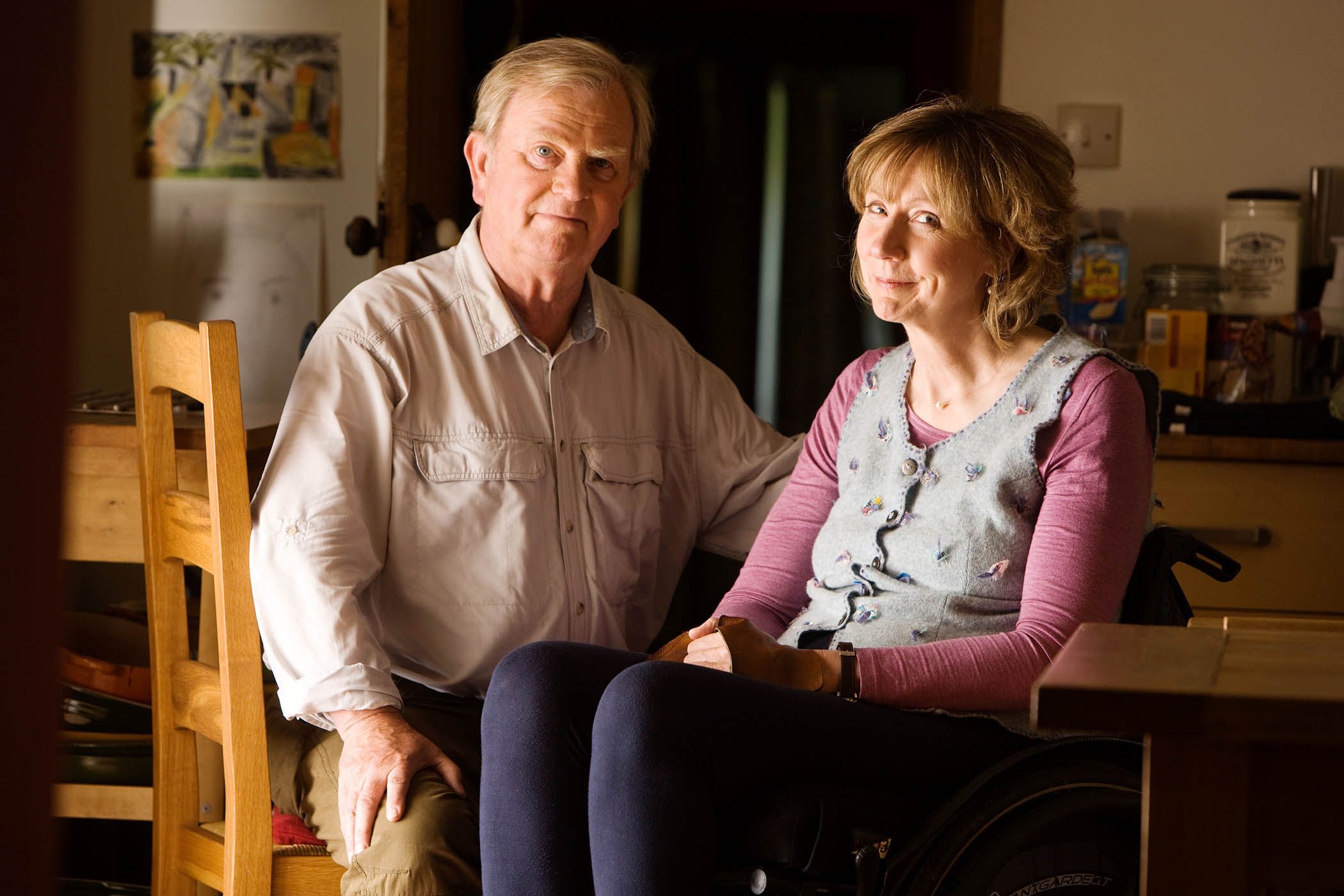
He achieved nobility after my accident. Nobody expected him to cope. Faced with his wife in a wheelchair, with brutal responsibility thrust upon him, this most carefree of men showed he could evolve. I told him to leave; I couldn’t bear his sacrifice. But he refused and devoted himself to protecting me even more.
He was hopeless at so many practical tasks, but he could always charm anyone to get the things he needed done. He worried constantly that I was safe. And then, in turn, we came good for each other. After his dementia gripped, I was determined to keep him at home as long as I humanly could. And I did. He died in hospital with sudden pneumonia, thankfully spared the worst indignities awaiting him.
We gave him a great send-off, in a light, airy crematorium that overlooked the Campsie hills in one direction and, in the other, HMP Low Moss prison and a government HGV testing station. He would have appreciated the comic possibilities. Hopelessly vain, he would have loved the Robert Redford-esque picture we chose of him. He would have adored the fact that so many people came that they had to stand outside the building – everyone from local farmers to former Scottish government ministers to half our village… not to mention all those old girlfriends waiting to adorn his coffin.
The emptiness feels profound. I find myself staring at the walls, devoid of feeling, untouchable. Sometimes I put on Channel 4 news, which we used to watch together. He loved it when I watched telly with him. I wish I’d done it more. So I park my wheelchair next to his armchair, lean my head on the wingback, say hallo-darling-and-what’s-Trump-up-to-now.
But the man who always had my back, who loved me despite everything, is gone. I’m not fine. But I’ll feed off the memories and I will, in the end, become so again.
Photograph by Murdo Macleod
Newsletters
Choose the newsletters you want to receive
View more
For information about how The Observer protects your data, read our Privacy Policy