
Few public services sit closer to politicians’ hearts than the lowly bus. Nigel Farage likes to campaign on top of them, Boris Johnson enjoyed painting models of them, the mayor of London is not shy of mentioning that his father drove the No 44 for 20 years. So much power does the bus wield, in fact, that Keir Starmer recently felt moved to weigh in on a local row over the demolition of a single bus shelter in Sheringham.
The British public are also fond of buses – in principle. They are a national symbol with a long cultural history, and good for the environment. The old-fashioned open back London Routemaster is increasingly popular at weddings. But in practice we are using them less and less. In England, excluding London, bus journeys fell from 4.9bn in 2009 to 3.6bn in 2024. This has perturbed governments, which have reacted mainly by throwing money at them. Buses sucked up £5.9bn between 2021 and 2025. But it has not worked.
The story of the bus is that of a tug of war between two political impulses – to devolve power and to keep it close to the centre. Buses were once under the control of local councils. But in the 1980s – except in London – they were deregulated and turned over to private companies, as Margaret Thatcher sought to weaken local government control.
It was a mistake. Competition law stopped companies being able to coordinate routes or timetables, so they piled into major thoroughfares at peak times, battling for passengers and neglecting less popular routes. Rather than choose their favourite company, people simply got on the first bus that arrived, resulting in a spate of “bus wars” – drivers would whiz up and down major roads, cutting in front of each other.
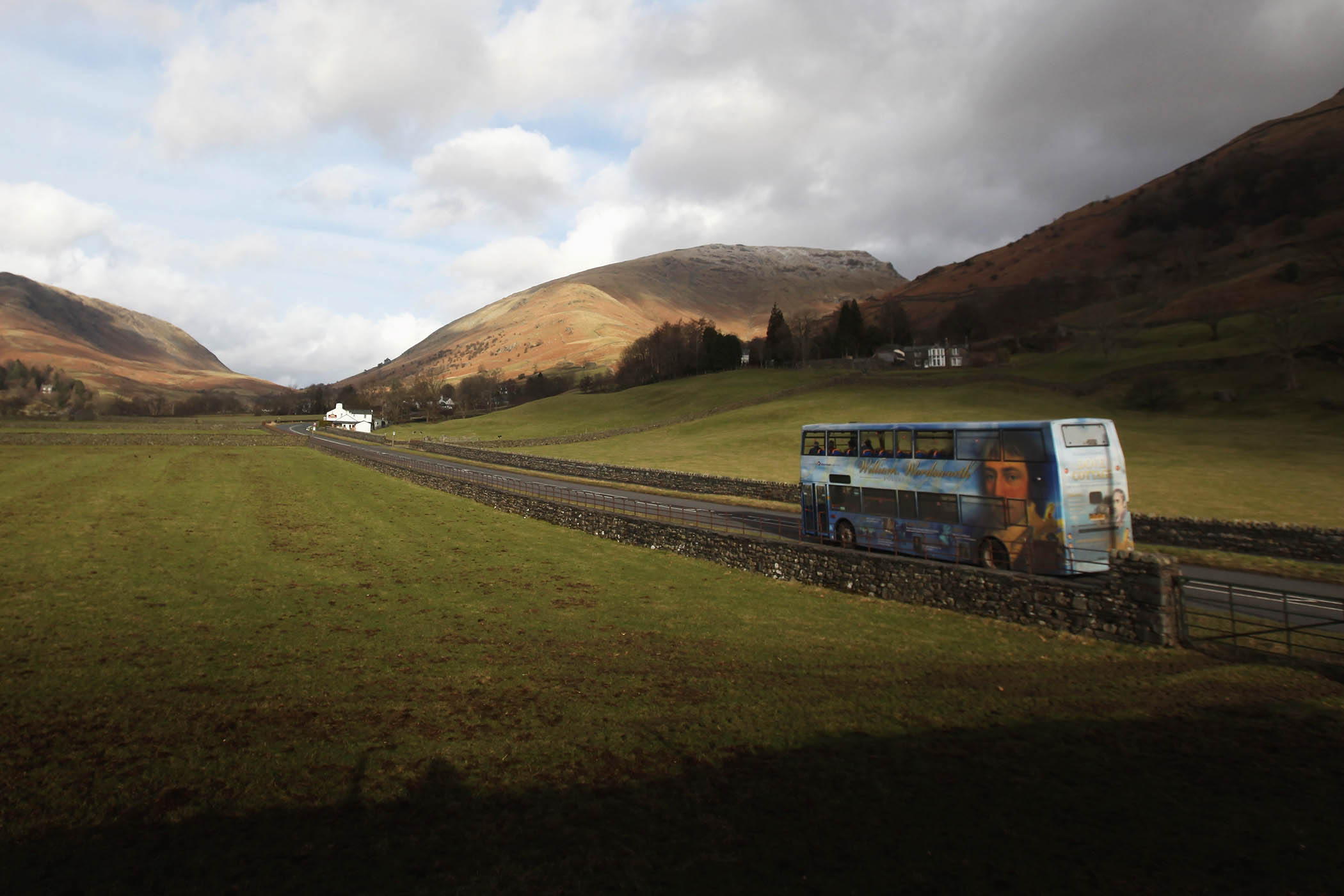
Where passengers were sparse, it produced a doom spiral: fares rose, which deterred customers and put companies under further pressure. “The biggest determinant of whether someone gets a bus is whether it will turn up on time,” says Robert Johnson at Centre for Cities. But with poor funding, buses became less reliable. Routes shrank and dried up outside major cities. Last June a report found that one in five routes in rural areas had disappeared in the previous five years.
Slowly, things may be reversing. Since around 2017 “there has been a palpable shift in the way people see the role of buses”, says Jason Prince, who runs Urban Transport Group. That year the government passed a law giving 10 metropolitan mayors the power to create bus franchises; they can decide which companies serve which routes, and when.
Greater Manchester took up the offer and completed the switch in early 2025, to some success: over the last year, bus journeys rose by about 11%. Liverpool, and West and South Yorkshire are to follow. Prince sees this as symbolic of a power shift. “Devolution has so far fundamentally been about transport, and we are at last seeing the early signs of success,” he says.
But take-up has been slow, and many places will prefer to stick with what they have. “It takes a lot of leg work and capacity to swap over to a franchise,” says Johnson. In Manchester the costs are estimated at about £134m. That includes dealing with disgruntled bus companies – several of which challenged the decision in court – and once a new franchise is in place, local authorities must manage them, and support less profitable routes, adding to the expense.
Devolution is to go even further: since last year local governments have been permitted to set up their own bus companies. But that will cost more too. In London extra funding can be diverted from the Tube, but other cities lack this resource, and national funds do not cover it.
Meanwhile the urge to accumulate power – and praise – in Westminster has not yet completely faded. A bus fare cap late last year that keeps journeys at no more than £3 won the government a lot of credit with voters. But it will make life even more difficult for local bus companies, who can’t now adjust fares to reflect costs or demand. Country commuters will benefit more than city dwellers who make shorter journeys (London’s single adult fare is £1.75), but what is ultimately likely to happen is that more rural routes will shut down as operators run out of money. The doom spiral continues.
Newsletters
Choose the newsletters you want to receive
View more
For information about how The Observer protects your data, read our Privacy Policy
The solution is simple: get rid of the cap, and plough the money back into local councils that can allocate it to less popular routes. That will, however, depend on Westminster’s ability to let credit flow elsewhere. If politicians truly love the bus, they may have to learn to let it go.
The politics of buses may well be shifting anyway. In London, buses are well funded and well managed. But these days they are also emptier. In 2014, an average of 6.7m bus journeys were taken every day, but 10 years on, that has fallen to 5.1m, even though London’s population has grown and Sadiq Khan has introduced any number of low-fare schemes. Last week, Transport for London proposed cuts to six bus routes.
One change is that people are no longer commuting as much – especially the young. People aged 16-24 now make about 14% fewer trips than the population at large. They are simply getting out and about less.
Meanwhile, car ownership has increased in the UK – hitting a record 41.9m vehicles – particularly among poorer households, who are the most likely bus users. Delivery drivers, e-bikes and Ubers are also likely replacing bus trips. As traffic has grown, bus speeds in London have fallen to their lowest level in years, crawling along at an average of 9mph, which puts passengers off further.
The fear is that by the time politicians solve the bus problem, the British public may have fallen out of love with them.
Photograph by Christopher Furlong/Getty Images