




To hear more about this story, listen to Madeleine Parr and Matt Russell’s investigation on The Slow Newscast here.
Curled on his father’s lap, four-week-old Dax Zey can’t focus his eyes yet; he hasn’t even smiled for the first time. But his future is already mapped out.
His fathers, Arthur Zey and Chase Popp, who live in a small town outside Denver, Colorado, chose an egg donor for her height, health and good looks. They chose the surrogate who carried him for her healthy habits. And, when it came to deciding which embryo to use, they chose the one that was estimated to have the highest IQ; would reach a “respectable” height; and would live the longest.
Dax is the product of pre-implantation genetic testing for polygenic disorders (PGT-P), a relatively new science offered by a crop of US startups. His parents paid $50,000 to a company called Herasight, which ranked their embryos’ genomes against wider population data, providing information on everything from their likely IQ to their chances of developing conditions such as schizophrenia, cancer and diabetes.
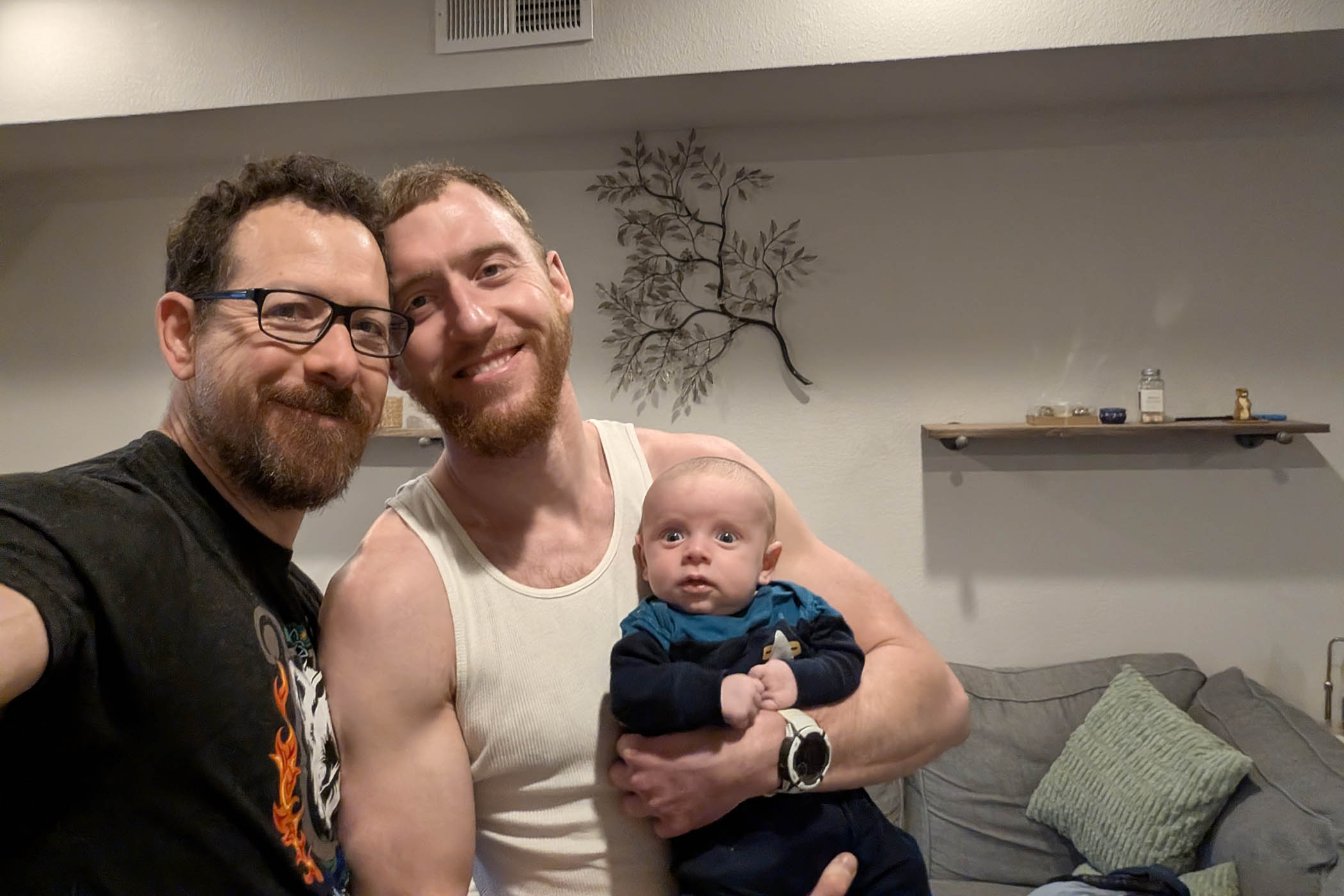
Arthur Zey, left, Chase Popp and their son, Dax. The couple paid $50,000 for PGT-P before selecting their ‘best’ embryo
This is not genetic engineering, because parents are selecting from a clutch of embryos already created, rather than editing or creating genes – but it does allow parents, as one startup, Nucleus Genomics, put it in an infamous ad campaign, to choose their “best baby”.
It’s a step further than genetic testing for, say, cystic fibrosis or Down’s syndrome, which is already widely available. And what makes most people squeamish about PGT-P is the moral question: the idea of selecting embryos for traits such as IQ or height – actively selecting for “good” genes, rather than avoiding “bad genes” – feels like playing God.
In the UK, PGT-P is against the law. However, last year it emerged that some British IVF patients are exploiting a loophole, obtaining their embryos’ genetic data after routine testing in British labs and sending it to US companies. Pandora’s box has been opened, just a mouse-click away.
‘If my child showed a sign of developmental delay, I’d be thinking gosh, I should have done genetic testing’
‘If my child showed a sign of developmental delay, I’d be thinking gosh, I should have done genetic testing’
Arthur Zey, father of Dax
The UK is the birthplace of IVF; the latest data shows that in 2023, one in 32 British children, roughly one in every classroom, was born through fertility treatment. Now, British fertility clinics face twin challenges: what to say to patients enticed by startups marketing a science which, critics claim, isn’t robust – and what to do about patients putting pressure on them to select embryos based on information which, in the UK, is illegal to use. Can the British fertility sector resist the lure of the “best baby”?
With comfy armchairs and a crackling fire in the waiting room, the Avenues fertility clinic in Euston, London, has the feel of a boutique hotel. “It’s supposed to feel like you’re being treated by your best friend,” says Dr Cristina Hickman, the clinic’s founder.
It was at the clinic last year that Hickman was approached by a colleague with a dilemma: a patient had admitted her plans to send the genetic data of her embryos to Herasight.Hickman had balked. “I was fully aware that this is illegal in the UK, and I was trying to figure out what to do.”
Newsletters
Choose the newsletters you want to receive
View more
For information about how The Observer protects your data, read our Privacy Policy
She sought legal advice and concluded that, because the patient was sending the genetic data abroad for PGT-P independently, there wasn’t much she could do. So she wrote to the Human Fertilisation and Embryology Authority (HFEA).
While the US is often described as a “wild west”, the UK’s fertility industry is one of the best-regulated in the world. Here, the HFEA maintains strict control over the sector and works in tandem with British law. The organisation thanked Hickman for her email, but pointed out that any change in the law “is for the government and parliament, not the HFEA”.
In a comment piece written by its chief executive, Peter Thompson, for an industry publication last month, the HFEA reiterated its position:“If a UK-based clinician acted on a patient's preference, which was based on PGT-P results, then the clinician would be acting unlawfully,” he wrote.
The HFEA said a breach would result in “firm regulatory action” but declined to speculate on specifics.
Some in the industry say that the article felt like a threat. Because whatever the HFEA thinks, PGT-P genetic testing is already happening – and British fertility patients are interested.
In a world increasingly obsessed with biohacking, the technology represents a golden opportunity to those who can start early. Although there’s no figure specifically for PGT-P, the market for wider pre-implantation genetic testing, which includes testing for monogenic conditions, such as Down’s syndrome, and other genetic risk factors, is expected to increase in global value from $781m (£587.3m) in 2023 to $1.7bn by 2029.
The best-known existing companies are all based in the US: Orchid Health, Nucleus Genomics, Genomic Prediction, and Herasight.
Silicon Valley, with its “move fast and break things” motto, has been a driving force behind the industry: Noor Siddiqui, the founder of Orchid Health, one of the first startups to offer detailed genetic screening, is a former Thiel fellow (as in Peter Thiel, the outspoken libertarian, billionaire investor and prominent pronatalist). Nucleus Genomics, founded by 25-year-old Kian Sadeghi, is backed by Thiel’s Founders Fund.
Siddiqui has become the industry’s poster child, and has been photographed with Shivon Zilis, who has four children with Elon Musk, another outspoken pronatalist. The Washington Post reported that “at least one of Musk and Zilis’s offspring is an Orchid baby”. Orchid declined to comment when The Observer followed up that claim. Meanwhile, Siddiqui’s mentor, Thiel, has poured millions into companies looking for ways to “reverse human ailments” and make death “a solvable problem”. Of course, choosing an embryo at low risk of developing diseases would help.

The Washington Post reported that at least one of Musk’s ‘offspring is an Orchid baby’
While Siddiqui’s Orchid, which has recently partnered with a clinic in Iceland, offers testing for polygenic and monogenic diseases, it does not offer screening for traits such as height, eye colour or even IQ. But Nucleus offers the full gamut: eye colour, height, hair colour and even chances of developing severe acne.
Sadeghi founded Nucleus in 2021. Initially, the company offered a genome sequencing service to adults, providing an insight into their genetic code and which diseases they might be at risk of. Within three years, it started offering genetic optimisation – the “choose your best baby” pitch that caused much controversy.
Any new area of science takes time to build up a comprehensive body of evidence which demonstrates its effectiveness, and PGT-P is still in its earliest stages. This is one of the reasons the HFEA is opposed to it.
The HFEA isn’t alone: an American researcher who had been part of a team that designed the science behind polygenic risk scoring, and asked to remain anonymous, told me that it was rapidly improving, but added that “it’s not reliable enough yet to use in wide populations”.
British clinicians generally agreed, pointing out that the testing can’t control the “nurture” aspect of child-rearing when it comes to certain traits. Take IQ, for example. “People think, ‘this embryo is going to be really smart’,” says Sarah Norcross, director of the Progress Educational Trust, a charity for people affected by infertility and genetic conditions.
“But that baby is not going to be really smart if you don't read to them. Making good educational choices would probably have more impact on IQ than selecting that embryo.”
There is also an argument that some of the datasets used by these startups simply aren’t large enough for predictions of many conditions to be accurate. Herasight, for example, gets much of its data from the UK Biobank, which tracks the health data of half a million people. But when it comes to rare conditions, the dataset is much smaller – and the number of people at the extremities of high or low risk of developing the condition smaller still.
Therefore, companies offer “scores” based on genetic markers from a relatively small group of people. This, say some clinicians, isn’t reliable enough.
Dr Alex Young, who has worked with Herasight to develop its methods, concedes that for some traits, it’s “possible” that the extreme ends of the range “won’t be as well calibrated”; in other words, they won’t be as precise. Jonathan Anomaly, Herasight’s director of communications, agrees that’s true “for some traits”.
But he aruges that in some cases, such as schizophrenia, selecting the embryo with the lowest likelihood of developing the disease is “way more effective than any drug you could take” to prevent or treat it.
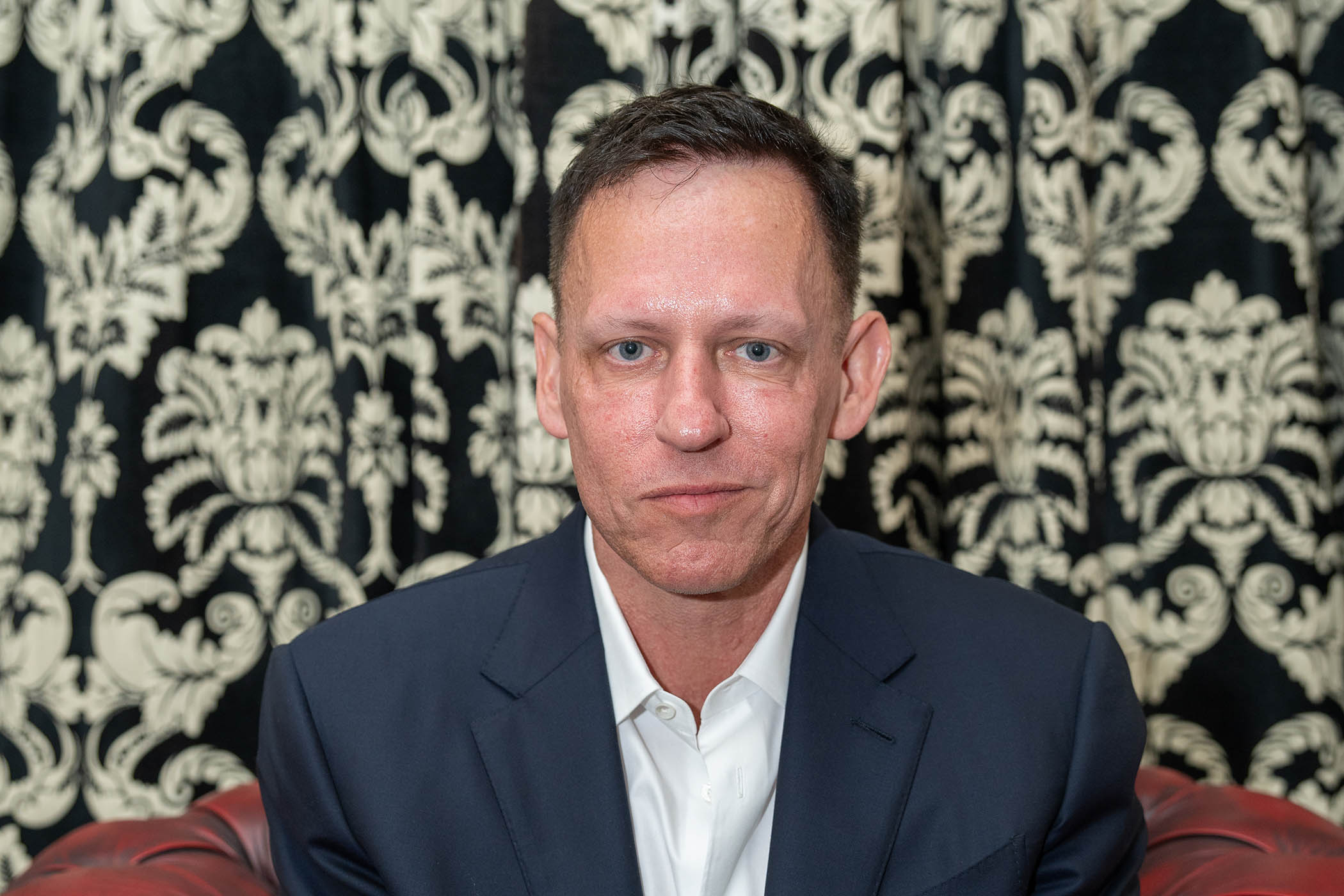
Nucleus Genomics is backed by Peter Thiel’s Founders Fund
And if patients want to knowingly spend $50,000 on an unproven science, why not?
It’s a question that goes to the core of many fertility services. Although the HFEA cautions against using unproven IVF “add-ons”, for example, it hasn’t banned their use altogether. In fact, it’s a thriving industry: almost three-quarters of patients in 2024 forked out for “add-on” procedures, such as an endometrial scratch (as uncomfortable as it sounds) or a 3,000-calorie intravenous lipid infusion. Both might improve an embryo’s chances of implanting into the uterus; neither has a substantial body of evidence to back up that claim.
Professor Robert Plomin, a behavioural geneticist at King’s College London and senior scientific advisor for Nucleus Genomics who calls PGT-P a “DNA revolution”, accepts that it might lead to some “unintended consequences”.
These startups have been accused of creating “two-track societies” where IVF babies created using this technology are tall, healthy and good-looking, while those created the traditional way continue to display feeble human traits like disease.
Plomin says that, although he does not want to “rehabilitate” the term, eugenics is practised without thinking about it. “You select your spouse on the basis of genetic characteristics,” he says. “The woman you’re gonna marry, you’ve selected on the basis of intelligence.”
In a statement to The Observer, Nucleus said: “This isn’t designer babies or eugenics. Polygenic prediction has been validated across ten years’ worth of research. Moreover, in IVF today, genetics is already used to pick an embryo. Now, parents can get more information when making this choice, from reducing cancer risk to having a taller baby.”
In previous statements, Orchid has strongly denied any association with eugenics. In an interview with the New York Times, Siddiqui said that genetic risk scores have "a much stronger evidence set than we have for blockbuster drugs".
“It’s our critics that are doing coercive eugenics,” says Anomaly, from Hersight. “I mean that quite literally, because they’re saying you don’t have the right to select among your embryos. My message to them is, when you say ‘her body, her choice’, do you really mean it? Or do you mean it’s the government’s choice?’” The same argument was made when the battleground was abortion.
Arthur Zey, Dax’s father, is more thoughtful. “I don’t shy away from the term ‘eugenics’,” he says. “But I realised as soon as I knew it was a possibility to test for [IQ] that if I didn’t do it, I would be second guessing. Like, if my child ever starts showing any signs of being developmentally delayed, even if it’s all in my imagination, I’ll be thinking, ‘gosh. I really should have gotten the genetic testing done’.”
It’s this attitude that the HFEA and British clinics are battling against.
Usually, several embryos are created during a round of IVF, and it’s routine for UK clinics to rank those embryos on cellular structure, then use the one which “looks” most likely to result in a pregnancy first. The second-best one is used next time. Sometimes, the embryos are screened to check they have the correct number of chromosomes, and after this, some might be discarded. But recently, said one British clinician, who requested to remain anonymous, some patients have asked to have certain embryos transferred – notably, not the ones identified as those most likely to result in a birth.
The clinician said that they suspected the patients had undergone PGT-P but they weren’t sure, and felt they couldn’t deny the requests. “The patient could make a complaint against us for not listening to their ‘needs’,” they said. “But we are breaking the law if we [transfer a certain embryo if a patient has done PGT-P], even if it’s for a reason we are not privy to.”
They added that, even if they do deny a request, that patient can simply move their embryos to another clinic which doesn’t ask as many questions – or even abroad.
Hickman has concluded the only way to ensure the UK has proper control over PGT-P is not to ban it, but to regulate it. PGT-P might be expensive now, but it will get cheaper as certain processes are automated, says Anomaly – and the science is becoming more robust. Hickman points out that the UK hasn’t shied away from regulating science involving complex tricky moral questions: our rules around mitochondrial donation led to some of the first “three-parent babies”. “[The regulation] we have in this country is amazing,” she says.
Thompson wrote that such a change would require an act of parliament. The current law was developed “after careful consideration” by MPs, he said. “Any consideration of embryo testing more broadly… would need similar parliamentary consideration.”
Some clinicians worry that if the law does not change, British patients will suffer. “Patients are getting wise to the fact that they can request their data files from labs. At what point will some amateur geneticist online say, ‘send us your files and I’ll have a look’, and they’ll come away with completely wrong information?” says one.
Hickman agrees. “Two patients I know of have gone through this process, but how many others are not telling us?” she asks. And while those patients used a reputable company, she’s worried others won’t. “How many will end up going to dodgy cowboys?”
For now, the HFEA – and British law – will keep its stance. An HFEA spokesperson said: “We cannot stop patients from going abroad to access this data but the data cannot be used to make a choice or influence a decision by a UK-licensed clinic.”
It’s still early days for Arthur and Chase, Dax’s parents, but they already know which embryo they’ll use next time: they have one female embryo and “I very, very, very much want to have a boy and a girl,” says Arthur.
Still, before little Jadzia comes along (as they have already named her), they’ve got the nappy changes and sleep regressions; the milestones and tantrums that come with early parenthood. Because the reality is that, even when you think you’ve got absolutely everything under control, parenting often goes wrong. Even the most carefully-raised kids have a nasty habit of surprising us.
Photograph by Andrew Harnik/Getty Images, Nordin Catic/Getty Images for The Cambridge Union