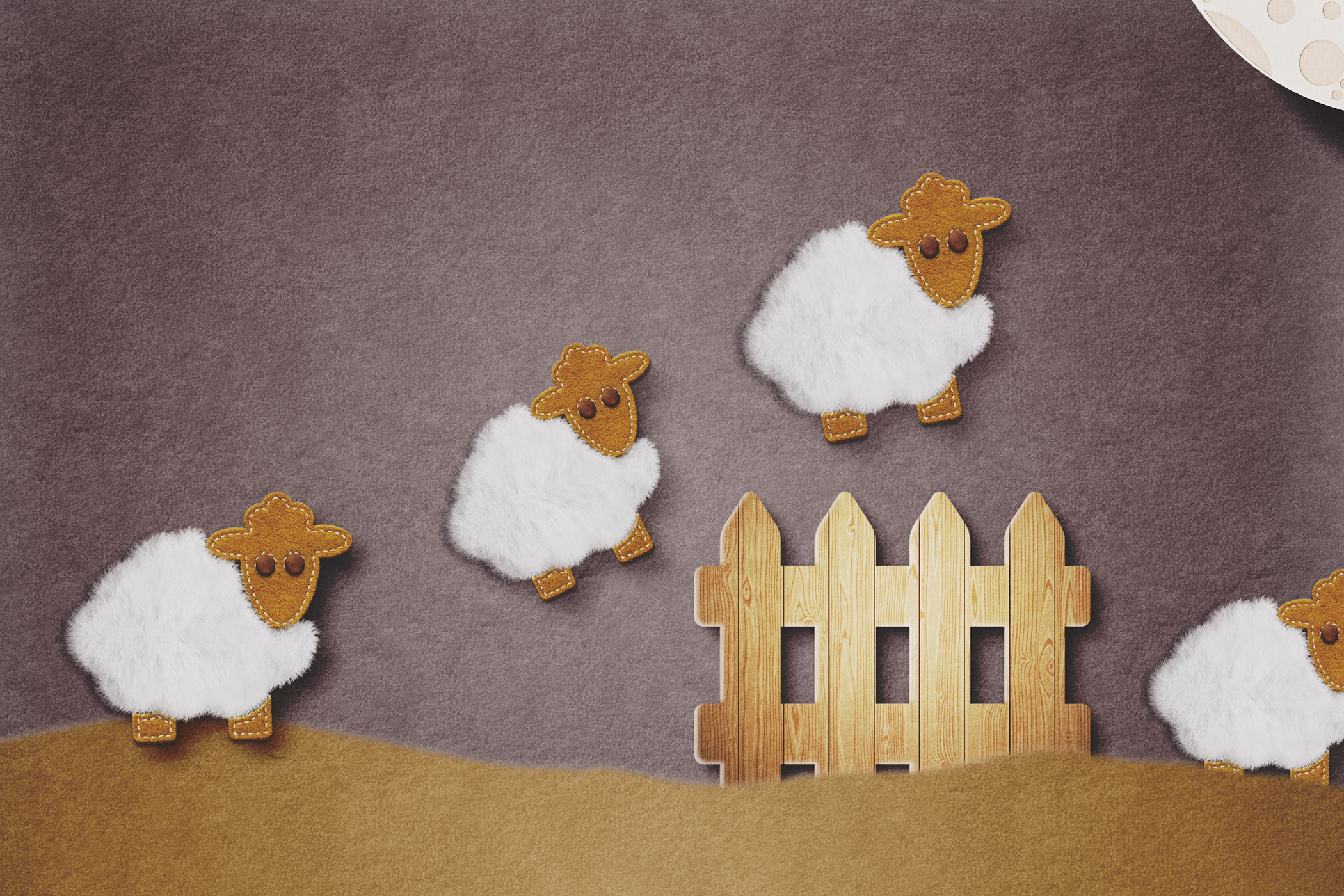
At various points in my life when I’ve had trouble sleeping, my instinct has been to return to the lessons of early parenthood. I’m talking about sleep training – those infinite evenings in the Whitechapel flat, the one-handed dawn Googles of “how to get baby sleep now”, “simple tricks six month old sleep”, “how to spot if baby actually fucking with me”, the routines, the regimes, the failsafe methods gleaned from experts’ books – and I’ve attempted to apply them to myself.
“Controlled Crying” works remarkably well for those in their 40s as well as those yet to discover how to burp unaided. For adults, the famous “Chair Method” is less about sitting beside the baby before moving slowly away, and more: falling asleep on an armchair watching Clarkson’s Farm. Though that does involve waking suddenly at five with a dead arm, your brow covered in a fine, mysterious oil. “Drowsy but Awake” requires a bed-partner who gets up to go to the loo at frequent, undefined intervals, creating an eternal twilight sleep. Less effective is “Pick up Put down”, where, instead of lifting the child from her cot every time she wails, you’re picking up your phone from the bedside table every time you feel the primal tug of its absence in the hollow above your sternum. My thinking is, sleep when the internet sleeps. Thank you that’ll be £29.99.
The business of sleep is now a multibillion-dollar global industry, with tech entrepreneurs repackaging it daily as the ultimate wellness cure. Around a third of adults in Western countries have trouble getting to sleep at least once a week. People not only worry about not getting enough sleep but they lose sleep due to worrying about it. In 2023, research organisation Rand found that given the chance these people would pay handsomely – on average 14% of their annual household income – to feel rested.
Research found that, given the chance, people would pay 14% of their annual household income to feel rested
Research found that, given the chance, people would pay 14% of their annual household income to feel rested
So it should come as no surprise that an increasing number of new parents are investing in the advice of experts as they feel themselves becoming slowly madder and madder with every lost hour. Except, anybody can call themselves a maternity nurse, sleep expert or consultant without even a flake of training, oversight or accountability. The BBC secretly filmed two infant-sleep “experts” – both of whom have published books, have celebrity endorsements and many thousands of social media followers – giving advice that doctors say could put babies “at risk of serious harm and even death”. They’re marketing themselves to women at various stages of post-natal desperation, who are willing to throw anything at the wall (including their dwindling savings) to make their babies sleep and allow themselves an undisturbed night.
Much like sleep itself, its industry runs in cycles. We see moments of genuine depth followed by flashes of psychedelic lunacy, with the promise of various nightmares and flashes of extreme boredom. “Sleeping” now outranks “shopping, nightlife, and seeing wildlife” as the thing people seek in a holiday. In response, more and more hotels are offering “luxury sleep packages” designed with sleep scientists, leading to an international sleep-tourism industry worth around $600bn. Am I alone in finding this terribly, terribly embarrassing? Genuinely humiliating? That this is where we have landed, evolved from humans with lusts, desire, the craving of risk, the sometime need to clamber over treacherous rocks to see the view of lakes from the very top, to: animals yearning hibernation beneath the anaesthetising weight of a medical grade duvet? I’m sad for us, as a race, that we are scrabbling so frantically for sleep that we’ll so readily offer our data to tech companies, our money to opportunists and our precious summer holidays to whomever promises the darkest room.
But the market only looks to be growing. As well as an essential part of life, sleep is now also a status symbol, a sign of wealth, wellness and control, largely because it will always be elusive to many. And while living might be exhausting, of course it’s life itself, with its various vices, anxieties, labours and joy, that keeps our bodies stubbornly awake.
Thank you for reading. Tell us what you think by writing to letters@observer.co.uk
Photography by Getty images
Newsletters
Choose the newsletters you want to receive
View more
For information about how The Observer protects your data, read our Privacy Policy