
It’s been nearly two weeks since Steven Bartlett declared on his The Diary of a CEO podcast that drinking three glasses of wine had ruined his life for three days. The response has included a backlash from presenters Greg James and Fearne Cotton, who accused Bartlett of joylessness, and criticised society’s exhausting fixation on optimising our lives to become the best versions of ourselves.
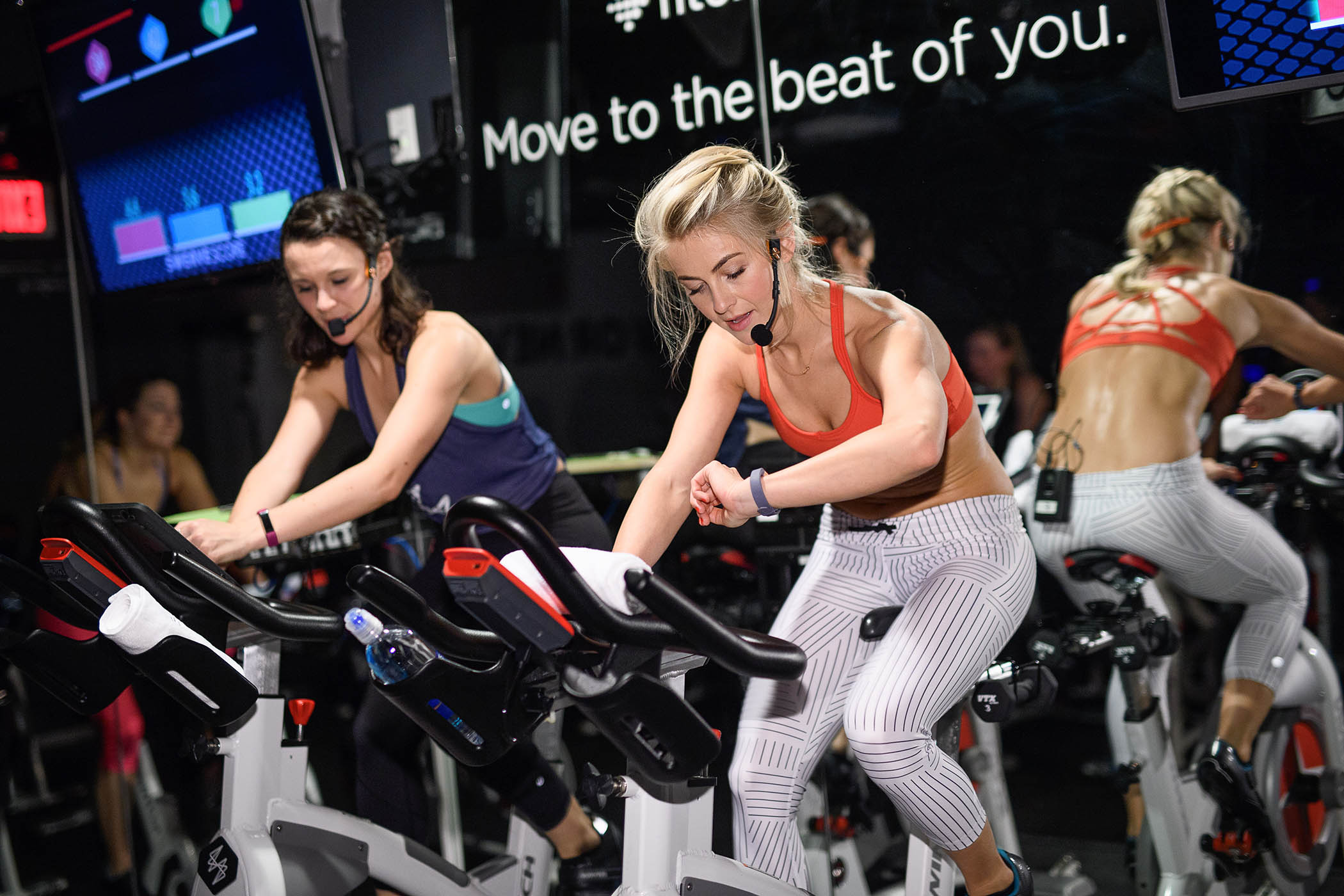
Over the past decade, our understanding of health and wellbeing has undergone a transformation, partly owing to the rise of tech that allows us to track, monitor, and analyse every aspect of our existence. The technology ranges from smartwatches that nudge us to stand up if we’ve been too sedentary to rings that evaluate our sleep and give us a “readiness score”, indicating how prepared our bodies are for physical and mental stress. Statista estimates that the global fitness tracker market is projected to reach $49.4bn in 2026, with YouGov reporting that 35% of Britons now own and use a fitness tracking device.
This normalisation of constant self-tracking is a primary fuel for our obsession with self-improvement, says André Spicer, a professor of organisational behaviour. In 2016, Spicer and his colleague Carl Cederström spent a year aggressively optimising their lives for their book, Desperately Seeking Self-Improvement: A Year Inside the Optimization Movement.
“Looking back now, none of the challenges we did seem that extreme anymore,” Spicer says. Their tasks included wearing sleep-monitoring headbands, ingesting modafinil to power through a 40-hour work marathon, and participating in cognitive behavioural therapy and online relationship counselling.
‘We felt totally overwhelmed and exhausted, constantly trying to optimise took over our lives’
‘We felt totally overwhelmed and exhausted, constantly trying to optimise took over our lives’
Prof André Spicer
Did these tasks make their lives better? Not quite. “We just felt totally overwhelmed and exhausted,” Spicer says, “constantly trying to optimise took over our lives.”
This exhaustion is something that Devon Price, a social psychologist and the author of Laziness Does Not Exist, recognises all too well. In his mid-20s, Price was diagnosed with severe anaemia and heart complications brought on by mental overexertion. He says he had internalised the belief that productivity was the measure of his self-worth.
“We live in a culture where if you have an aptitude for something that can be potentially profitable to someone else, you’re strongly encouraged from a young age to lean into that and make it central to your life,” Price says.
Spicer correlates this growing obsession with self-optimisation with the rise of a modern, “anxiety-based world” in which people feel a profound loss of control. In response, we hyper-focus on what we can control – our health, our relationships, our daily metrics – in an attempt to ground ourselves. By doing so, says Spicer, we effectively try to become the “CEO of Me, Incorporated”.
However, cracks are starting to appear in the armour of the quantified self. A 2026 market analysis by digital health leader YouHong Medical reveals a sharp decline in the use of fitness trackers among the young. Users aged 18–34 now account for just 41% of the market, down from a previous high of 52% in 2000.
This backlash against technology can also be seen in the rise of the “unplugged holiday”, where holidaymakers spend their entire trip without access to any devices. Bookings for remote and tech-lite properties without internet access have increased by 17%, according to the home rental platform Plum Guide. The company also found that searches for “digital detox” accommodation had more than tripled between 2023 and 2024.
Newsletters
Choose the newsletters you want to receive
View more
For information about how The Observer protects your data, read our Privacy Policy
Launching their first off-grid cabin in summer 2020, co-founders Hector Hughes and Ben Elliott started Unplugged because of burnout from their high-stress tech jobs. They wanted to create a space in nature where people could “escape the constant buzz of technology”. The cabins are stocked with analogue equipment, such as board games and a cassette player, to encourage guests to “slow down” and spend their time in a more leisurely fashion.
Speaking to The Observer, the sociologist and author of The Happiness Industry, Prof William Davies, suggests that this shift away from technology and self-optimisation is linked to the broader cultural undercurrents of the anti-AI backlash and represents “a refusal to treat humanity and machines as interchangeable”.
For Cathy White, founder and CEO of CEW Communications, an agency that specialises in scale-ups and venture capitalism, “the pushback against optimisation culture is definitely there”, but the urge to optimise “will never completely go away” in her industry. She argues that this is because investors place intense scrutiny on the performance of startups, and that, in the early stages of a company, success is often seen as a reflection of the founders themselves.
Nevertheless, for Spicer the fundamental trap of being “CEO of Me, Inc” is that you can never actually achieve satisfaction: there will always be a new metric to improve. Instead of a complete rejection of optimisation culture, he advocates for a “just good enough” approach, where we make peace with not always being our optimal selves. A happy medium in which, rather than three glasses of wine, Steven, you have one large one (and, perhaps, don’t go on about it).
Thank you for reading. Tell us what you think by writing to letters@observer.co.uk
Photograph by Dave Kotinsky/Getty Images