

Since June, a month in which Iran was at war with Israel for 12 days, dozens of nuclear scientists and Revolutionary Guard leaders were assassinated by Mossad, and Iran’s nuclear installations were damaged by US strikes, Iranians have been asking fundamental questions of their regime.
At a time of acute economic crisis, with the currency, the rial, in freefall, people are asking: what is the point of a wildly expensive nuclear programme if it does not provide deterrence, and will be whacked again by Americans and/or the Israelis, who remain determined to ensure Iran will never have a nuclear capability? Why, they ask, must we be committed to the destruction of Israel, as a nation that once had a thriving Jewish community, simply because the founder of the 1979 revolution, Ayatollah Khomeini, considered Israel theologically illegitimate and an instrument of western imperialism?
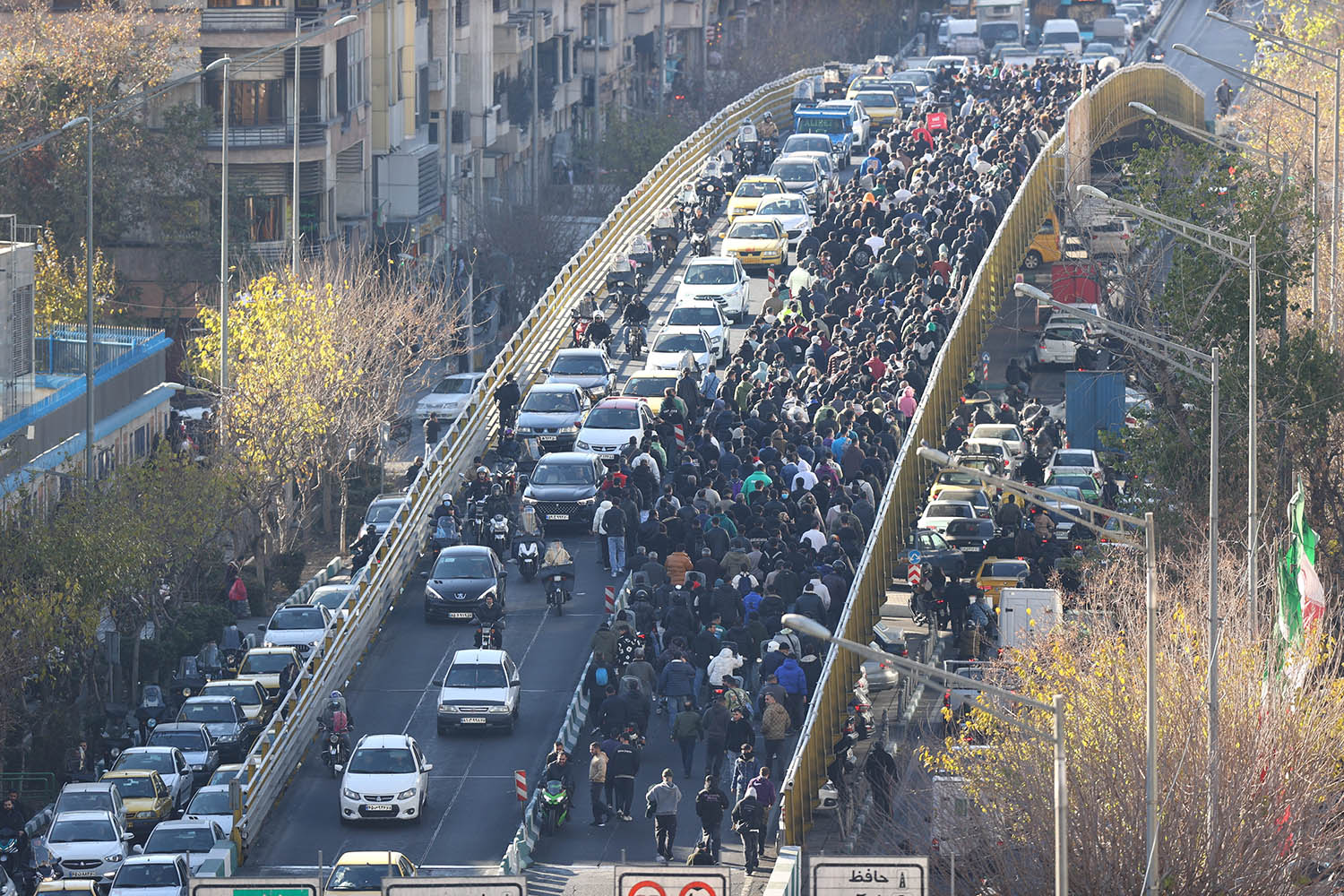
The demonstrators now include middle-class professionals, not just rebellious students, and – unusually – there have been calls for the 65-year-old son of the late Shah, Reza Pahlavi, to return from the US to head a reformist government. President Masoud Pezeshkian, well meaning but lacking real power, has called on his ministers to begin a dialogue with the protesters. The 86-year-old Ayatollah Khamenei is saying and doing nothing, letting others take the heat.
There are usually two requirements for a successful revolution. First, an incumbent government no longer prepared to put its own survival above all else and, second, a unifying or at least dominant figure capable of overthrowing the ancien regime. For now there is little sign that either the ageing and infirm Khamenei, or the Revolutionary Guard and hardliners who sustain him, are interested in reform rather than buying time. Nor does the young Shah in exile, for now at least, seem to be the figure who can lead a full-scale revolution.
The Israeli government and some neo-conservatives in the US believe that another round of military strikes – on the grounds that “one more heave” is all it will take – will lead to the overthrow of the Iranian government. That risks giving the regime the opportunity to wrap itself in the national flag and blame foreign enemies for all the country’s problems. It’s a tactic used by autocracies the world over, and had some – albeit limited – effect after the 12-day war in June.
A better approach might be to reach out to the Iranian government, during its moment of weakness, with an offer that would encourage the opposition to keep up the pressure, reduce the threat Iran poses to its neighbours and give the beleaguered people of Iran the prospect of a better life.
It is striking that, despite his hostility to the regime in Tehran, Donald Trump says he likes Iranians. So far, neo-conservatives and hardline supporters of Benjamin Netanyahu have ensured that no credible bargain has been offered to Iran on Trump’s watch. But since the war in Gaza, the Jewish community in the US has become more critical of the Israeli prime minister, while Trump’s wealthy friends in the Gulf have become more open to, and less scared of, the idea of finding a modus vivendi with Iran now it poses less of a threat.
Perhaps most importantly for a US administration that sees wealth creation, for itself and its friends, as the most effective form of diplomacy, Iran is a country of immense natural wealth, has a strong national identity and is a source, despite the theocrats’ best efforts, of genuinely entrepreneurial human capital.
What better time for Trump to consider making a genuine offer to fix the relationship and free the Iranian economy from the constraints of sanctions, which serve only to enrich sanctions-busters and black marketeers while penalising innocent civilians? There is no case for allowing Iran to develop nuclear weapons, but what is there to fear from allowing a modest amount of low-level enrichment to, say, 3.75%, under International Atomic Energy Agency supervision as a face-saver – if that’s what secures a deal?
In today’s circumstances, Iran may be less inclined to insist on continuing support for its weakened proxies elsewhere in the Middle East. What if Iran could come up with a more useful foreign policy narrative than “death to America” and “death to Israel”, thereby minimising the threat to its neighbours? Then we really could be talking about a Nobel peace prize.
Newsletters
Choose the newsletters you want to receive
View more
For information about how The Observer protects your data, read our Privacy Policy
Peter Westmacott began his diplomatic career in Iran and was British ambassador to Turkey, France and the US
Photograph by Fars News Agency/AP