On Wednesday, US forces descended by rope from a helicopter to seize a large oil tanker off the Venezuelan coast, accusing it of carrying sanctioned crude. The same day, Venezuelan opposition leader María Corina Machado was completing a perilous journey out of her home country, arriving late for her Nobel peace prize ceremony in Oslo.
Yet, censorship and a government-imposed sense of normality back in Venezuela mean daily life has largely continued as usual. For most people, the immediate struggle remains survival in the context of a collapsed economy and a renewed wave of repression. Some quietly hope mounting US pressure could help force political change, but that hope is tempered by years of failed efforts to dislodge the ruling authoritarian regime – and by deep anxiety over what military intervention might mean for ordinary citizens.
Since mid-August, Donald Trump’s administration has increased military pressure on Venezuelan president Nicolás Maduro. US forces have carried out 22 strikes on suspected drug-trafficking vessels in the Caribbean and in the eastern Pacific, killing at least 87. The Trump administration has offered a $50m bounty for information leading to Maduro’s arrest, authorised CIA operations inside Venezuela, and deployed the world’s largest aircraft carrier, the USS Gerald R Ford, along with some 15,000 troops, dozens of aircraft and a fleet of warships to the Caribbean. In late November Late last month, Trump declared that the airspace above and surrounding Venezuela should be considered “closed in its entirety”.
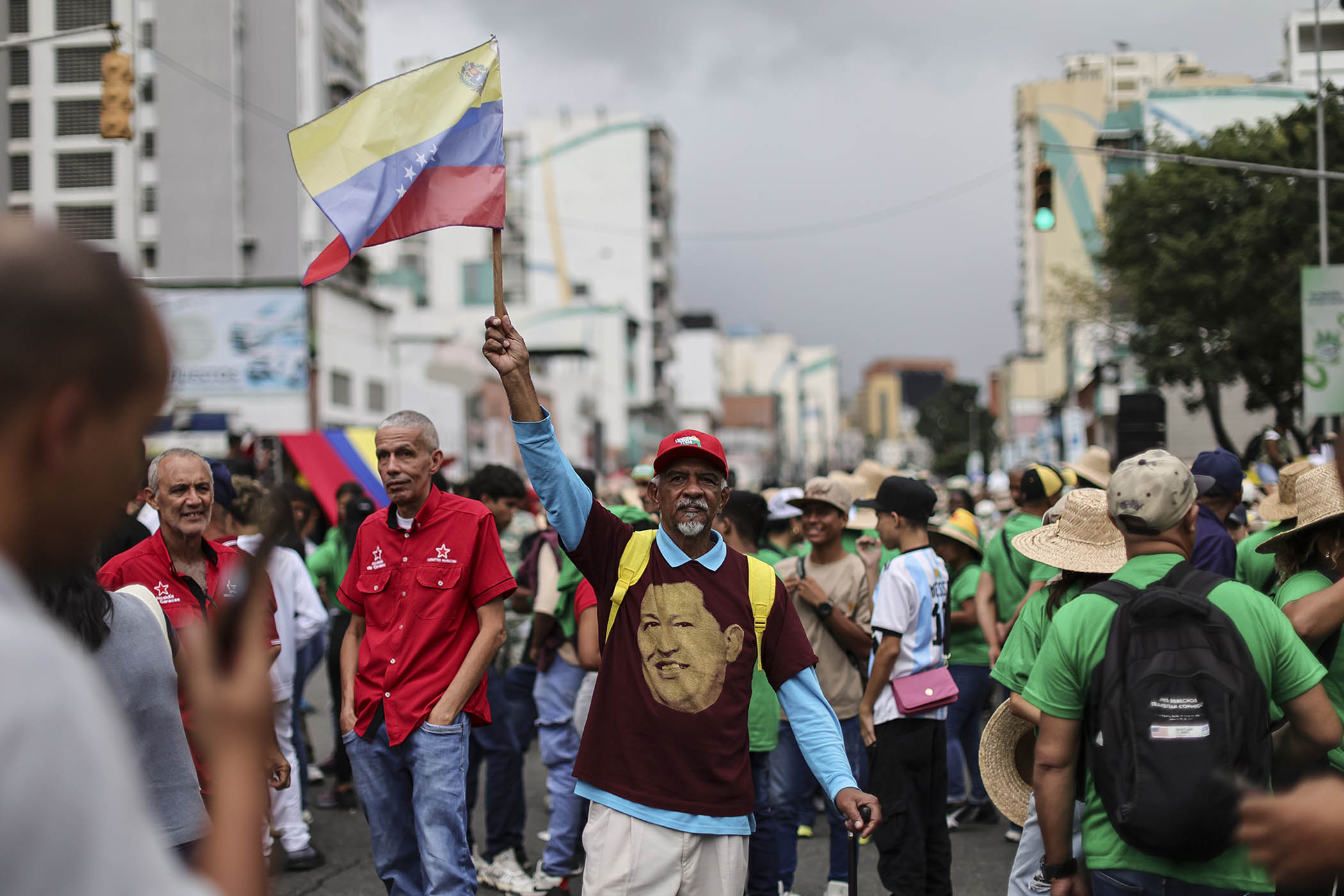
Meanwhile, state television and social media circulate videos of Maduro dancing to upbeat Latin music, alongside images of choreographed pro-government marches and government-mandated Christmas celebrations that began 1 October, projecting a carefully managed sense of normality.
“There is a total denial from the government about everything that is happening,” says a Venezuelan photographer who, like everyone The Observer spoke to inside the country, asked to remain anonymous for fear of government reprisals. He says he carefully deletes messages on his phone in case he gets stopped by government authorities who regularly check citizens’ phones.
A university teacher says she barely sees any information about US military actions unless she actively looks for it on social media.
‘There is a total denial from the government about everything’
‘There is a total denial from the government about everything’
A photographer in Caracas
Venezuelans are more consumed by daily economic hardship than the government’s distraction and spectacle. The local currency, the bolívar, has lost more than half its value against the dollar this year, while annual inflation is estimated at about 270% – the highest in the world.
Repression has also intensified since the US pressure campaign began. The university teacher says police and agents from the military counter-intelligence agency, DGCIM, appeared at metro stations soon after the escalation began. Maduro has also promoted VenApp, a mobile app encouraging citizens to report “everything they see, everything they hear, 24 hours a day”.
A Venezuelan activist living near the Colombian border says the area is saturated with military personnel. “That’s why there is a lot of fear about what you say or express publicly. There is constant monitoring [by the government],” she says.
Nevertheless, the university teacher in Caracas says that “everyday life has not changed much”. She says “concerns about the economic situation continue to grow”. A human rights defender from Caracas that “people are more focused on surviving than looking up at the sky to see if something [a military plane] is coming”.
Newsletters
Choose the newsletters you want to receive
View more
For information about how The Observer protects your data, read our Privacy Policy
Asked about the seizure of the oil tanker and the possibility of a US invasion, Machado backed the US move against the oil tanker and said that “Venezuela has already been invaded”, citing the presence of Russian and Iranian agents and armed groups.
Others are more wary. The university teacher worries that if oil seizures become routine, reduced state revenue could hit those who depend on public income. Similarly, the human rights defender warns that an economic blockade “could be catastrophic” for ordinary Venezuelans.
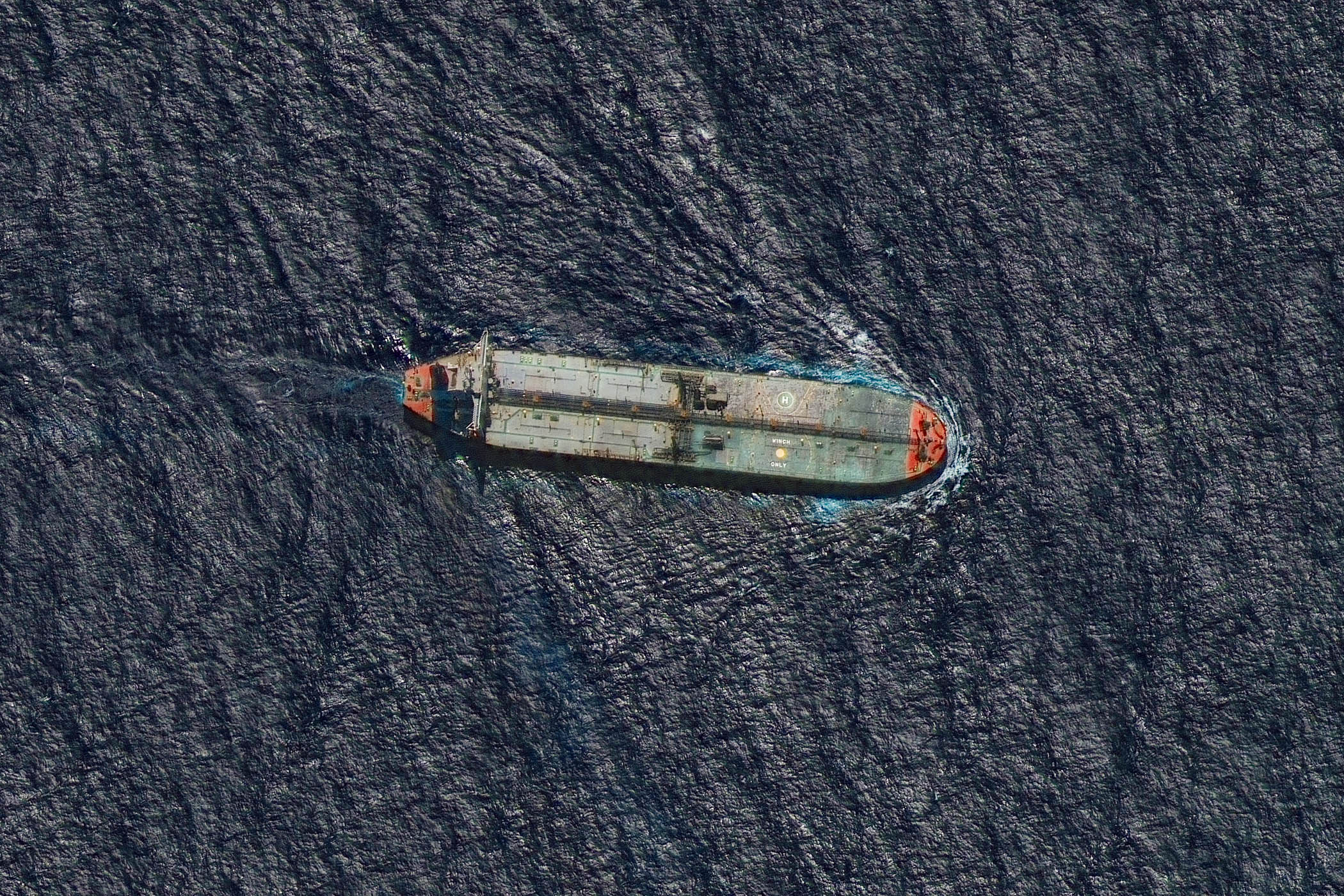
The crude oil tanker Skipper recently seized by the U.S. off the coast of Venezuela.
The photographer expects people to feel the effects of the maritime and aerial restrictions by January. “For now, there’s still gasoline, at least in Caracas. Things feel normal. The lights are on,” he says.
Maduro, he adds, has sought to turn the tanker seizure to his advantage, accusing the US of piracy and oil theft.
The activist at the border wants regime change, but not through foreign military intervention. “There’s a lot of fear,” she says, warning that a US military attack could trigger harsher government repression, mobilisation of armed actors and worsening conditions for political prisoners. Others interviewed shared concerns that civilians in Venezuela would pay the price of a military conflict.
“Maduro’s government is facing pressure greater than at any time before,” the activist says. “This creates high expectations for change.”
The human rights defender says that government officials appear increasingly nervous since Trump’s threats began, with a sense that the political tide could turn.
Machado’s Nobel prize has injected cautious optimism. Despite censorship, many Venezuelans have quietly celebrated the award. The human rights defender says he wept with joy while watching the ceremony. “Everyone has read the speeches,” he says. “We know this is recognition not just of her, but of a entire people.”
“The challenge is to bring the Nobel peace prize and Machado back to Venezuela,” the university teacher says, arguing that the government prefers her in exile, creating discouragement among supporters who feel abandoned.
Others remain sceptical. Maduro has weathered years of international sanctions, protests and contested elections to stay in power. It has become, says the photographer, “a war of exhaustion”.
Photograph by Jesús Vargas/Avalon, Vantor via AP