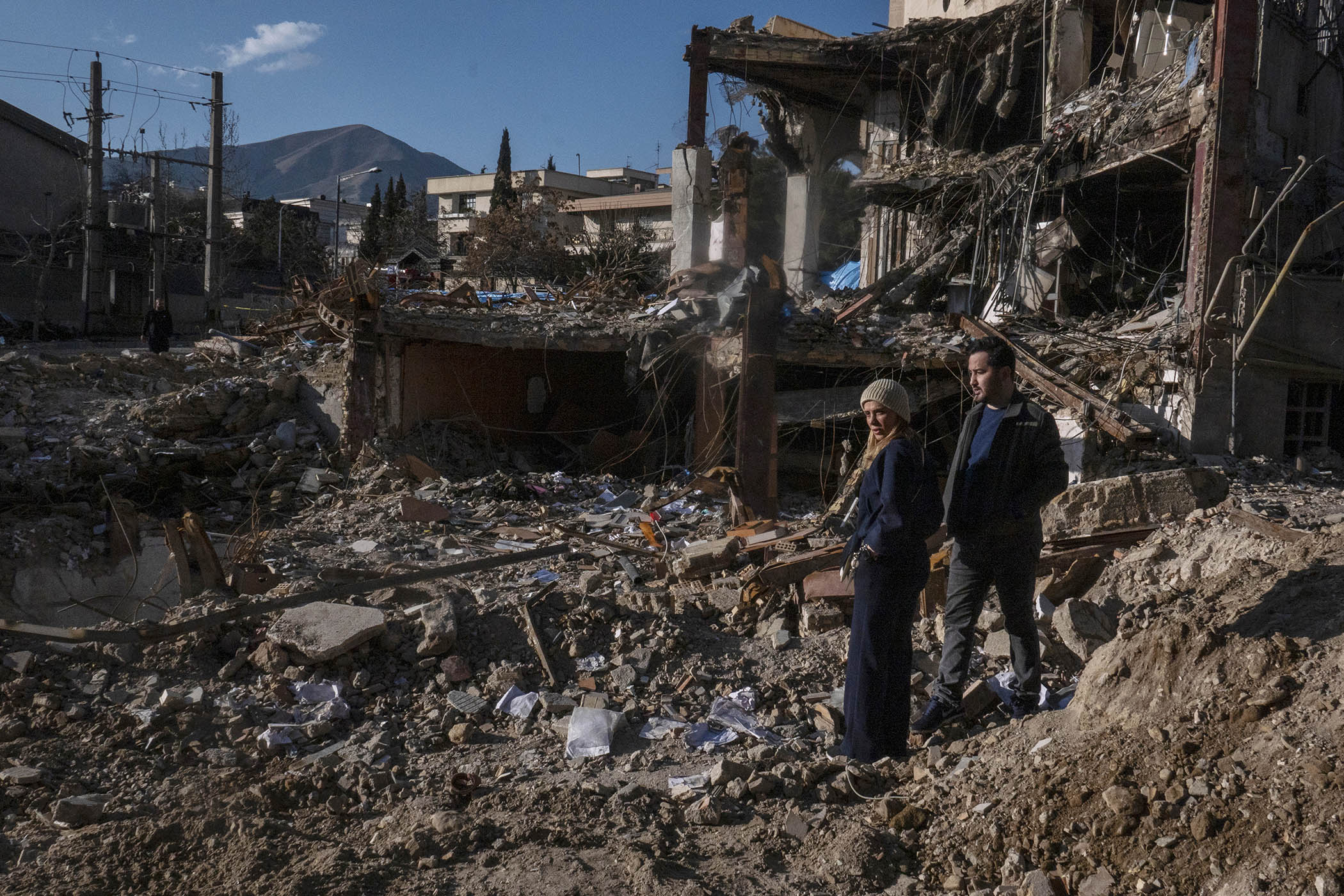

In Donald Trump’s telling, Iran is on the brink. Its army has been decimated, its navy is at the bottom of the sea and its missile stocks are running low. Now the regime has been offered a way out in the form of a 15-point peace plan. If it does not accept, the US will “unleash hell”.
“They are begging us to make a deal,” according to Trump.
The problem is that Iran also thinks it has the upper hand over an adversary that is desperate to de-escalate. Yesterday, an Iranian official told state TV the proposal is a ploy that did not reflect “the reality of America’s failure on the battlefield”. It has been dismissed.
The official line is that there are no talks and that the Americans are negotiating among themselves.
As peace processes go, it’s a bad start. The American plan, communicated through Pakistani intermediaries, is said to demand a complete end to Iran’s nuclear programme. This goes further than the deal agreed by the Obama administration and ripped up by Trump, which set caps on uranium enrichment and centrifuges. The proposal also would restrict Iran’s missile programme, end its support for regional proxies and reopen the Strait of Hormuz.
These conditions are similar to the demands made by the US before the war in February. They fall short of the goal of regime change sought by Israel and briefly endorsed by Trump, but would defang Iran as a regional power.
Tehran has countered with its own demands: reparations for war damages, an end to attacks not just against Iran but its proxies in Gaza and Lebanon, and recognition of its “exercise of sovereignty over the Strait of Hormuz”. This last point indicates Iran’s desire to formalise its biggest point of leverage – its ability to choke Gulf energy supplies and hold the world economy to ransom.
“They have no intention of capitulating, no intention to give something that they were not willing to give before the war,” said Danny Citrinowicz, a former head of the Iran desk in Israeli military intelligence. “For the Iranians, this campaign is an opportunity to rebuild the strategic structure of the region in a way that supports their interests and protects their security.”
The result, said Citrinowicz, is “a war of attrition, with no off-ramps, no strategic way out”. This suits Tehran far more than Washington. The Iranian regime has taken a huge amount of punishment and is still standing, battered but defiant. It appears ready for a prolonged struggle that brings the global economy to the brink. For a US president facing tough midterm elections in November, this scenario would be a difficult sell to American voters.
“It’s a strange situation,” said Nicole Grajewski, a fellow at the Carnegie Endowment for International Peace. “You have the strongest conventional military in the world coming up against a country with asymmetric tactics that seems to have somehow gained an upper hand in negotiations.”
But the stakes are different for each side. “For the Iranians, this is a fight for their survival. For the United States, this is a war of choice,” said Grajewski.
The US has postponed but not removed its threat to bomb Iran’s power plants. Meanwhile thousands of marines and paratroopers are on their way to the region, perhaps in advance of an invasion of Kharg Island, the terminal that handles 90% of Iran’s oil exports. An administration official told Axios that “Trump has a hand open for a deal and the other is a fist, waiting to punch you in the fucking face.”
Will these pressure tactics work? The regime has been changed by nearly four weeks of war. Pragmatists have been sidelined, and hardliners have come to the fore. So many leaders have been assassinated that it is questionable whether anyone has the authority to negotiate a deal. Even if an official does manage to broker one, it may not be accepted by the rest of the system, said Grajewski.
It is not inconceivable that Trump cobbles together a half-baked compromise that he tries to spin as a victory. He has, after all, claimed to have solved eight wars. One of these is ongoing; two others didn’t exist. But it’s one thing to claim diplomatic slam dunks in places few Americans can locate on a map. It’s another to style out a win when petrol prices are spiralling upwards.
“For President Trump, someone who wants to reach quick, decisive wins, Iran doesn’t offer that,” said Citrinowicz. “We said that from the get-go.”
So Trump could be pushed to escalate in a bid to de-escalate. He warns “it won’t be pretty”. But neither will Iran’s retaliation.
Photograph by Majid Saeedi / Getty Images
Newsletters
Choose the newsletters you want to receive
View more
For information about how The Observer protects your data, read our Privacy Policy