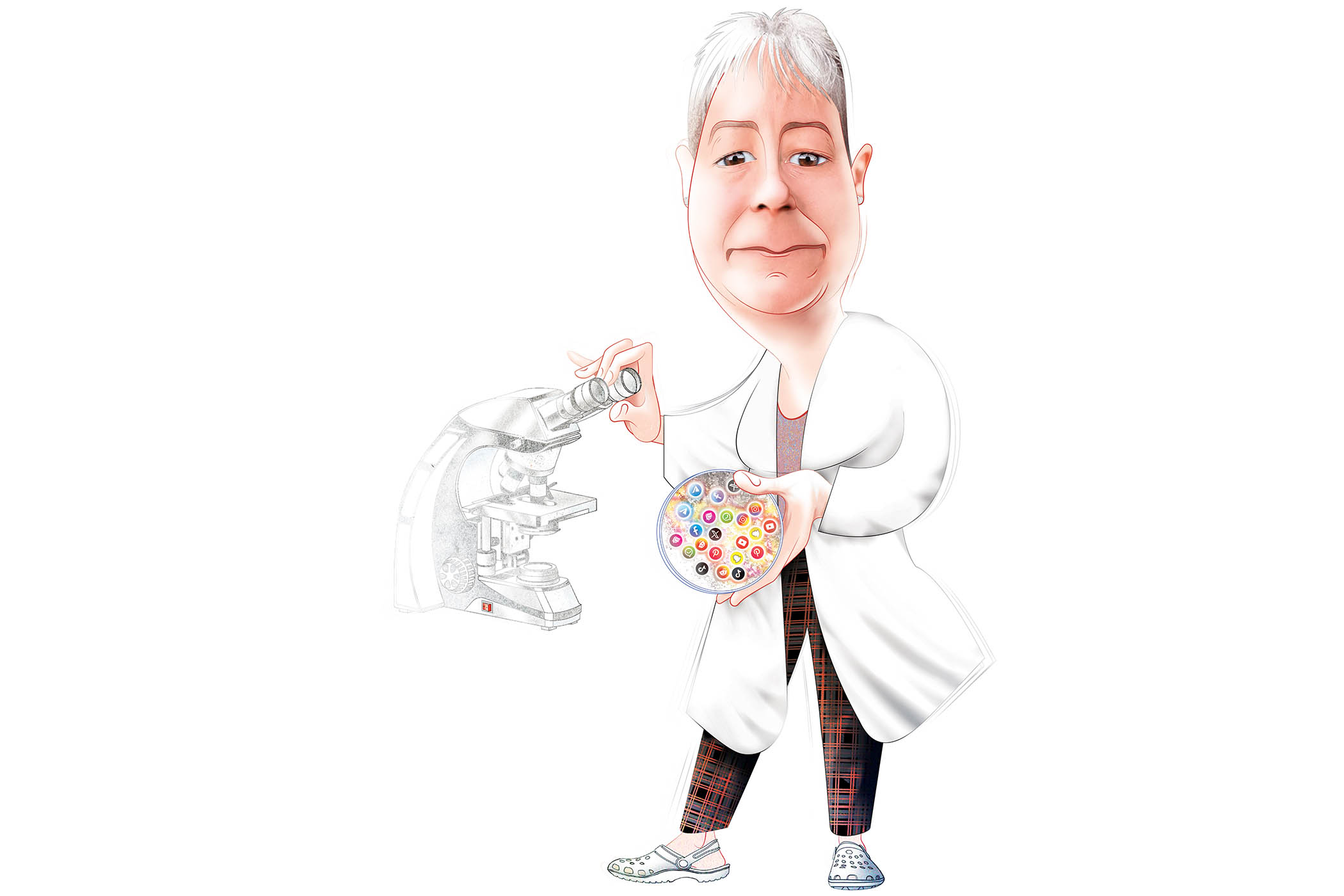
Portrait by Katarina Premfors for The Observer
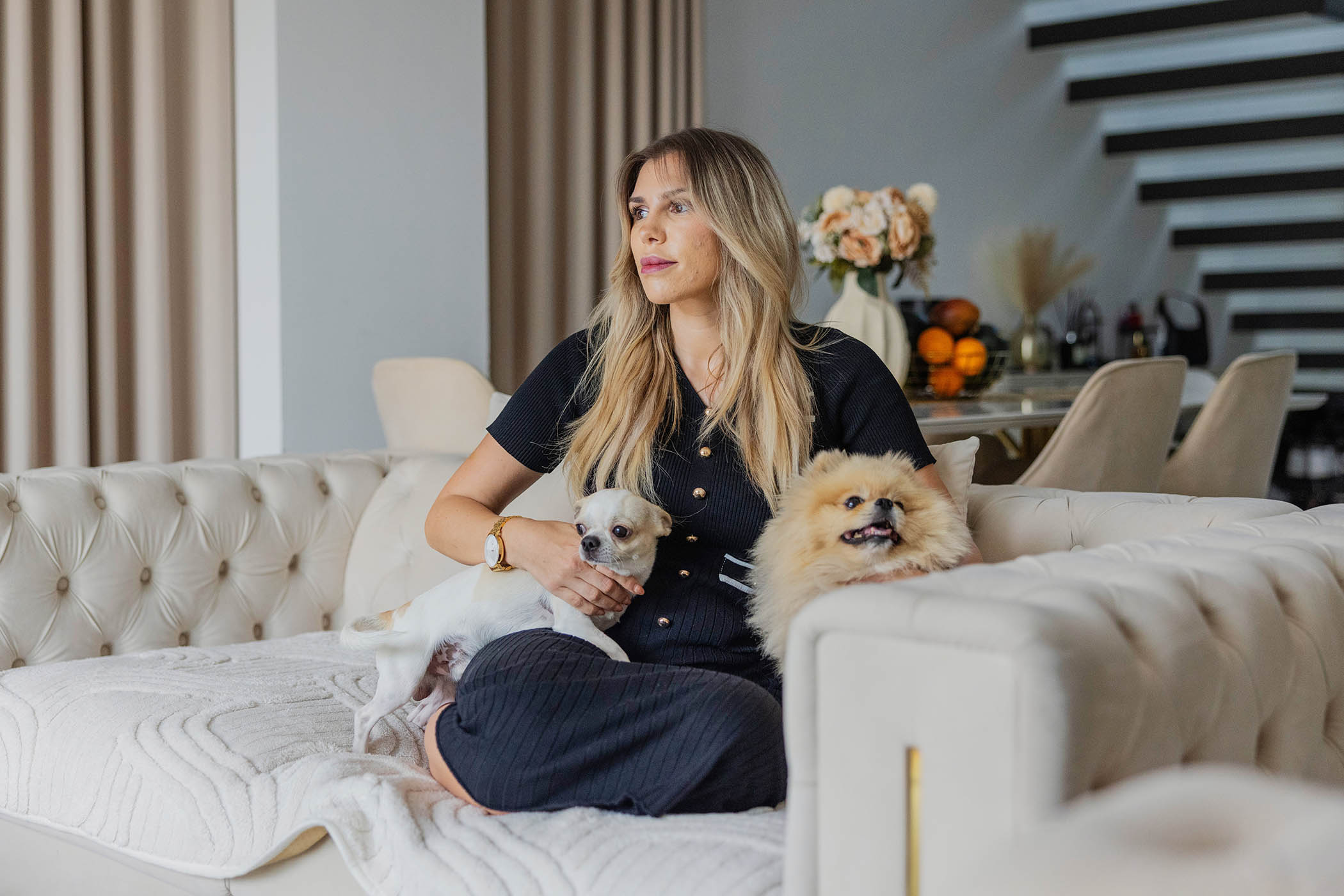
When Nathalie Bleicher-Woth, a German influencer with nearly 2.5m social media followers, first heard the sound of bombs in Dubai last Saturday, she did her job and posted a video. She described how she had heard a big noise and didn’t know what was happening.
“There were influencers texting me: ‘We don’t know if you’re allowed to say stuff like this on the Internet’,” she said. “So I deleted the story.”
Bleicher-Woth, 29, was scared. She spent 48 hours sleeping in the bathroom with her child because she was told to stay away from the windows. But now, a few days later, she is relaxed and smiling. “We saw the news that so many missiles and drones had been intercepted,” she said. “I think we are fine. I trust the government will do everything to protect us.”
This emotional journey – from fear to apparent calm – will be familiar to anyone who has followed the content of Dubai influencers over a week of Iranian missile attacks across the region, including the United Arab Emirates. Most intriguing has been a chorus of videos, set to a Belgian Eurodance song, celebrating how safe people feel in the City of Gold. “You live in Dubai, aren’t you scared?” reads the caption, before the answer is given: “No, because I know who protects us.” This call and response is backdropped by images of the UAE royal family.
The role of influencers in attesting to the safety of Dubai, which is heavily dependent on tourism and foreign business, has raised a question about whether any money is changing hands. But a better question in a state with restricted free speech and potentially rich rewards for towing the government line is whether pay-for-play is even necessary.
Last March, Dubai’s government-owned media office marked Ramadan by posting an Instagram video that featured the ruler of the UAE, Sheikh Mohammed bin Rashid al-Maktoum. This Ramadan the same footage has been repurposed by residents of Dubai, many of them influencers, to send a message about their city: “It is safe here. Our rulers will look after us.”
People in Dubai may have good reason to believe this. The UAE ministry of defence says that only two of the 196 Iranian ballistic missiles detected since last Saturday have impacted on land. More than 93% of Iranian drones, which are being detected at much higher levels, have been intercepted. The attacks have resulted in three deaths across the country.
It is also not unusual to “fancam” leaders in Gulf states, where paternalistic attitudes run deep. “If you open the front page of my school yearbook in Bahrain, there’s a photo of the king, crown prince and prime minister,” said Marc Owen Jones, an expert on Middle East disinformation.
But the consistency, tone and scale of the “aren’t you scared?” trend makes Jones think that it is likely to have started as an inorganic campaign. “When I look at some of the people I know who are paid propagandists in the UAE, their narrative is that Dubai is super safe,” he said. “So this is obviously a narrative that the state is keen to promote.” Dubai is not in fact immune to danger. All three deaths in the UAE have been in the city, with Iranian attacks damaging Dubai International Airport, Fairmont The Palm hotel, and the Burj Al Arab hotel.
Newsletters
Choose the newsletters you want to receive
View more
For information about how The Observer protects your data, read our Privacy Policy
The Observer contacted several Dubai residents who took part in the trend. All said they did so of their own accord and without payment, claiming a range of motivations including a desire to show loved ones they are okay. Yulia Nicholson, a Russian expat working in real estate, said she joined in because she related to the trend. She said she had “zero fears” about living in Dubai with her kids: “I wish I could get paid for saying what I think.”
As they grow, paid trends will attract participants who have no ulterior motive in saying their piece. If anything, this is the ideal. “The ultimate goal of any campaign like this is if it is picked up organically by people replicating it,” said Jones.
The Observer has found no concrete evidence of payment to influencers. But the visibility of social media, coupled with Dubai’s strict rules around free speech, means that this may not be needed to create a uniform narrative.
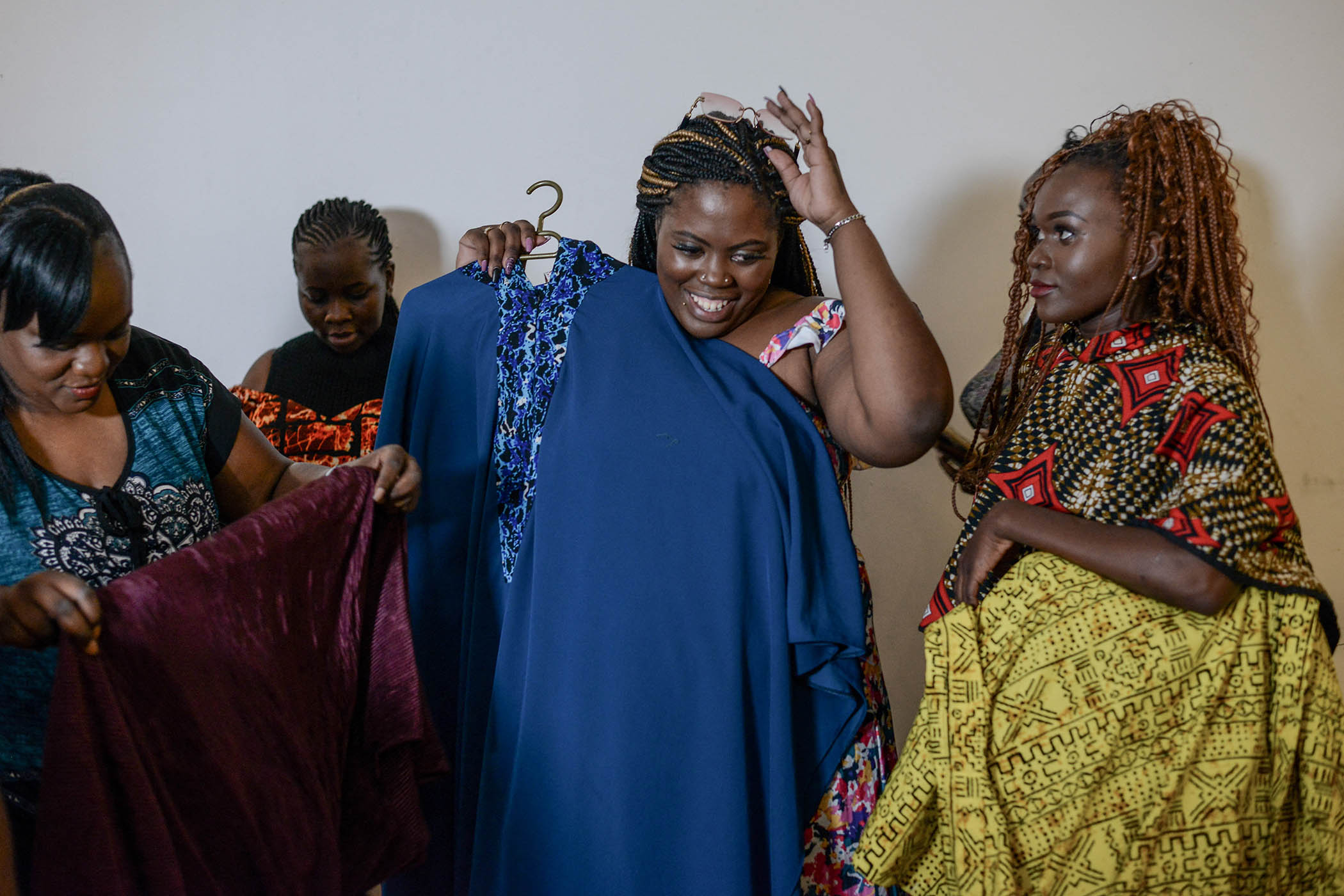
Dubai’s police force warned on Tuesday that sharing rumours, misinformation or any content that may cause “public panic” was prohibited and could lead to a jail sentence. The jeopardy is acutely high for the estimated 50,000 content creators who call Dubai their home. New rules took effect last month that require all influencers in the country to obtain an advertiser permit, putting them firmly within the purview of the government.
There are also positive incentives for influencers to stay in the UAE’s good books. In 2025, Dubai launched a $40m Creators HQ which provides podcast studios, offices, legal support and filming permits. Content creators can also apply for a 10-year golden visa which offers residency without a sponsor. Many influencers may be treating this moment as an audition for more lucrative work with the city’s tourism board, which regularly partners with content creators. The UAE is not alone in doing so: official figures show that the UK has spent north of £350,000 on influencer marketing since Labour was elected into government.
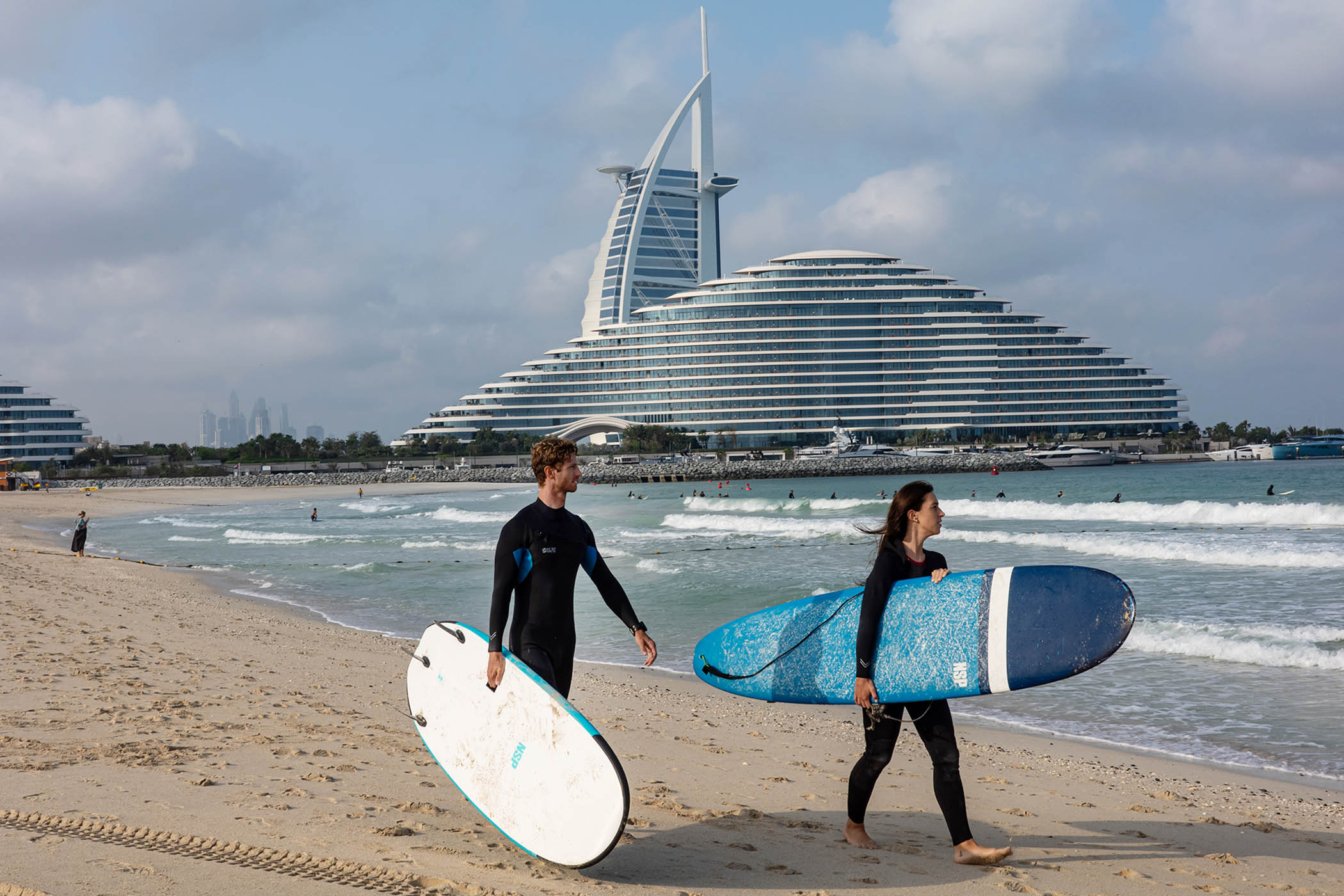
Surfers on Dubai's Jumeirah Beach
“Influencers who come to Dubai feel that they’ve been given an opportunity,” said Jones. “You have a distorted sample of loyalists who are going to praise the place because they like it there.” In this ecosystem, saying nothing at all can be risky. “This is how the Trump administration works. It’s not good enough to be silent – you have to engage in sycophancy.”
There is no doubt that talking about the safety of the UAE fits the messaging desired by the state. Dubai is one of the most visited cities in the world and a global financial centre which hosts 102 hedge funds, 290 banks and 500 wealth management firms. It has become this glittering giant by presenting itself as a refuge in a dangerous region.
“Dubai has been able to capitalise on unrest, insecurity or repression around it,” said Jim Krane, a professor of energy geopolitics at Rice University. “Its business model has been based around relative safety, security, social freedoms and religious tolerance for 125 years.”
Expats are the lynchpin, comprising nearly 90% of the UAE population and including 240,000 Brits in Dubai alone. Any mass exodus of the community would be nothing less than a national security risk. “By their nature, expats don’t have citizenship and many don’t have long-term residency,” said Krane. “These are skilled and highly mobile people who don’t need a big push to move on. That is very threatening to the economic model of Dubai.” Arguably the best people to spread the good word at a time of precarity are westerners with huge followings and in-built reasons to praise the government.
These include the more extreme elements of the expat and tourist communities who incorporate Dubai into their broader political worldview. “There’s been this campaign to talk about how dangerous London is,” said Jones. “Nigel Farage and Tommy Robinson have been to Dubai. Part of the narrative is to say: ‘Oh my god. It’s safer in Dubai than London’.” At the sharp end are prominent X users who have posted from all over Dubai in the past week to drum home the message that there is nothing to fear, even as the UAE continues to issue shelter-in-place orders. The spear tip is Andrew Tate, the self-styled misogynist, who is attempting to get into Dubai over land to “show respect to the greatest city on earth”.
But an underplayed element of the information war is that, like any war, it has two sides. Users on X have shared videos that claim to show ballistic missiles over Dubai, when the footage in fact depicts a 2024 attack on Tel Aviv. An AI-generated clip, seen more than two million times, claims to show the Burj Khalifa, the world’s tallest structure, in flames.
The Observer has also found evidence of coordinated activity, including a sequence of posts from different accounts with identical wording: “Dubai is done. It will be nearly impossible for the UAE to sell a secure lifestyle to expats and investors now.” Three of these posts alone have received more than ten million views on X. None of the accounts in question, one of which belongs to a former NFL player, could be reached for comment.
The Dubai Media Office did not respond to multiple requests for comment.
It is clear, in many cases, that the interests of Dubai influencers and their autocratic leaders align. Both need the city to be seen as a place of aspiration rather than fear. Even now, Bleicher-Woth, who has lived in Dubai for a year, insists she feels safer than she did in Berlin, where she had a stalker and was scared to leave the house. “No one is saying bad stuff to me or trying to attack me here,” she said. For this, the threat of ballistic missiles is a small price to pay.
Photograph by Christopher Pike/Getty Images