
Illustration by Andy Bunday
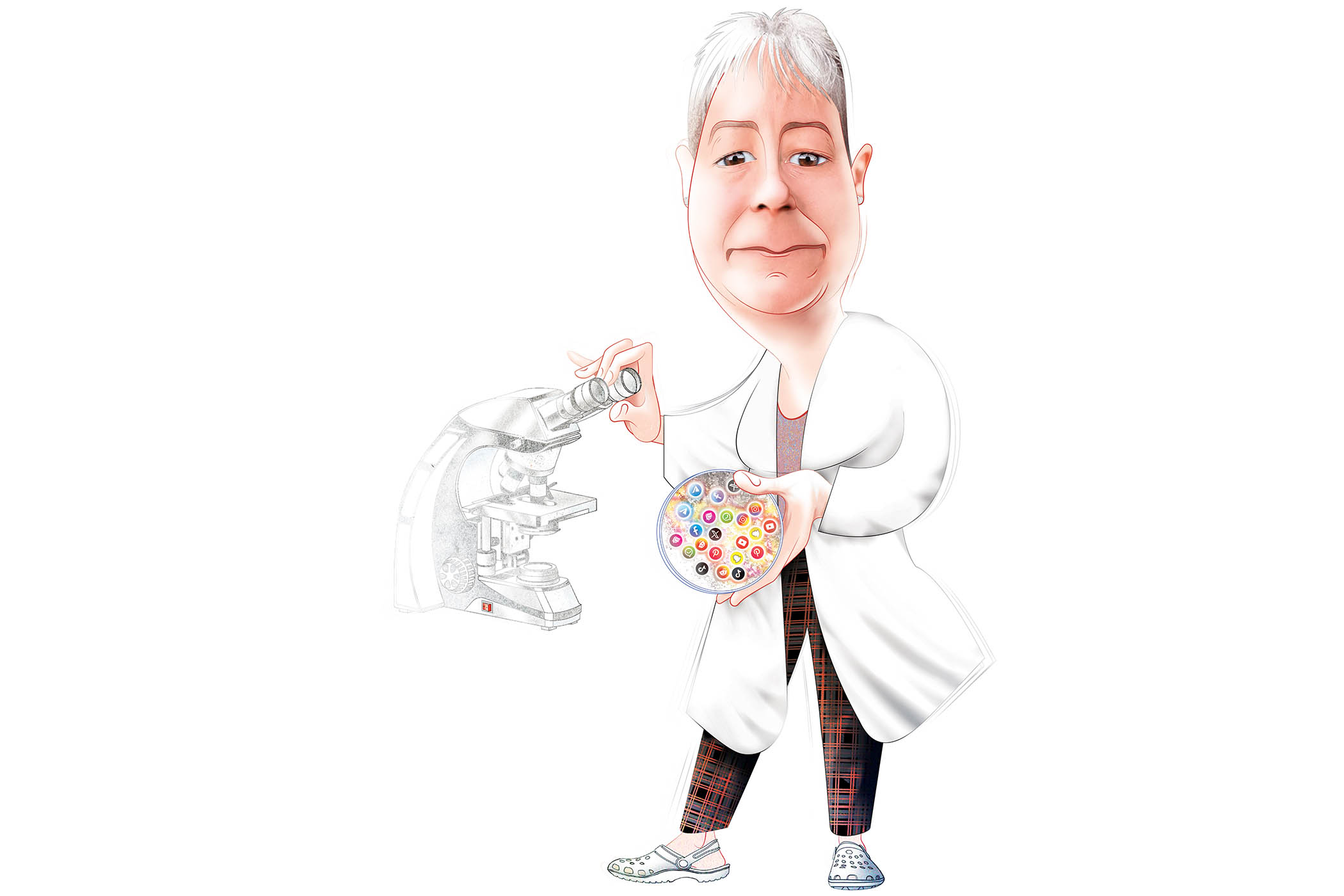
If any executives from Meta, Alphabet or TikTok owner ByteDance are hoping to do some offence archaeology on Jeanette Dickson, they won’t find many lolz. Scrolling through the social media feeds of the chair of the Academy of Medical Royal Colleges (AoMRC) reveals a woman whom digital marketers would call an “amplifier”, reposting other comments rather than being an abusive “reply guy” or indiscreet wannabe influencer. Think updates on oncology exams and NHS workforce issues rather than 6-7 memes, Saturday Night Live reels or Where Is My Husband! Raye lip-syncs.
Not that Britain’s most senior doctor outside of Whitehall is in an ivory tower, unaware of modern digital life. When Dickson parked the tanks of the UK medical professions on big tech’s lawn last week, warning that doctors believe children’s “unfettered exposure to tech” is a danger akin to smoking, she did so from the perspective of someone who has almost 6,400 posts on X.
A few of them hint at the personality of this “sweary Glaswegian”, as colleagues describe her. During the Brexit wars in 2018, when Dickson was taking her first steps on the national stage, she encountered some protesters outside parliament, alongside police, journalists and “a lone man with a megaphone”.
“Megaphone man was protesting about parliament’s destruction of Christianity,” she posted. “I felt he was not fully up to speed on current events.”
For others not up to speed on current events, ministers are considering whether or not to follow Australia’s decision to ban social media for children under 16, restrict access to AI chatbots, or disable features such as infinite scroll and autoplay for videos. The government’s consultation, which closed last Tuesday, received more than 80,000 submissions, and the AoMRC’s was arguably the most significant. As the collective voice of the UK and Ireland’s medical royal colleges and faculties, the 22 professional bodies that represent GPs, surgeons, psychiatrists, A&E consultants, intensive care specialists and sundry other clinicians, it speaks for about 220,000 doctors. Nearly all of them.
The colleges often disagree, which means it is rare for the academy to speak up. Last year, Dickson criticised Aseem Malhotra, a British cardiologist who was appointed as an adviser to the US health secretary, Robert F Kennedy Jr, after he used a speech at Reform UK’s annual conference to link Covid vaccines to the cancer diagnoses of King Charles and Catherine, Princess of Wales. “We all know this is how conspiracy theories begin, with anti-vaccine rhetoric,” she said at the time. Then, in December, she blamed the government for contributing to anti-migrant rhetoric, linking it to news that foreign-born doctors were leaving the NHS in record numbers.
But last week’s announcement that – although science has not yet proved it – there is an “overwhelming consensus” among doctors of the harms of tech and social media, was of a different order, and an extraordinary feat of cat-herding. How did Dickson manage it?
‘She’s really very good at listening, and I think a lot of that comes from being an oncologist’
‘She’s really very good at listening, and I think a lot of that comes from being an oncologist’
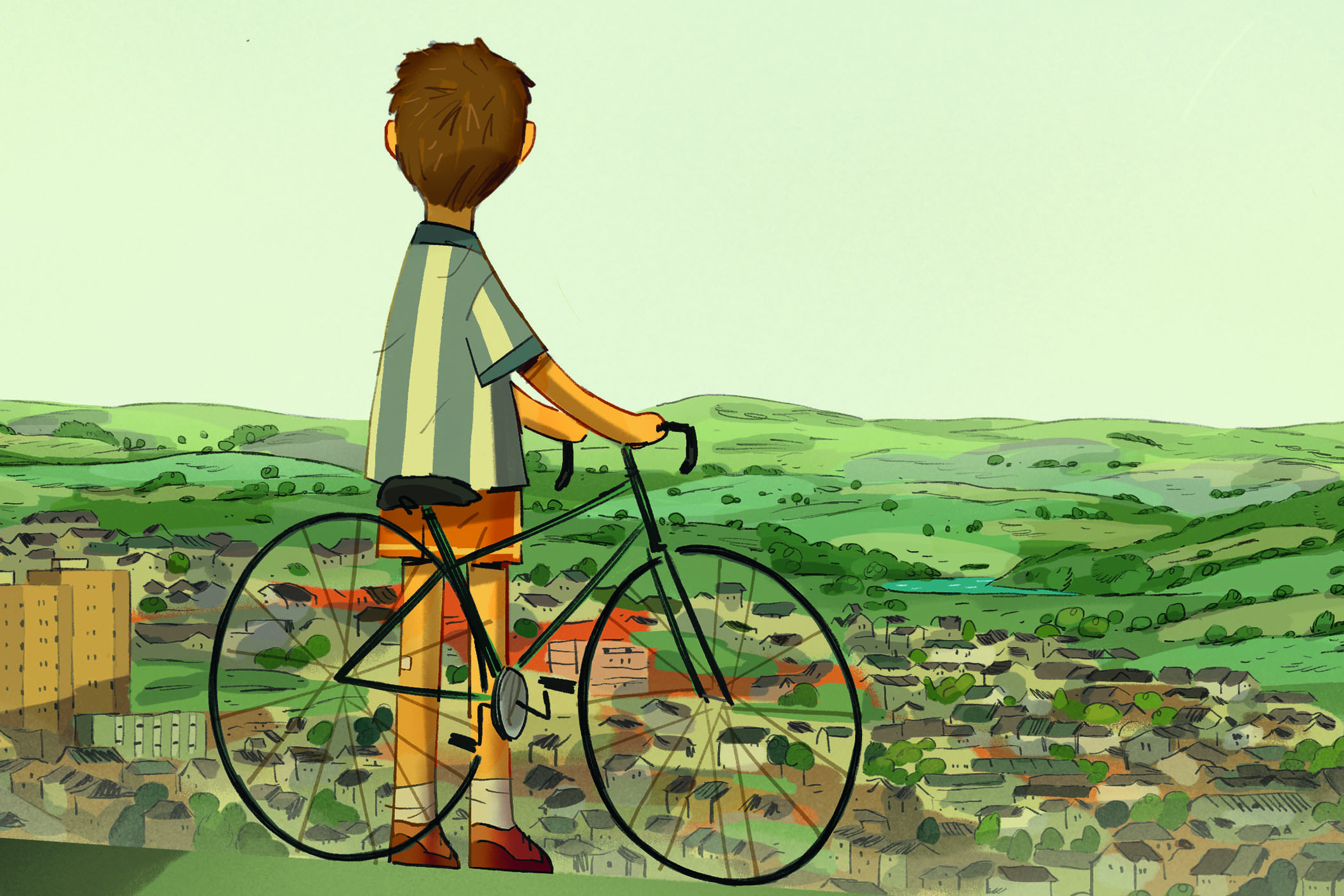
Her upbringing in the 1970s and 80s in one of Glasgow’s working-class neighbourhoods marks her out from many of the privately educated members of the medical elite. She barely knew her father, a dock worker, as her parents divorced when she was very young (for those keen to establish which side of Glasgow’s divide she is from, it was a mixed Protestant-Catholic marriage, and she has no interest in Celtic or Rangers).
Her mother, brother and stepfather all became psychiatric nurses, but her mother – seeing her excellent comprehensive school grades – insisted that her daughter raise her sights higher than she had. A flirtation with becoming a police dog handler fell away and Dickson arrived at medical school at Glasgow University in 1986 at the age of 17 and was drawn to the cancer ward. “I really just liked the people, liked the patients, liked the team, liked the vibe, so I thought, right, that’s it,” she told the British Medical Journal in 2024.
Newsletters
Choose the newsletters you want to receive
View more
For information about how The Observer protects your data, read our Privacy Policy
After training in Eastbourne, about 500 miles away, then Glasgow again, followed by Manchester, she found a job at Mount Vernon hospital on the outskirts of north-west London, where she stayed put and focused on lung cancer.
“She’s really very good at listening, and I think a lot of that comes from being an oncologist,” said Tom Roques, a consultant oncologist who trained as a registrar with Dickson at Mount Vernon. “You go into treating people with cancer often to make the best of bad situations, and to tailor that to them as individuals. There’ll be people who are university professors and people who can’t read and write. Those skills translate very well into high-end leadership.”
Being a good listener is not part of the DKB – doctor knows best – archetype that can still sometimes be found among medics, but it points towards Dickson’s success in national leadership roles. Like many in the medical profession, she has no partner or children; in 2013, she became an officer of the Royal College of Radiologists, which represents both oncologists (who treat and diagnose cancer) and radiologists (who use imagers and scanners to look inside the body) – and by 2019 was its president.
“Jeanette is really skilled at having the right conversations within Whitehall,” said Phil McCarvill, AoMRC’s chief executive. “She’s prepared to say the things that other people aren’t but behind the scenes, so you get people in the right place. Jeanette will plant the idea that something needs to happen and then wait for it to come full circle for someone to come back and say: ‘Do you think the academy could support us if we did this?’”
After three years as chair of AoMRC, Dickson’s term will end on 8 July. It’s unlikely that the children’s screen-time conversation will be resolved by then, but perhaps there is a lesson from lung cancer. When Dickson became an oncologist, less than 10% of patients survived for five years or more. That figure has doubled, thanks to research into better treatments, such as immunotherapies, and warnings from doctors that smoking kills. Dickson and her colleagues hope that last week’s warning about screen use will have a similar impact on the childhood mental illness crisis.