


Listen to the Slow Newscast episode “Frontier Men: The Forbidden Island” to hear more about this story.
It took nine hours for Mykhailo Polyakov to reach the island, borne through swells under the cover of darkness. Finally at rest by the shoreline, he ate a lunch of trail mix and beef jerky in an inflatable dinghy, and waited with his camera.
Seen from above, North Sentinel, part of India’s Andaman and Nicobar Islands, shows only the faintest signs of human activity. There is the outline of a shipwreck, some tracks that lead into thick forest, and little else.
But under the canopies live anywhere between 15 and 200 people, hunter gatherers clad in bark strings and armed with bows and arrows. Non-islanders call them the Sentinelese, because we don’t know what they call themselves. They are one of the last uncontacted groups in the world.
This hasn’t stopped people trying to reach them. The most infamous was a British naval officer, Maurice Vidal Portman, who kidnapped some of the tribe in 1880 and exposed two of them to fatal illness in the nearby city of Port Blair. The latest was Polyakov, a YouTuber who made landfall just under a year ago.
Polyakov is now back home in Scottsdale, Arizona, but his fate was uncertain for much of last year. He was arrested shortly after his visit to North Sentinel and was thrown in prison with Burmese poachers.
The 25-year-old got away with a fine and heavy criticism from those who regard his trip as narcissistic, deluded and risky. Survival International, a human rights organisation working on behalf of Indigenous people, says it was a “foolish” and “idiotic” thing to do.
But Polyakov is no outlier. He forms part of a lucrative industry of “danger tourists” who want to reboot the age of discovery of the 15th and 16th centuries by visiting treacherous places such as active war zones or extreme natural environments. Willing to cross legal and ethical boundaries in the name of content, they often claim to be raising awareness of the threats isolated communities face when the most immediate threat is from danger tourists themselves.
In the two months since Polyakov returned from the Andaman and Nicobar Islands, he has already travelled to war-torn Haiti. Soon he will head to Mexico and Papua New Guinea, where he will try to contact other remote tribes.
Polyakov, who has a master’s degree in finance, planned to go into banking until the twin inspirations of Vice News and Werner Herzog put him on a different path.
Newsletters
Choose the newsletters you want to receive
View more
For information about how The Observer protects your data, read our Privacy Policy
“I can do these daring things, and people will find them interesting,” he realised. “I can commercialise that.” He set up a YouTube channel, which he named Neo-Orientalist.
“Orientalist was a term for European scholars to interpret Asia for European audiences. So they would go write about these mysterious places, and open them up to the world. That’s the same sort of energy that I want to capture,” he tells The Observer. “And I threw ‘neo’ in front, because I’m bringing it back.”
After a travel series on Taliban-controlled Afghanistan, Polyakov’s focus turned to North Sentinel and the people who have lived there in solitude for thousands, maybe tens of thousands, of years.
“I thought it would be an incredibly compelling story. They’ve never been in footage that wasn’t grainy, so I believed audiences would find it interesting that there were these people you might never have heard of – and here they are in [high definition video]”.
Polyakov is one of a long line of adventurists, slave traders and colonialists who have been drawn to the tiny island, which lies in a remote stretch of the Indian Ocean at the western edge of the Andaman and Nicobar Islands. Since the 13th century Venetian merchant Marco Polo described the Andamanese as the “most brutish and savage race”, explorers have repeatedly characterised the Indigenous groups on the island chain as “primitive”. Those on North Sentinel have been stereotyped most extensively.
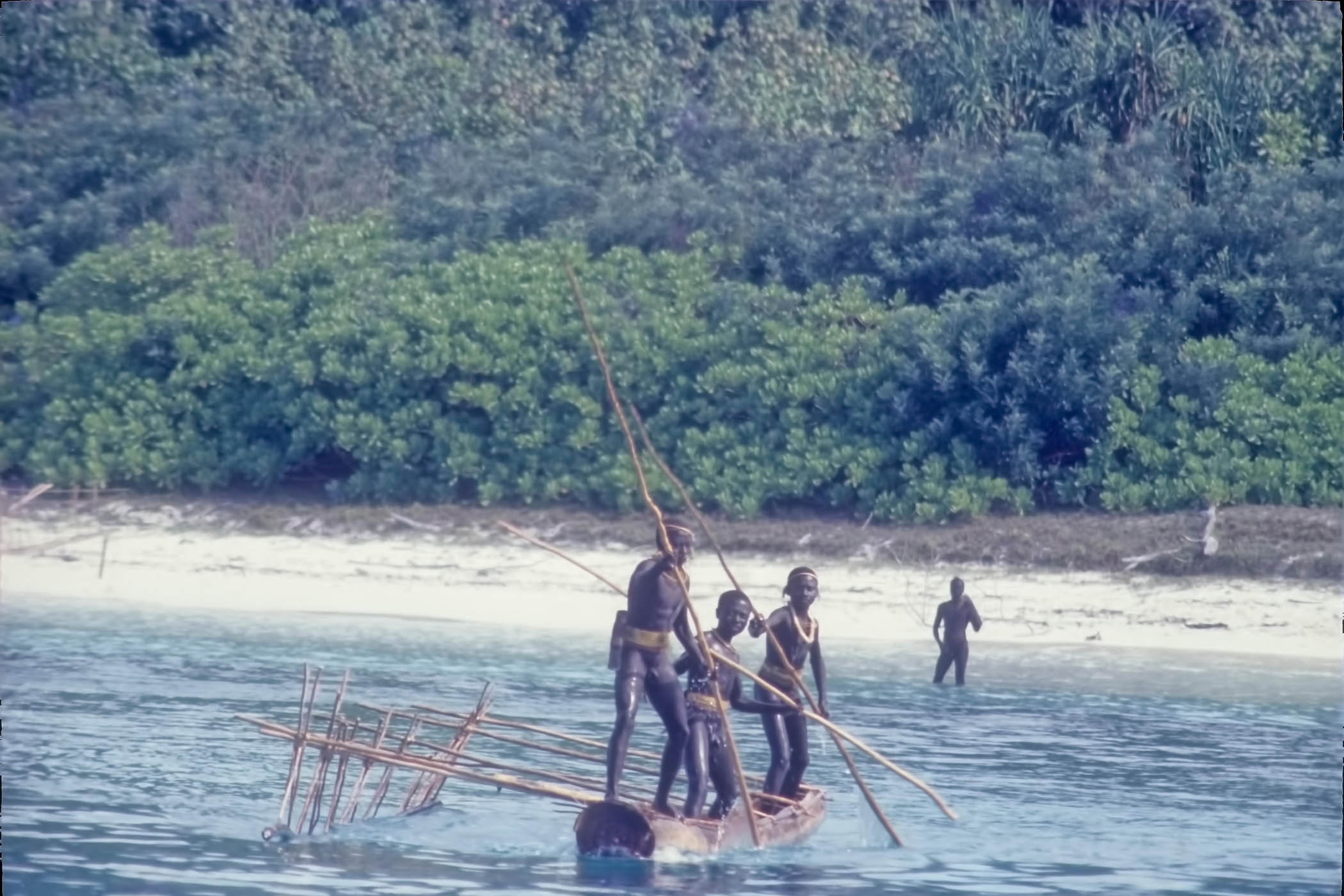
Sentinelese islanders photographed in 1984
Many have come to regret their encounters with the Sentinelese. In 2018, a young Christian missionary called John Allen Chau was killed when he tried to convert them.
“Lord, is this island Satan’s last stronghold where none have heard or even had the chance to hear your name?” he wrote in his diary ahead of the ill-fated encounter. The exact circumstances of his death are not known but five fishermen witnessed a body being buried at the shore a day after he was last seen. A tribesperson had pierced Chau’s Bible with an arrow in a previous encounter.
Adam Goodheart, a historian, paid a visit to North Sentinel two decades before Chau and lived to tell the tale.
“It feels like everyone’s mental image of a remote island,” he says. “This dark forest, with immensely tall trees, ringed by a perfectly white beach. Beyond that, there’s a small lagoon and a ring of coral reefs all the way around.”
While circling the island in a wooden fishing boat, he spotted the Sentinelese people from a few hundred yards away. One of them got into a small canoe, apparently to get a closer look.
“I remember the effect it had on me, the sense that I was looking across a great gap between civilisations; a gap between epics of history. But also that I was encountering people who were very much members of my own species, with a culture, lives, family relationships and psychologies as complex as my own.”
This moment of connection was cut short by a violent squall. “It was quite frightening,” Goodheart says. “We had to make a decision between setting out into the roaring ocean or trying to pick our way through this very hazardous reef, getting into the lagoon and possibly even being blown ashore.”
He escaped. With hindsight, he understands why the Sentinelese can be hostile to outsiders. “Indigenous peoples tend to be very meticulous oral historians who preserve long traditions,” he says. “Especially ones that affect their own survival.”
Polyakov is happy with the moral considerations he made. He likens his trip to those reporters make to North Korea and insists the idea that outsiders can infect indigenous peoples with lethal illnesses is unfounded.
Not so, says Jonathan Mazower of Survival International: “This isn’t an academic or theoretical risk. It’s a very real one that has happened time and time again throughout history.”
He cites the Murunahua people, an uncontacted group in the Peruvian Amazon, whose territory was infiltrated by loggers in 1996. More than half of the population died in short order, mainly from common illnesses.
‘Orientalist was a term for European scholars to interpret Asia for European audiences... That’s the same sort of energy that I want to capture’
‘Orientalist was a term for European scholars to interpret Asia for European audiences... That’s the same sort of energy that I want to capture’
Mykhailo Polyakov
Polyakov never did encounter the people of North Sentinel. He blew a whistle and shone a light towards the trees, but nothing and no one stirred. He briefly disembarked to leave a coconut and a Diet Coke (“a tongue-in-cheek symbol of modernisation arriving to their coasts”) before returning to the mainland. There he was met by police. Only then did his family find out where he had been.
Polyakov spent nearly a month in police custody and in jail, and several more months on bail without his passport. He flew home in December after paying a $180 (£135) fine.
India bans travel within three miles of North Sentinel, with a maximum sentence of five years in prison for those who breach the restriction zone around the protected territory. But Mazower thinks the light punishment handed to Polyakov will do nothing to prevent future visits.
“I don’t think any of the publicity he’s generated has been helpful,” he says. “The principal threat to the Sentinelese are people like him.”
Polyakov is unmoved by the idea that he might inspire copycats. He says: “People have free will, and they can do whatever they want. I think it’s ridiculous to hold me responsible for what someone else does.”
Last month he released a 37-second teaser for a new video about North Sentinel. Although he never filmed the tribe, he tells The Observer that he had seen new drone footage of them that “shows they’re alive” and “very much active”. He even claims to be able to estimate their “approximate population size”, which is publicly unknown.
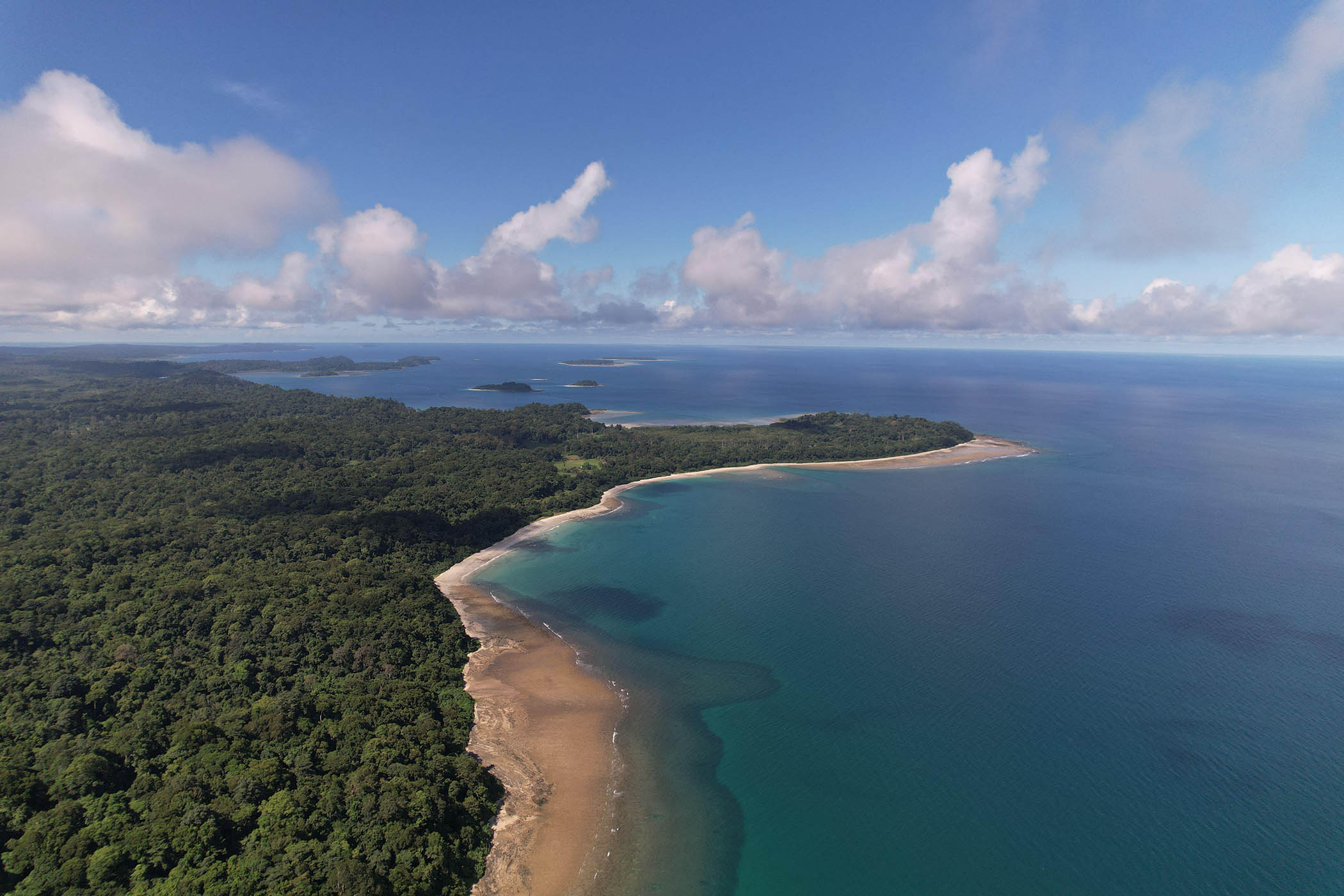
India bans travel within three miles of North Sentinel
Last week, India’s National Green Tribunal approved a £7bn Great Nicobar mega-project involving a container port, airport and military base to be built a hop and a skip away from the Sentinelese. The government hopes to attract a million visitors a year to the area. Survival International warns that the development could wipe out the Shompen, an Indigenous group who live on Great Nicobar Island.
“All these things are basically variations on a theme,” Mazower says. “That the land rights of uncontacted peoples – or other Indigenous peoples who aren’t uncontacted – are very rarely properly recognised and respected as they ought to be.”
The danger tourism industry is forecast to be worth £35bn by 2030. Human nature suggests that, without stronger deterrents, explorers like Polyakov will keep pushing the limits of what’s legal in search of what’s monetisable.
“I think we see the Sentinelese through a haze of our own cultural obsessions, presumptions and fantasies of noble savages, unexplored places and uncontacted tribes that stretch back centuries,” Goodheart says. “That undermines our ability to understand them as full human beings.”
Asked for any parting thoughts, Polyakov says: “I guess you can follow me on YouTube.”
Portrait by Cassidy Araiza for The Observer. Additional photographs Nutu/Alamy, Hemanth Kumar/Alamy