In the final days of his bruising Republican presidential primary campaign, knowing he was going to lose, Marco Rubio warned about the dangers of Donald Trump, a man he compared to a “third world strongman”.
“For years to come, there are many people on the right, in the media and voters at large, that are going to be having to explain and justify how they fell into this trap of supporting Donald Trump,” Rubio told CNN. “Because this is not going to end well, one way or the other.”
Ten years on, Rubio stood in triumph behind Trump after the stunning capture of Venezuelan despot Nicolás Maduro by US special forces on 3 January.
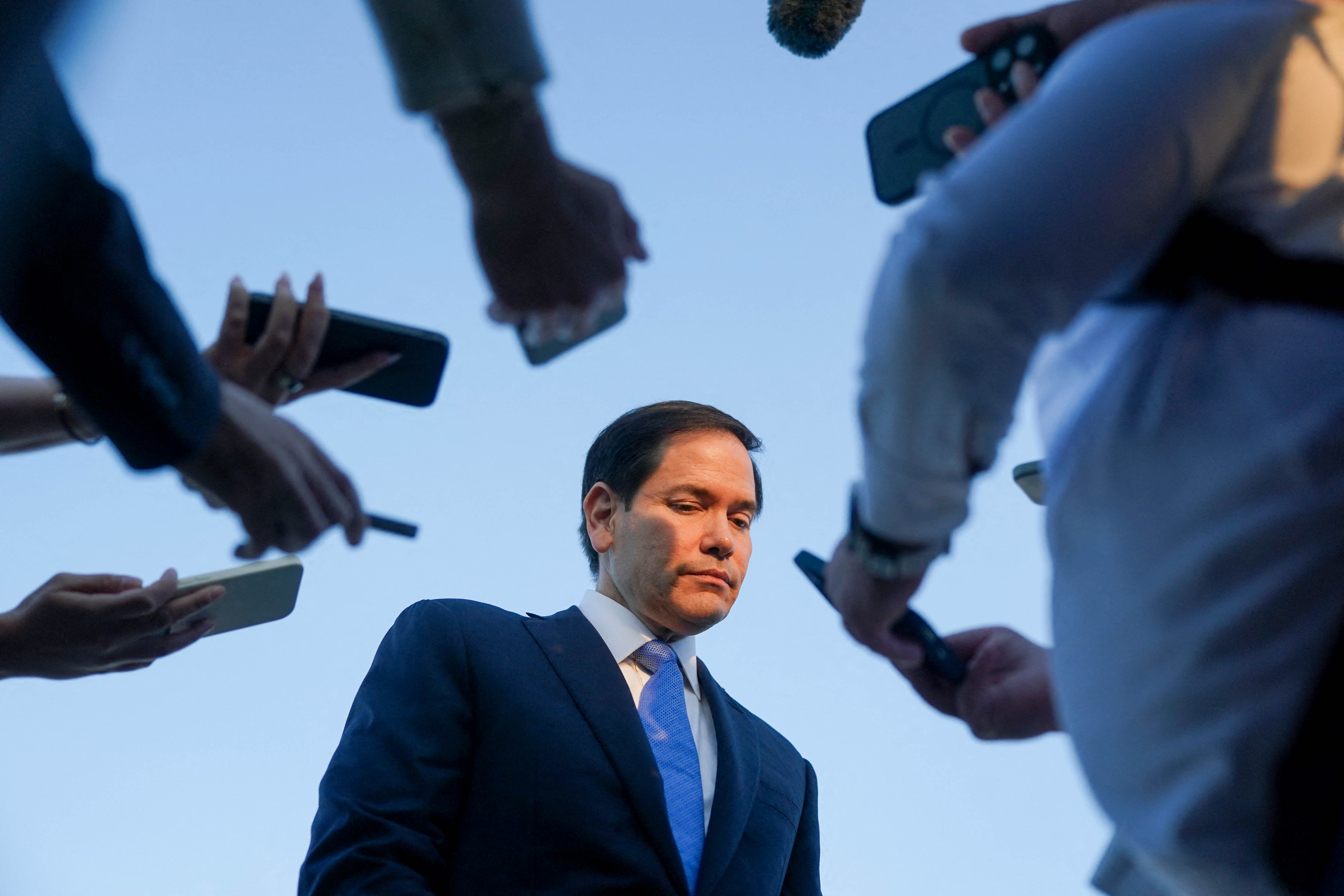
The 54-year-old’s emergence as chief architect of Trump’s return to the Monroe doctrine has crowned his evolution from Reagan-era conservative to Maga Republican. The flush of success since the fall of Maduro has revived talk of Rubio – famously dismissed by Trump during the 2016 campaign as “Little Marco” – as a future president. He does not look so little any more.
“When Trump has a problem, Rubio fixes them,” one Maga consultant said. “He has rebranded himself and put in the legwork to build trust with the big man. His stock has never been higher.”
Rubio’s ascent is all the more striking when set against his early travails inside the second Trump administration. The new secretary of state clashed repeatedly with Elon Musk as the world’s richest man and his department of government efficiency (Doge) roamed across the federal government with unchecked power.
Within days of the inauguration, Musk announced he had “spent the weekend feeding USAid into the wood chipper”. Rubio, a fervent supporter of US soft power as a senator, could only watch as an agency nominally under his control was dismantled.
As Musk’s tech minions sowed chaos throughout the civil service, Rubio fought a clandestine turf war for control of his own department. “Memos would come down from the secretary [Rubio] and the Doge guys would say: ‘We’re not going to do that,’” one state department staffer said.
Rumours flourished that Rubio and national security adviser Mike Waltz were viewed with suspicion by Maga purists in and around the White House. “There was certainly talk that he and Waltz weren’t ‘Maga enough’,” said one Republican strategist close to the administration.
Even on foreign policy, Rubio appeared to be shut out of Trump’s inner circle as the president’s special envoy and golf buddy Steve Witkoff assumed the key portfolios on Ukraine, Gaza and Iran. A profile of Witkoff in the Atlantic dubbed him “the real secretary of state”.
Newsletters
Choose the newsletters you want to receive
View more
For information about how The Observer protects your data, read our Privacy Policy
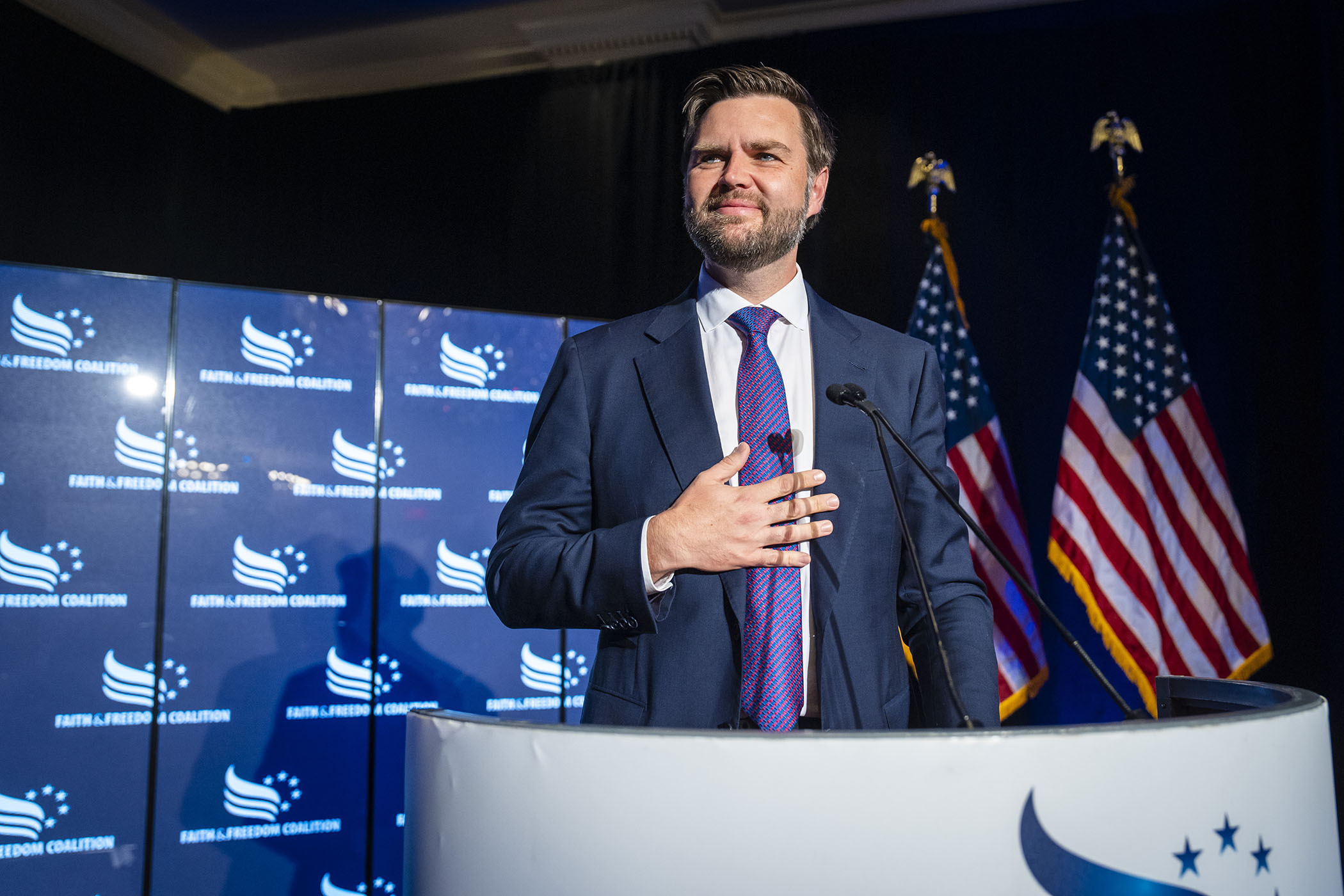
On other foreign policy matters, the isolationism of JD Vance, the vice-president, held sway, while traditional Republicans like Rubio were marginalised. A photo of Rubio sitting uncomfortably on the Oval Office couch as Trump and Vance berated Ukraine’s Volodymyr Zelensky last February went viral, held up by critics as proof that he had betrayed his Reaganite idealism for nothing.
‘Rubio’s main characteristics are deadly competence and patience, and he has clearly relied on both’
‘Rubio’s main characteristics are deadly competence and patience, and he has clearly relied on both’
Peter Doran, Foundation for Defense of Democracies
Amid the chaos of those early weeks, however, Rubio learned to bite his tongue and bide his time. Musk’s fall from grace after a spectacular feud with Trump last summer has seen Doge’s early influence collapse. When Waltz was hung out to dry after the “Signalgate” fiasco that saw a journalist added to a secret group chat of senior officials discussing US air strikes on Yemen, Rubio inherited his post at the national security council. The promotion made him the first person to combine the roles of secretary of state and national security adviser since Henry Kissinger under Richard Nixon through the nadir of the Vietnam war.
“Rubio’s main characteristics are deadly competence and patience, and he has clearly relied on both,” said Peter Doran at the Foundation for Defense of Democracies.
Critics have condemned Rubio’s shape-shifting as he rebuilds the state department along Maga lines. Dozens of US ambassadors were recalled just before Christmas as the administration moves to appoint loyalist diplomats to “advance the America First agenda” overseas.
In an executive order that cited Rubio last week, Trump withdrew from 66 international organisations and treaties, claiming they are “contrary to the interests of the United States”. Democratic congressman Chris Van Hollen accused Rubio of having had a “full Maga lobotomy”.
Supporters insist that the secretary of state has picked his battles shrewdly, flexing his muscle when needed without crossing Trump himself.
A longstanding Russia hawk, Rubio has repeatedly intervened in negotiations on Ukraine to realign Washington with its traditional allies and stop Witkoff from bowing to every demand from Moscow.
“Rubio has a clear understanding of Vladimir Putin and his negotiating strategy, and Witkoff clearly does not,” said Doran. “When ever Rubio is leading the charge, the Russians seem to pull back because they understand that he will not be fooled by their tricks.”
Rubio is therefore indispensable to European allies alarmed at the Trump administration’s hostility towards America’s oldest friends. When the president revived his interest in seizing Greenland last week, refusing to rule out military action against a fellow Nato member, Denmark immediately sought talks with the secretary of state. Leaving aside his other pressing duties, Rubio will duly meet his Danish counterpart this week tasked with ensuring the survival of the transatlantic alliance
Rubio’s patience has now been rewarded as Trump has turned his ire on Venezuela.
The secretary of state was at the president’s side throughout the final planning of the daring raid to oust Maduro, fulfilling his years-long desire for regime change in Caracas.
For Rubio – the child of Cuban immigrants who has spent his career warning of the threat from communist regimes in Latin America – the arrest of Maduro, now awaiting trial on drug-trafficking charges, is a prized scalp.
What comes next is less certain and fraught with risk.
“Rubio has figured out that Trump likes short, sharp, cheap military action,” said Justin Logan, director of defence and foreign policy studies at the Cato Institute. “The dilemma is that in order to achieve something big in Venezuela, that won’t do it – you need to pay significant costs.”
Rubio is now tasked with running a country of 30 million people, overseeing a high-stakes gambit to seize control of Venezuela’s oil, cutting off the flow of drugs and migrants to the US, and cutting Caracas’ ties with US adversaries.
Rubio has made no secret of his hope that the fall of Maduro will trigger a domino effect that topples communist regimes across the region, notably in Havana. Last week he set out a three-phase plan aimed at restoring democratic government to Caracas.
How long Trump’s newfound fondness for hawkish neoconservatism and nation building will endure remains uncertain, however. The shadow of past US regime-change failures in Iraq and Afghanistan looms over Venezuela. If the project unravels and the America First wing of the party grows restless, Rubio could be left exposed.
“Make no mistake: Rubio is holding the bag on this issue,” the Maga consultant said. “If he can somehow extricate the United States in a more or less graceful way, that will be to his great credit. If he cannot, the bag is going to be left with him.”
Photograph by Nathan Howard/AFP via Getty Images