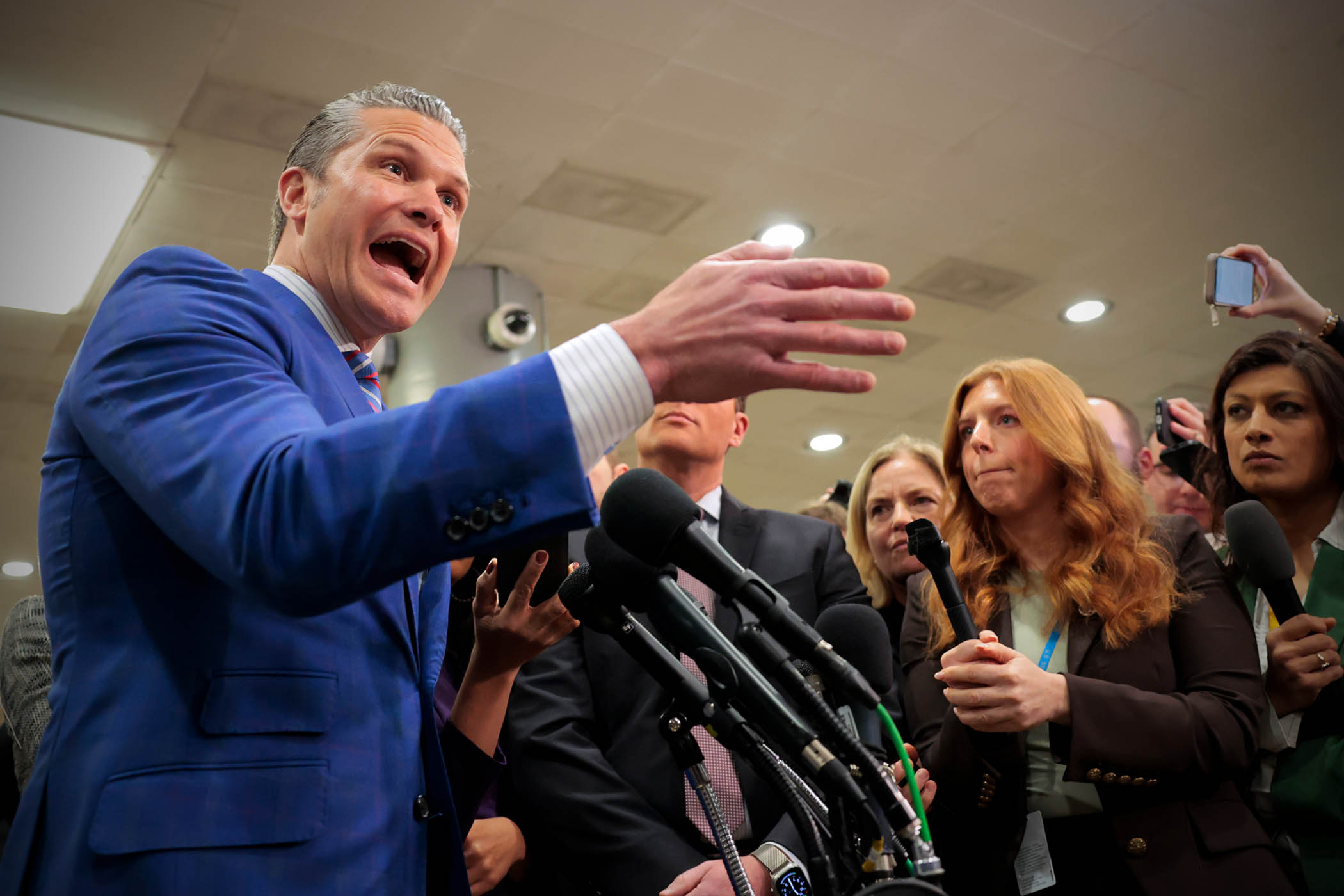

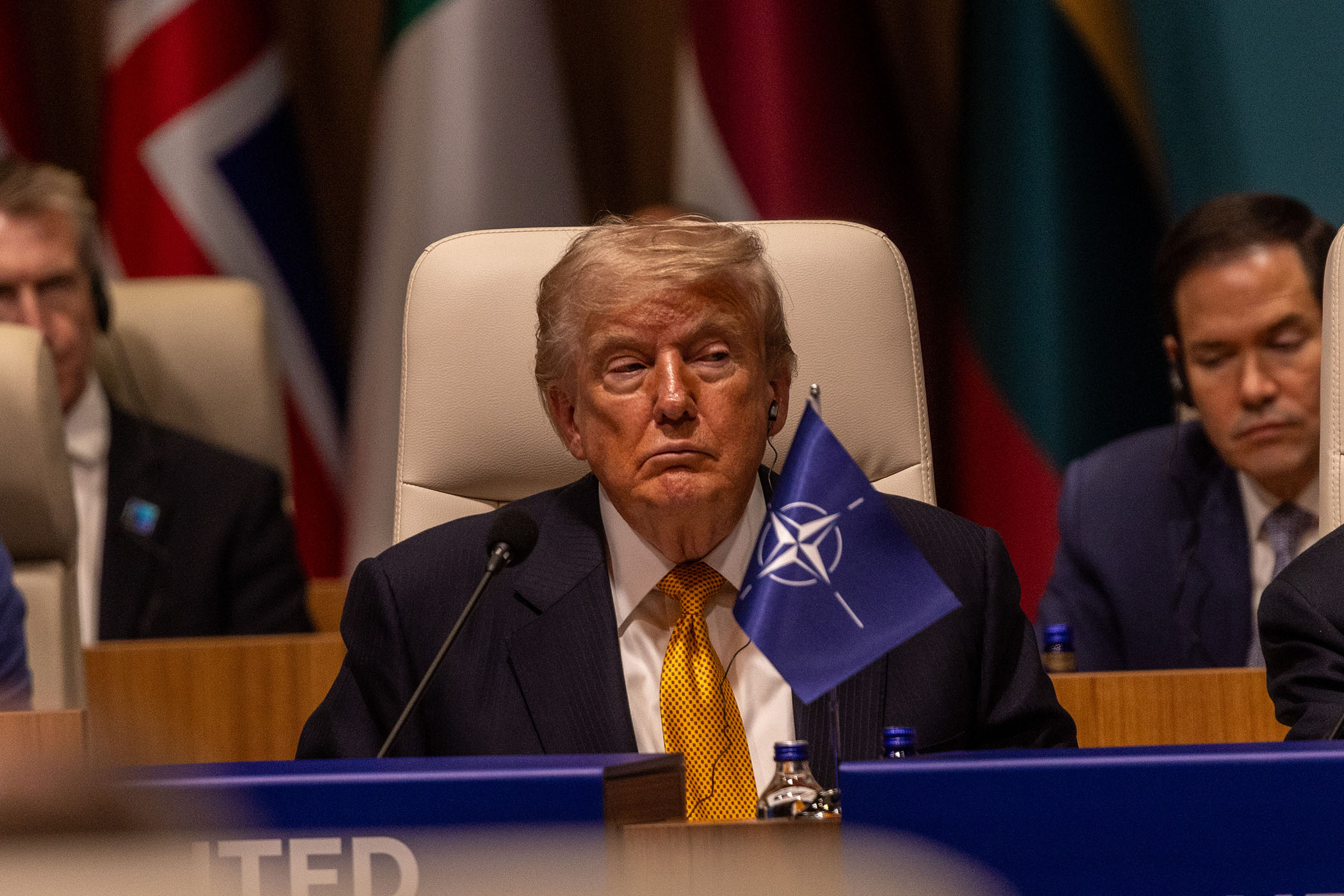
Pete Hegseth, the US secretary of war, on Nicolás Maduro, the Venezuelan president: “He fucked around and he found out.” President Donald Trump on the Colombian president Gustavo Petro: he had better “watch his ass”. Pam Bondi, the US attorney general, said that Venezuelan president Maduro and his wife, Cilia Flores, “will soon face the full wrath of American justice on American soil in American courts”. Andy Ogles, a Tennessee congressman, on why the US should take over Greenland: “We are the dominant predator force in the western hemisphere.”
What does this language mean for the history and politics of the US? It is a departure from the norms of the past. Even what looks like more measured language is not: as the scholar Paul Rosenzweig has noted, “wrath” and “justice” are in themselves opposing concepts; fury and impartiality do not mix.
“Everything Trump says is not what you expect a politician to say,” says Susan Hunston, professor of English language at the University of Birmingham. She cites research from the early days of his first administration that demonstrates the distinctiveness of his rhetoric. “Trump uses shorter words and a more restricted vocabulary, suggesting that his language will appear familiar to a larger proportion of people,” she has written. Speaking to me, she says: “People who are not normally sympathetic to politicians will relate to him – and now to his administration – because they recognise their own speech rather than the speech of politicians.”
It is striking to compare Hegseth’s description of the capture of Maduro with Barack Obama’s announcement 14 years ago of the death of Osama bin Laden. Hegseth repeatedly refers to the force sent into Venezuela as “warriors”; Obama spoke of the team that killed Bin Laden as a “small team of Americans” or “the men who carried out this operation”. It’s a noticeable distinction: “warriors” conjures a class that is separate and special, more powerful than ordinary citizens; Obama’s language emphasised unity. He closed by saying: “We can do these things not just because of wealth or power, but because of who we are.” Contrast this with Stephen Miller, Trump’s deputy chief of staff, describing current circumstances, and America’s position, thus: “We live in a world, in the real world, that is governed by strength, that is governed by force, that is governed by power. These are the iron laws of the world since the beginning of time.”
Fine words, of course, can obscure darker actions, and US history offers many examples. “Manifest destiny”, the 19th-century term used to celebrate and justify the expansion across the American continent, sounds a lot grander and far more palatable than, say, theft and slaughter. Under the linguistically elegant Obama, the US carried out 10 times more drone strikes than under George W “Misunderestimate” Bush, to give only one example.
‘We live in a world, in the real world, that is governed by strength… by force… by power. These are the iron laws of the world since the beginning of time’
‘We live in a world, in the real world, that is governed by strength… by force… by power. These are the iron laws of the world since the beginning of time’
Stephen Miller, White House deputy chief of staff
Even without considering Trump’s language on his personal social media platform, Truth Social, or on Elon Musk’s X, the language of his administration evokes the Wild West, or at least the fantasy Hollywood version. It is the language of us and them, of good guys and bad guys.
Some people – even those close to government – say none of this matters; that it’s all bluster; that no one serious takes any notice. I disagree. When six European leaders band together to defend the position that Greenland’s sovereignty is not to be decided by the US, we must acknowledge that language has power. Miller has stated bluntly: “Nobody’s going to fight the US militarily over the future of Greenland.” His wife, Katie, posted a map of Greenland coloured as the American flag, with the word: “SOON.”
Discourse coarsens across the board. The genie will not go back into the bottle. On Wednesday, a woman in Minneapolis was killed in her car by an Immigration and Customs Enforcement (ICE) agent; the city’s mayor, Jacob Frey – a critic of Trump – said ICE should “get the fuck out” of Minneapolis.
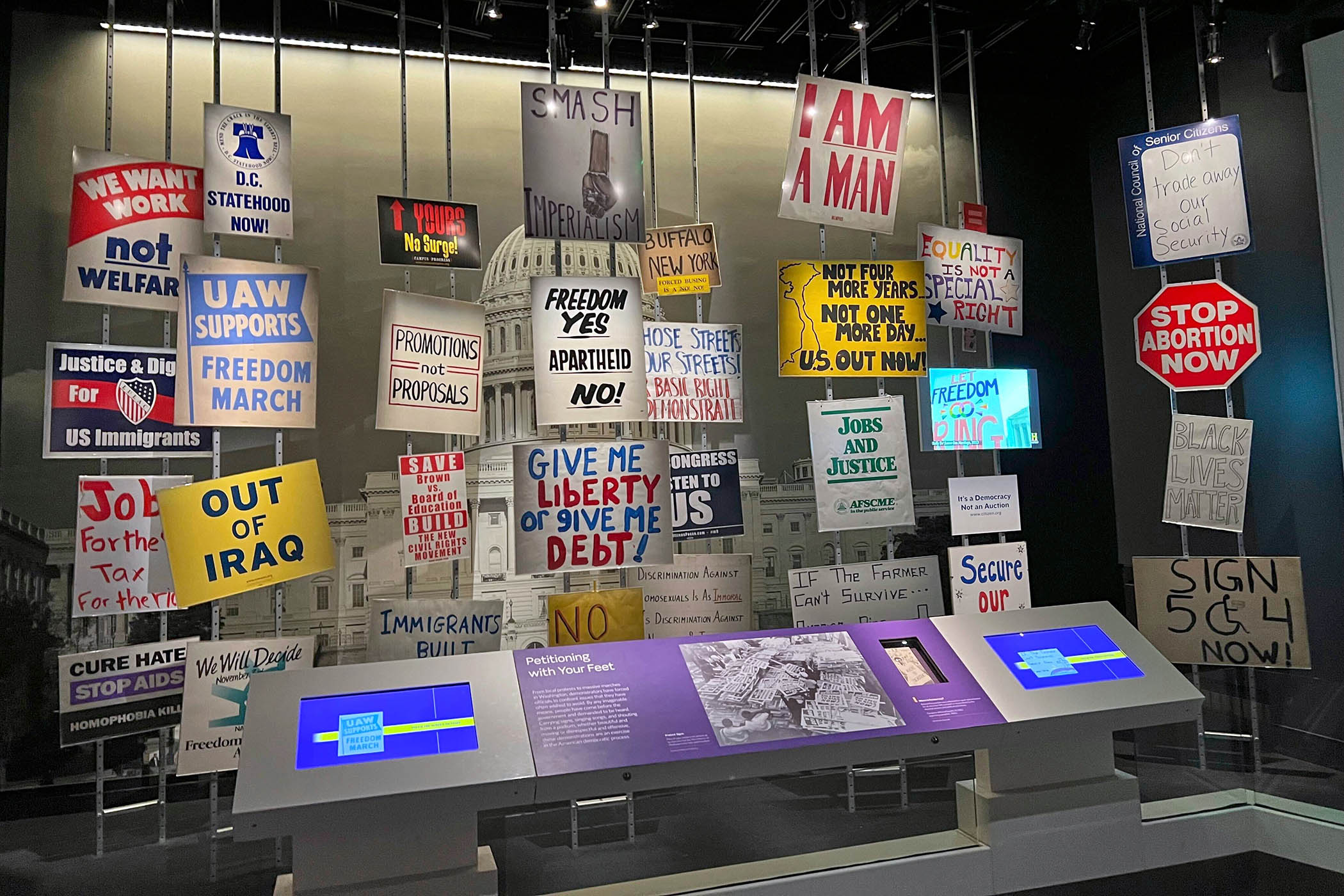
The US is a country conceived out of, and built upon, rhetoric. The Declaration of Independence made an unprecedented case for equality and self-determination, even if the country’s founders had very different ideas of what that meant than we do, and even if their grand project was always flawed. The rhetoric of American leaders has always mattered. It is worth recalling now how some of them have tried to use language to heal rather than inflame.
“We are not enemies, but friends. We must not be enemies,” said Abraham Lincoln on 4 March 1861, as he was sworn in as the 16th president. Little more than a month later, the Confederacy fired on the US garrison of Fort Sumter, beginning the American civil war. Perhaps more than any other president, Lincoln understood how human society is shaped by language. When he delivered what we now call the Gettysburg Address, in the dreadful midst of an uncertain conflict, he called back to the Declaration of Independence in his opening words.
Newsletters
Choose the newsletters you want to receive
View more
For information about how The Observer protects your data, read our Privacy Policy
Eighty years after Lincoln’s first inaugural, as America stood on the brink of another great war, Franklin D Roosevelt used powerful language to speak for hope in what has become known as the “Four Freedoms” address. “In the future days,” he said, “which we seek to make secure, we look forward to a world founded upon four essential human freedoms”: freedom of speech, freedom to worship, freedom from want and freedom from fear.
We remain far from achieving those goals. They can seem to recede even further from us; that the arc of the moral universe does not – contrary to the stirring words of another great American, Martin Luther King Jr – bend towards justice. Yet we have to hope. In the final words of that 1861 speech, Lincoln called out to “the better angels of our nature”. Fine language alone cannot, by any means, provide a solution to the world’s ills. But brutal language can only breed greater brutality.
Photograph by Heather Diehl/Getty Images