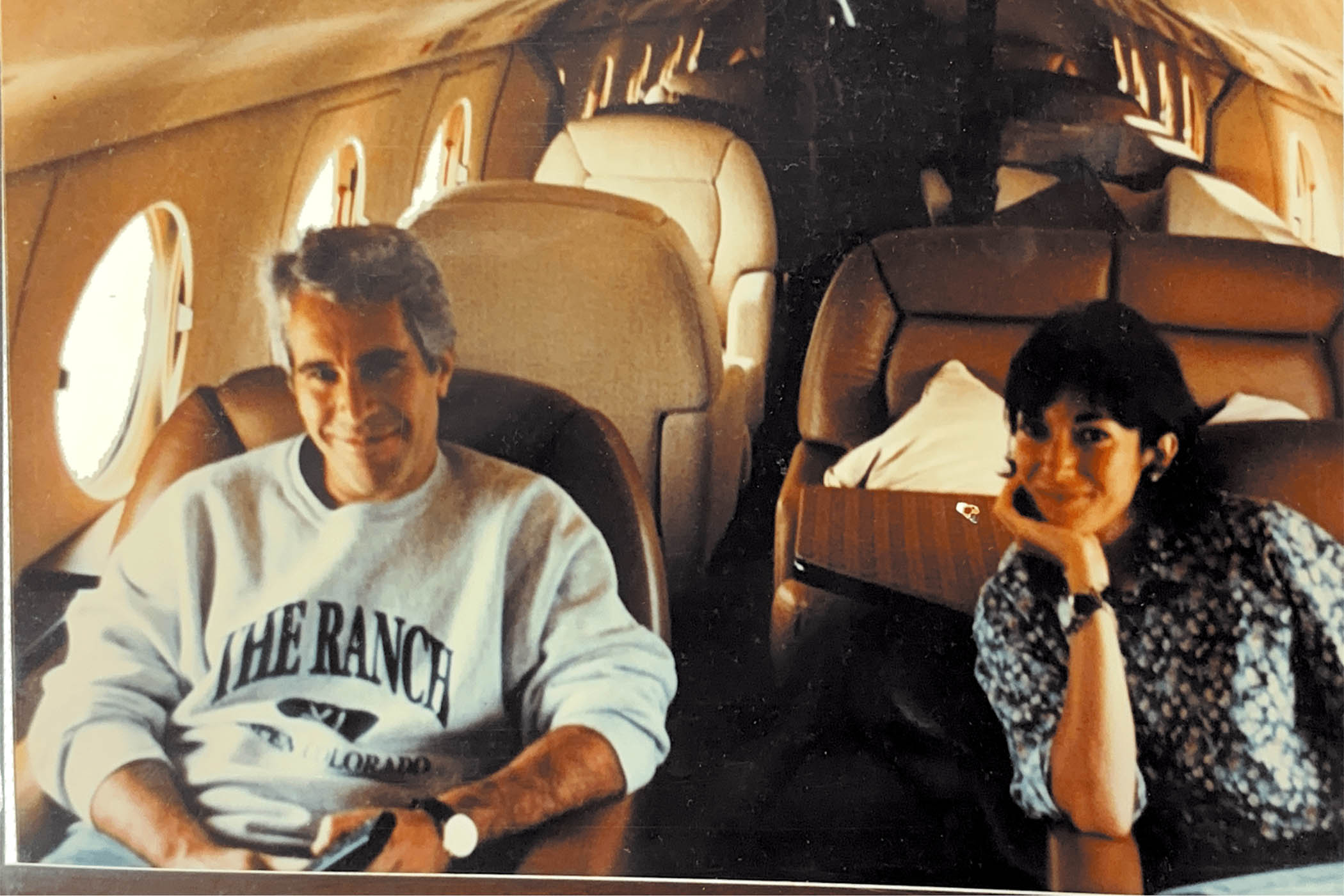

In December 2013, the US private bank JP Morgan asked Ghislaine Maxwell to find another bank to look after her money because of her association with Jeffrey Epstein.
The following year, it set out its reasons for doing so in a confidential report that has now surfaced in the Epstein files.
In justifying its decision to close its doors to Maxwell, JP Morgan appears inadvertently to have answered a question that has formed part of the mystery of Maxwell’s relationship with Epstein: where did her money come from?
In a short checklist section of its report, the bank identifies Maxwell’s sources of wealth in one word: “Inheritance.”
Maxwell’s total net worth was $10m, the bank estimated, and said: “We understand her wealth came from trusts her father Robert Maxwell left behind after he passed away” in 1991.
“Client’s investable assets were FORMERLY held at PB [JP Morgan Chase private bank], the rest of her wealth is held in her real estate and artwork (NYC townhouse and London townhouse).”
The bank admits to some uncertainty, however: “Because of circumstances surrounding the closing of the account per risk committee’s request we cannot request any additional information from the client.”
But if its information were correct, it will have undermined one of the theories that have sought to explain the enduring closeness of Maxwell and Epstein: that she was reliant upon him for money.
Other revelations in the Epstein files have only deepened the mystery. In October 1999, 20 years before he took his own life, Epstein transferred $18.3m to Maxwell, who was then his girlfriend.
Three years later, he made another payment to her of $5m. Overall, the billionaire sex abuser gave his accomplice more than $30m from accounts at JP Morgan alone.
Newsletters
Choose the newsletters you want to receive
View more
For information about how The Observer protects your data, read our Privacy Policy
Given that Maxwell claimed to earn up to $250,000 a year for her role as Epstein’s fixer, the sums do not seem to add up. When Todd Blanche, the US deputy attorney general, asked her to explain why Epstein had transferred so much extra cash to her, she said: “I don’t know. I had no control. I don’t believe any of it was my money.”
In Epstein’s world, a gift was often not merely a gift. Documents released last week by the Department of Justice reveal that he gave away millions of dollars to hundreds of people. But he often did so for ulterior motives: to evade tax, to cement relationships, to pressure victims or to buy silence.
Epstein made Maxwell a signatory on several company accounts, the documents show.
As well as showering her with gifts, including a $60,000 necklace, he used Maxwell’s accounts to carry out circular transactions that some financial experts believed were suspicious. In 2011, according to one released memo, she received $10.9m from a bank in Puerto Rico linked to Epstein. The same day, Maxwell transferred exactly the same sum to another Epstein company. On another occasion, Epstein transferred $7m to Maxwell. She used it to buy a helicopter, which he then claimed use of.
So concerned were banks at these complex arrangements that 19 separate “suspicious activity reports” were filed on Maxwell, The Observer can reveal. At least one source has come forward to allege that Epstein and Maxwell were involved in money laundering. The source said the FBI, to which they reported their suspicions, “weren’t interested in the financial stuff”.
Maxwell, who was sentenced to 20 years in prison in 2022 for conspiring with Epstein to sexually abuse minors, has never been accused or charged with a financial crime.
She has said any payments from Epstein were legitimately made for business or investment reasons and has denied any knowledge of any illegal financial activity.
Photograph courtesy of US Department of Justice