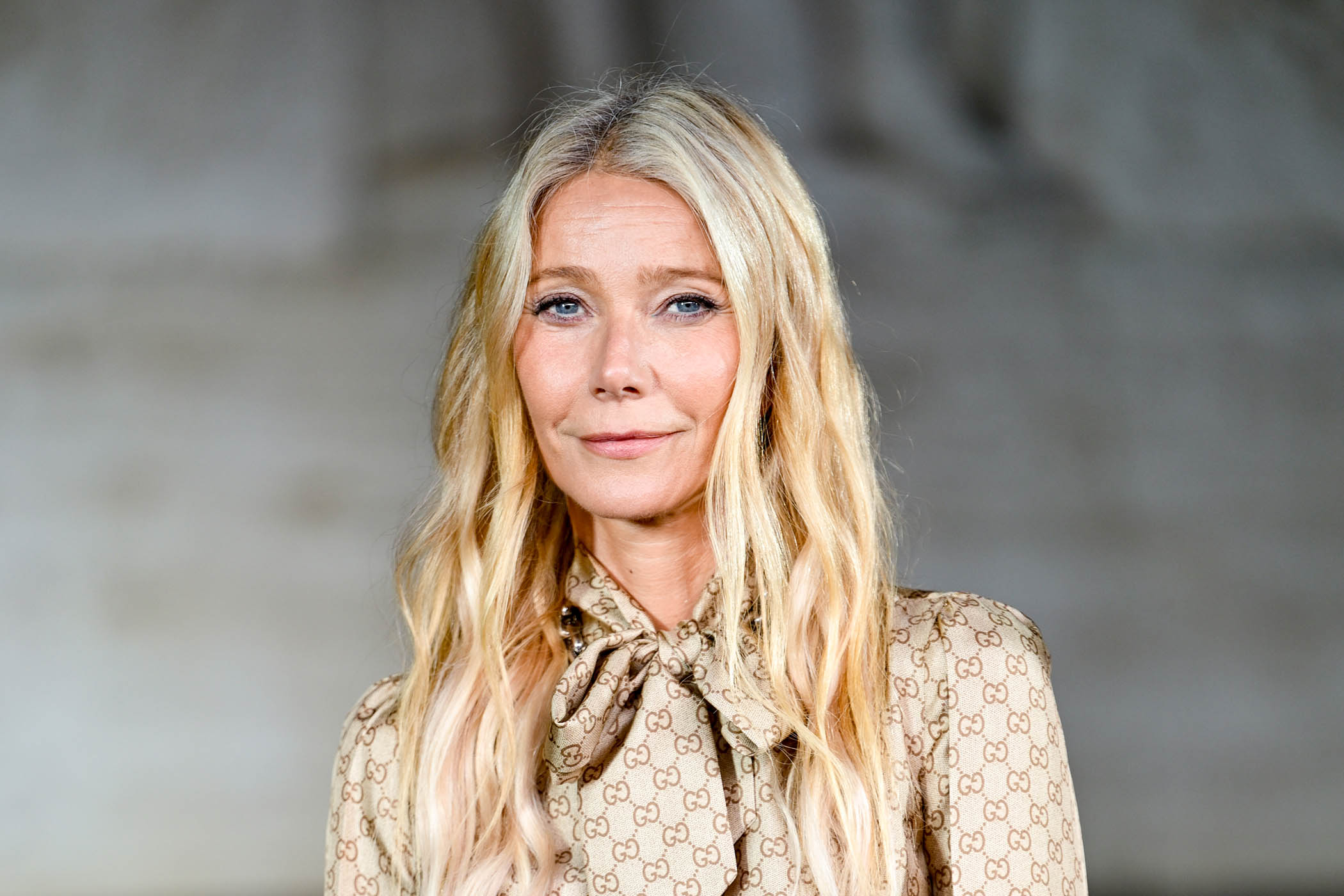



Since launching Goop in 2008, Gwyneth Paltrow has grown her wellness newsletter into a $433m brand. The company briefly went viral for selling vagina-scented candles and “vampire repellent” mist, but its most successful product is Paltrow herself, a dewy-skinned nepo baby who broadcasts an aspirational vision of femininity from her marble-topped kitchen in liberal Montecito, California.
Many Paltrow fans were therefore shocked when, earlier this month, the actor and entrepreneur released an episode of the Goop podcast featuring Trae Stephens, the co-founder of Anduril, a defence-tech firm that builds killer robots. (He was an unusual choice for a programme whose recent topics and guests have included astrology and actor Matthew McConaughey.) In an hour-long conversation about faith, family, and the ethics of autonomous warfare, Paltrow joked about her politics. “I’m trying to, I guess, sort of weave together lots of different points of view, and also get out of that place of like, righteousness and anger and fear,” she said. “I’m pretty centrist and my husband thinks I’m a Republican, which I’m not. I don’t feel anything right now.”
Stephens hadn’t asked Paltrow about her party affiliation, but it would have been a fair question. In March, she told Vanity Fair that she is “very fascinated” with Trump’s health secretary, Robert F Kennedy Jr, and his “Make America Healthy Again” campaign, which has peddled bunk theories about paracetamol and made it more difficult for Americans to obtain the Covid-19 vaccine. Like Kennedy, Paltrow advocates drinking “raw”, unpasteurised milk.
But Paltrow’s ability to cause outrage hasn’t stopped there. A week after the episode aired, she appeared in an advertisement for a luxury condo building in Herzliya, a posh suburb of Tel Aviv. “Waking up for a morning run can be brutal, but it’s a price I’m willing to pay,” Paltrow says in the video, in reference to 51 Park. While exact prices are not listed, similar units in the area fetch millions of pounds. The building’s owner, Liora Ofer, is Israel’s second-richest woman – a fellow “girlboss” who amassed her $3.4bn fortune by consolidating control over her family’s shipping and logistics business. Her firm, Aviv Melisron, is the largest developer of shopping malls in Israel, including the Ofer Adumim mall in Ma’ale Adumim, an illegal settlement in the West Bank.
The online reaction was, predictably, furious. “Gwynocide” briefly trended on X, where sustainability activist Livia Giuggioli posted that she had pulled the plug on Paltrow’s planned summer visit to her family farm in Italy. “You’re either so detached that you need to be cancelled, because you live in another world,” Giuggioli wrote. “Or you’re actually a really, really nasty person. Or you are stupid.”
During a 2018 lecture at Harvard Business School, Paltrow boasted of her ability to create “cultural firestorms” that drive traffic to Goop’s website and, in turn, boost sales. “I can monetise those eyeballs,” she said. This viral marketing strategy was ahead of its time in 2008, but in 2026, when most major corporations have acquiesced to the influencer in the White House, it’s fast becoming standard practice.
Paltrow’s latest “cultural firestorm” coincided with a dramatic expansion of Goop Kitchen, her takeaway-only lunch chain. The company opened its third location in New York City this month and plan to open four more by the end of the year. Healthy, customisable, fast-casual lunches are cooked in “dark kitchens”, which make meals to order but have no tables for dining in. Instead, food is whisked away by couriers for apps like DoorDash and UberEats.
Goop Kitchen’s expansion was made possible by a $15m investment from former Uber CEO Travis Kalanick, who is developing robots for use in dark kitchens through his latest venture, Atoms. These include the Bowl Builder, a 19ft-long machine equipped with a conveyor belt where protein, grains and vegetables can be tossed in a takeaway container with sauce and then bagged. The Bowl Builder was developed by Lab37, a robotics workshop formerly at Carnegie Mellon University, which previously designed laser systems for F-16 fighter jets. According to Lab37’s website, it can package up to 300 meals an hour, enabling small to medium-sized restaurants to sack as many as half of their kitchen staff.
Photographs of Tuscan landscapes and farm-fresh vegetables appear on the online editorial page. An army of salad-tossing robots is not pictured anywhere
Photographs of Tuscan landscapes and farm-fresh vegetables appear on the online editorial page. An army of salad-tossing robots is not pictured anywhere
Machines like the Bowl Builder are not yet widely used in the dark kitchens run by Atoms subsidiary CloudKitchens, which operates 90 facilities across the US, including the flagship Goop Kitchen in Costa Mesa, California. But the business is rapidly expanding. The dark kitchen industry, valued at more than $100bn, is projected to grow by 10% year on year. CloudKitchens co-founder Diego Berdakin said in a statement that Goop had paid back their initial investment within three months. “Simply put, this is the most impressive operator I’ve seen in the last decade of investing in online delivery,” he said. He and Kalanick plan to automate not just the cooking of food but its delivery, too, with driverless cars and drones carrying meals to customers’ doors.
This may seem at odds with Goop Kitchen’s all-natural ethos and the “chef-made integrity” touted on its website. Photographs of Tuscan landscapes and farm-fresh vegetables appear on Goop’s online editorial page alongside yoga retreat ads and ayurvedic health tips. An army of salad-tossing robots is not pictured anywhere.
Newsletters
Choose the newsletters you want to receive
View more
For information about how The Observer protects your data, read our Privacy Policy
At Anduril, Stephens is more focused on making machines that can kill people. (He also sits on the board of Carbyne, an Israeli AI communications and surveillance company.) On the Goop podcast, he was at pains to justify the autonomous arms business as work that “is good, [but] feels bad”. In the world of Goop, everything is designed to feel good. The white middle-class women who form the company’s core customer base may not sweat the details. After all, according to exit polls, their demographic twice voted to elect Donald Trump. For Paltrow, the rest is just free publicity.
Photograph by Saira MacLeod/WWD via Getty Images