
A contrasting pair of festive extravaganzas is bringing merriment and discord to Croatia’s capital in the run-up to Christmas.
On the jolly side, the markets of Zagreb Advent are generating festive cheer in the squares of the city centre, with ice skating, stands selling sausages, and scores of musical acts on illuminated bandstands. The tourism board’s proud boast is that it won the award for Europe’s best Christmas market so many times it was barred from entering the competition.
On the other hand, it doesn’t have much to say about the city’s other high-profile seasonal show. On 27 December Marko Perković will perform at Arena Zagreb for more than 20,000 paying punters. Better known by his stage name, Thompson – supposedly the make of gun he used as a soldier in Croatia’s war of independence in the 1990s – he is, to put it mildly, a polarising figure.
His best-known song, Čavoglave Battalion, opens with a fascist salute. Thompson has also performed a song glorifying the Nazi-allied Ustasha movement and its genocide of Serbs during the second world war.
After selling out the Arena show, Thompson attempted to book another night at the same venue. But by that time the city council had passed a ruling banning the use of municipal venues for events likely to promote discrimination, racism or fascist salutes.
Mayor Tomislav Tomašević, of the green-left Možemo! (We Can!) party, said the move was “similar to Uefa’s rules for sporting events”. In return, Thompson threatened “radical steps”, while his management accused the mayor of “causing divisions in society”.
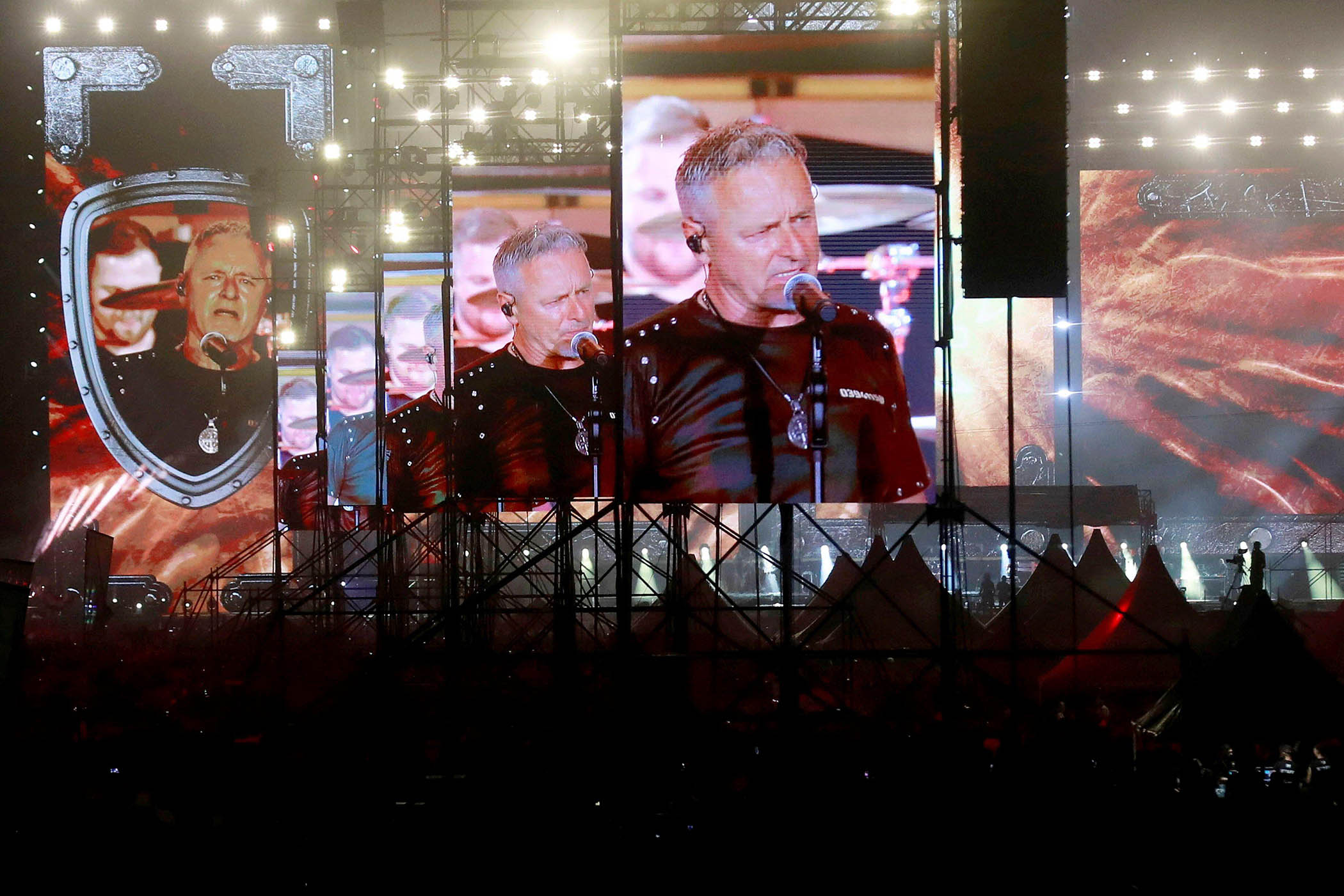
In fact, an earlier Thompson gig in Zagreb appears to have been the trigger for a new and disturbing wave of toxic nationalism and ethnic violence. The singer’s management claims it sold half a million tickets for July’s enormous concert at Zagreb Hippodrome racecourse, making it the largest paid-for show in history. Many of the crowd wore black T-shirts bearing the insignia of the Croatian Defence Forces (HOS), an ultra-nationalist militia which adopted the Ustasha salute during the war of independence. This is the same cry Thompson utters at the start of Čavoglave Battalion.
The song is the kind of undistinguished, grinding chug that gives Balkan rock a bad name. But it had an electrifying effect on the Hippodrome crowd as Thompson roared the opening “Za dom!” (“For homeland!”). The audience duly replied: “Spremni!” (“Ready!”), with MPs from the governing conservative HDZ party among those chanting along.
Given that it was the Ustasha equivalent of “Sieg Heil”, it is hardly surprising that the regional Youth Initiative for Human Rights labelled the show “the largest fascist rally held in Europe” since the second world war.
Thompson’s mega-gig might create ‘a wave of nationalism that could explode into physical violence’
Thompson’s mega-gig might create ‘a wave of nationalism that could explode into physical violence’
Tena Banjeglav, Documenta – Centre for Dealing with the Past
However, no one in the crowd seemed concerned about that – or about the constitutional court ruling that the phrase was “an Ustasha salute [which is] not in accordance with the constitution of the Republic of Croatia”. Nor did the prime minister, Andrej Plenković, who posed for photographs with Thompson the day before the gig. He brushed off concerns about the singer’s fondness for a fascist salute, calling it “part of Thompson’s repertoire”.
Newsletters
Choose the newsletters you want to receive
View more
For information about how The Observer protects your data, read our Privacy Policy
Even at the time, opposition parties and organisations campaigning for ethnic reconciliation warned that the government was playing with fire by cosying up to a singer who has been banned in several European cities for his apparent Nazi sympathies. Tena Banjeglav, of Documenta – Centre for Dealing with the Past, said the mega-gig had “opened Pandora’s box” with its endorsement of Thompson and his songs. She predicted that it would create “a wave of nationalism that could explode into physical violence”.
Those concerns were apparently realised last month, when there were several attacks on minority ethnic groups. Dozens of masked and hooded attackers targeted a Serbian cultural festival in Croatia’s second city, Split, yelling “Za dom, spremni!” as they stormed the venue. Masked men disrupted an international karate competition in the port city of Rijeka, targeting Serbian competitors, and scores of black-clad men sang fascist songs outside the Serbian Cultural Centre in Zagreb.
During the same period, there was an increasing number of reports of racially motivated attacks on food delivery drivers from south Asian countries.
“I feel a pressure that is mounting,” says Dejan Jović, a professor of international relations at Zagreb University, who is a member of Croatia’s Serb minority. “There were protests against me in front of my own faculty by a small but still quite radical rightwing group. I’m sorry to see that even when Croatia is in the European Union, and 30 years after the end of the war of the 1990s, we still need to deal with these issues.”
Many are puzzled by the metamorphosis of “Za dom, spremni” from a fascist salute to an expression of Croatian patriotism in some circles. But this does not convince historian Hrvoje Klasić, who says attempts to class the phrase as a traditional greeting are nonsense. “It’s an Ustasha salute,” he insists. “There are no other views.”
Klasić, who said he receives death threats “on a weekly basis” over his work on Croatian nationalism, warned that Plenković is “playing a very, very dangerous game” by trying to appeal to the ultra-nationalist right. This, says Klasić, is a misguided attempt to hold all the factions of his HDZ party together and to prevent breakaway parties siphoning off votes.
Certainly Croatia can ill afford an escalation of the recent scenes of intolerance and extremism. Tourism generates more than a fifth of the country’s GDP by attracting visitors to its coastal resorts and, more recently, to the capital’s Christmas markets. Hooded men on the prowl and black-shirted hordes chanting Nazi salutes seem less likely to appeal to the sort of visitor the country would like to attract.
Photograph by Damir Krajac/Cropix/Alamy