
The four Israeli helicopters flew in low and fast from the direction of the Syrian border.
Shortly before midnight on Friday, two of them touched down near the graveyard of Nabi Sheet, a small farming town in Lebanon’s eastern Beqaa Valley and a stronghold of the Iran-backed group Hezbollah. Israeli commandos jumped out and moved quickly towards the cemetery.
According to the Lebanese army, they were disguised in Lebanese military fatigues and the uniforms of a Hezbollah-affiliated ambulance service. Their mission was to recover the remains of Ron Arad, an Israeli air force navigator who vanished over Lebanon in 1986 after parachuting from his stricken jet. His fate remains one of Israel’s most enduring military mysteries.
The commandos worked swiftly and quietly among the gravestones. Ghosts searching for a ghost.
But Nabi Sheet, a quiet town surrounded by farmland and close to the Syrian border, was not entirely asleep. Residents say the area has long expected the possibility of an Israeli raid, and word spread quickly through the streets as the helicopters arrived. Villagers and local fighters rushed to set up roadblocks around the town while others moved towards the cemetery itself.
Violence erupted as tracers from heavy machine-gun fire arced through the sky, targeting the hovering helicopters. On the ground, gun battles broke out in the narrow streets as Hezbollah militants attempted to cut off the Israeli commandos, who abandoned the search and withdrew.
Moments later, Israel launched a wave of airstrikes across Nabi Sheet. At 1am an enormous blast struck the centre of the town, residents said, creating chaos that appeared to serve as cover while the commandos scrambled back to their aircraft and escaped across the border.
By Saturday morning, the small town bore the scars of the most violent night since the latest round of fighting between Israel and Hezbollah began a week earlier. Lebanon’s ministry of health said 41 people were killed, including three Lebanese army soldiers and one member of the country’s general security service – the first uniformed Lebanese servicemen to die in the current hostilities. Hezbollah claimed there had been roughly 40 airstrikes.
Israel had failed to find Arad’s bones, but left behind a trail of destruction. The mission highlights the level of force and impunity with which the Israeli military acts to achieve its war aims.
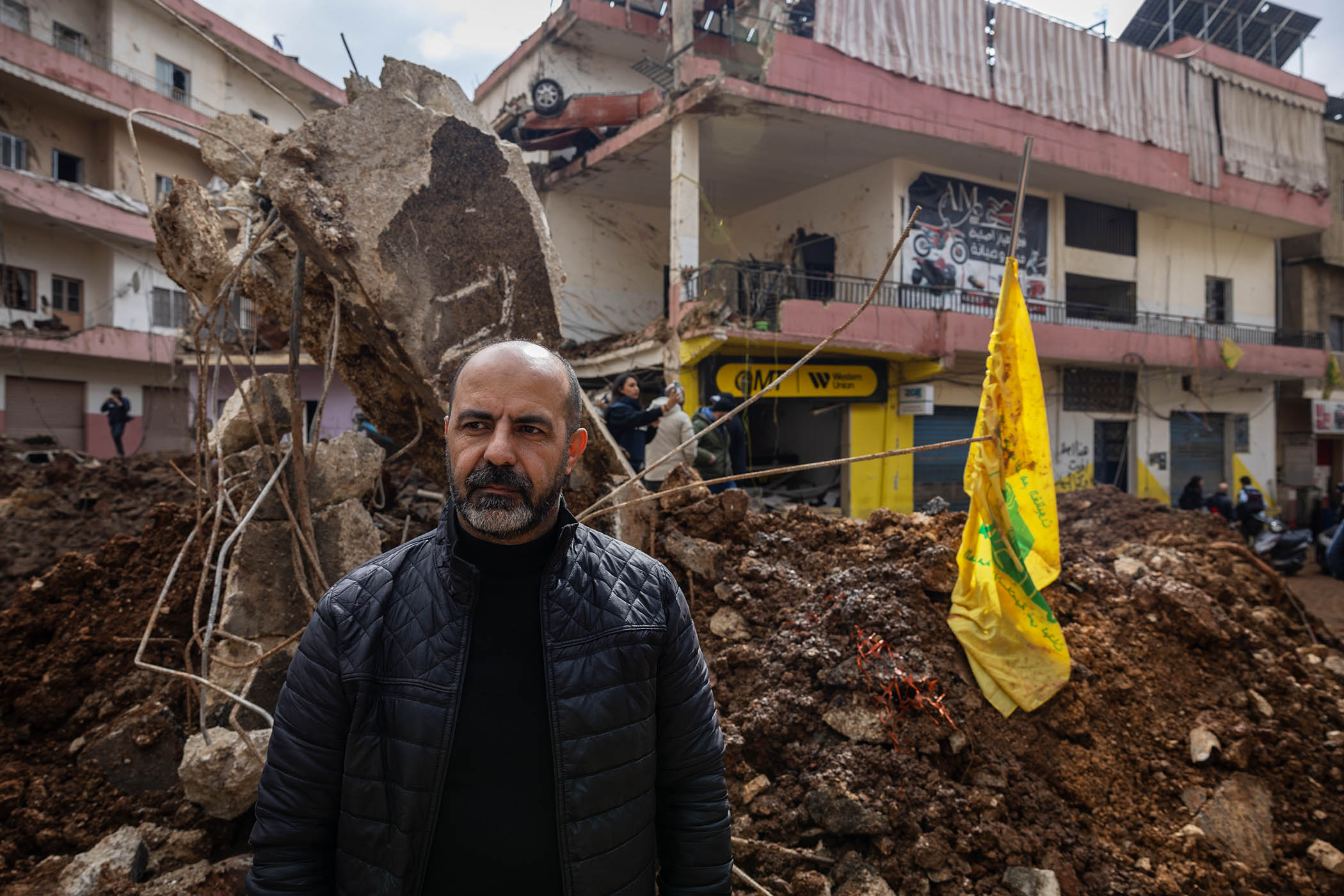
Ali Shoukr, the head of the local municipality, struggled to make sense of the destruction. “We don’t care about Ron Arad,” he told The Observer, standing in front of the massive crater in the middle of town. “We care about our land and our children.”
Newsletters
Choose the newsletters you want to receive
View more
For information about how The Observer protects your data, read our Privacy Policy
Behind him the scene was apocalyptic. Entire building facades had been torn away by the blast. A red Mercedes lay on its roof on the fourth floor of a neighbouring building, catapulted up there by a blast. Nearby, an ambulance had been flung into a money-exchange shop.
On Saturday morning, dazed residents milled out the centre of town, gawping at the mud-stained destruction and the downed power lines. A woman in a black abaya broke down crying before condemning the violence at the top of her voice. Shoukr said rescuers had pulled three young girls from the rubble of a destroyed building.
In Israel, the raid immediately revived the debate over the decades-long search for Arad. His widow, Tami, urged the Israeli military not to risk further lives trying to recover his remains.
“Our desire to know what happened to Ron stops the moment it involves any risk to IDF soldiers,” she wrote on social media. “In our view, the sanctity of life comes before the obligation to return a soldier’s remains for burial.”
Despite her appeal, Israel’s prime minister, Benjamin Netanyahu, said the mission to locate the missing airman would continue. The Israeli military said none of its soldiers had been killed during the operation and it is unclear how many of the dead were Hezbollah fighters.
In Nabi Sheet, the focus was less on geopolitics than on survival. “It was very brutal,” said Hani Moussawi, the local mayor, as excavators cleared broken concrete from the streets. “The Israelis destroyed everything. All the infrastructure. It cost us blood and the blood of our children.”
The rubble of Nabi Sheet raises difficult questions about the war itself. Why attempt such an operation now, amid an escalating conflict? And what broader goal is Israel pursuing in its campaign against Hezbollah?
Some analysts suggest the airborne incursion may have been a test – a probe into Hezbollah’s strongholds in the Beqaa Valley, where many of the group’s largest rockets are believed to be hidden among the mountains and villages.
If Israel intends to dismantle Hezbollah’s arsenal, such raids could become more frequent. A dawn raid on the same area by approximately 15 Israeli helicopters was reported on Monday morning, although details remain murky. Hezbollah released a statement banning all coverage from the area to “ensure the safety of media personnel”.
With Israeli tanks massing at its northern border, and Hezbollah showing no signs of giving up the fight, many Lebanese are asking what will come next and how long it will last. Lebanon’s health ministry says the overall death toll from Israeli attacks since the fighting began has now climbed above 400, including 83 children.
Back in Nabi Sheet, Ali Shoukr gazed again at the car lodged high inside the shattered apartment block, before turning towards the crater carved into the street.
“I’m so sad when I see this crater,” he said, gesturing towards the destruction. “I don’t know how this will end but I hope it does soon. It’s the 21st century, we shouldn’t be killing each other.”
Photographs by Oliver Marsden for The Observer