

Two months after the US and Israel struck Iran last year, an Israeli student received a message from a stranger on Telegram: was he interested in making some money?
The Israeli suspected the stranger, who identified himself as David, was a foreign agent gathering information on behalf of Iran, or some other country. A month earlier, the Israeli government had launched a public awareness campaign, urging citizens not to be lured or tricked into spying for hostile regimes. “For 5,000 shekel, is it worth ruining your life?” said one advertisement, which showed a man drinking with friends, before cutting to a scene of him behind bars.
But for this Israeli student, the answer was: Yes. He was interested.
“David” then deposited $9.69 in the Israeli’s digital wallet – the first of a series of payments that would amount to more than £24,700 over the next five months. In exchange, the Israeli shared the coordinates of likely Israeli targets in Iran, information about Israel’s involvement in the death of an Iranian president, and the identity of an Iranian who had collaborated with Israel.
All of it was fake.
Making extensive use of AI, the Israeli student fabricated intelligence that he fed to the Iranian while impersonating multiple people.
Details of the scam have now been disclosed in an 11-page indictment that pulls back the curtain on some of the activities at the margins of the spy war between Israel and Iran, enabled by commercially available AI chatbots.
The student told the Iranian his name was Yousef Zedah, and claimed to be a computer science student. When he mentioned a fictitious friend serving in Israel’s secretive cyber warfare Unit 8200, David offered him up to 10,000 shekels for an introduction. The Israeli said he would try. He sent David screenshots of a fake conversation in which he struggled to persuade his friend. Perhaps a gift would help sway him, the Israeli suggested. After David sent 2,000 shekels, the Israeli took a photograph of his own phone and sent it to the Iranian, pretending he had bought it for his friend. The friend was grateful for the present, he said – and had agreed to speak.
In a group chat, the Israeli started a conversation between himself, the Iranian and the friend he was impersonating. The Iranian wanted to verify the friend’s ID, so the Israeli sent a photograph of a driving license he found online belonging to an unsuspecting individual referred to in the indictment as T.S.
When the Iranian insisted T.S. send a photo of himself holding the ID, the Israeli – impersonating his friend – blocked him. T.S. had got spooked, the Israeli told the Iranian, showing him more fake screenshots of a conversation in which his friend expressed fear of cooperating with a foreign agent.
As a compromise, the agent asked for a photograph of the friend making an OK sign. The defendant used AI to create one.
Could T.S. also offer proof he served in Unit 8200? the agent asked. The Israeli found a document online, doctored it to include T.S.’s details, and sent it to the Iranian. He appeared to be convinced.
The agent asked the Israeli student, now posing as T.S., about the circumstances surrounding the death of Iranian President Ebrahim Raisi. Had Israel been involved in the helicopter crash that killed him along with Iran’s foreign minister in Azerbaijan in 2024?
Yes, said T.S.
As evidence, the Israeli used ChatGPT to fabricate a document implying that Israel had downed the helicopter, with the symbol of Unit 8200 in the background. At the college where he was studying, the Israeli opened the document on a computer and photographed the screen to make it look more realistic. The Iranian said his commanders were sceptical of the document’s authenticity, but he was convinced. He transferred about 4,000 shekels to T.S for the information – and $2,900 to the Israeli student for connecting them.
The following month, October 2025, T.S. told the Iranian he was working in the mapping department of Unit 8200. The agent asked if he could share locations that were in Israel’s crosshairs. The Israeli used Google Maps to pinpoint various sites across Iran and created a PDF document, which he sent to the agent. It included a building near an airport outside Tehran where he said a senior official was thought to be located; a commercial factory suspected of being a weapons depot; and a mountain range close to an Iranian naval base that was believed to conceal an underground base.
Later that year, the foreign agent contacted T.S. with another request: did he have any information about Iranian collaborators? The Israeli, posing as T.S., said he would try to convince a friend who worked in that department to help. For each collaborator whose details T.S's friend provided, the Iranian would pay 100,000 shekels.
The Israeli student sought help from his brother, who found the ID of an Iranian citizen and his wife's passport on Telegram. T.S sent them to the agent, claiming the couple had monitored the movements of two Iranian military officials who were killed in an Israeli strike in June 2025.
When the agent asked for more details, the Israeli student used Grok to create a script stating the collaborator had been recruited via a social network and knew how to operate an explosive drone and ride a motorcycle.
Soon after, the agent deposited the equivalent of about £16,328.68 in T.S’s digital wallet, of which the Israeli student transferred 10% to his brother. The Iranian had promised to pay even more for information about other collaborators.
Several days later, the agent, ‘David’, informed the Israeli student that the alleged collaborator had been arrested. After an investigation, he had been cleared of suspicion, the Iranian said. He said he felt he had been defrauded. But if he had doubts about who he was corresponding with, he set them aside.
In Iran, tensions were rising as thousands of protesters took to the streets in December in what the regime viewed as a US-Israeli plot. A military official with whom the Israeli was studying in real life commented that he expected a “development” in Iran when Prime Minister Benjamin Netanyahu returned to Israel from the United States on Jan 7 2026. The Israeli, posing as T.S., contacted the Iranian ‘David’ to inform him. The agent had previously promised to pay T.S. 40,000 shekels if he provided advance warning of an attack on Iran.
As Iran launched a bloody crackdown on the protests and Donald Trump threatened to intervene, the foreign agent inquired what locations T.S.'s unit was mapping. The Israeli asked the Gemini chatbot what sites the US was likely to target in Iran and sent the agent coordinates of a courthouse, a prison, and other buildings.
The attack would involve cruise missiles, he told the Iranian, based on news reports he had read on a Telegram channel that day. He didn’t know exactly when the US and Israel would strike, but said it was likely to happen between Jan 13 and Jan 14. That much was almost true; American fighter jets were poised to strike Iran on Jan 14, but Trump called them off at the last minute because Israel wasn’t ready.
The agent asked for T.S.’s opinion on what targets Iran should attack in Israel, suggesting the Knesset, Highway 1, or the city of Dimona near the country’s nuclear reactor. The Israeli responded that he would rather Iran didn’t attack anywhere.
How the scam was exposed by Israeli authorities is not revealed in the indictment filed by the state Attorney’s office in the Jerusalem District Court last month. The Israeli and his brother were arrested in January and have been charged with contact with a foreign agent, providing information to the enemy, and impersonating another individual.
The brothers’ defence attorney Ariel Attari described the indictment as “outrageous”.
“These are two Zionist and patriotic brothers who sought to 'sting' the Iranians,” he was quoted as saying by Israeli media outlets. The defendants had intended to harm and mislead the enemy, Attari said – and succeeded. Instead of an indictment, they deserved the Israel Prize for their contribution to the security of the state, he claimed.
While the brothers faced charges, another Israeli was indicted for spying for Iran. Raz Cohen, an Israeli military reservist was in contact with Iranian intelligence agents for about a month, receiving $1,000 in cryptocurrency for information about the operation of the Iron Dome defence system, the location of its batteries and air force bases. In that case, the information provided was true.
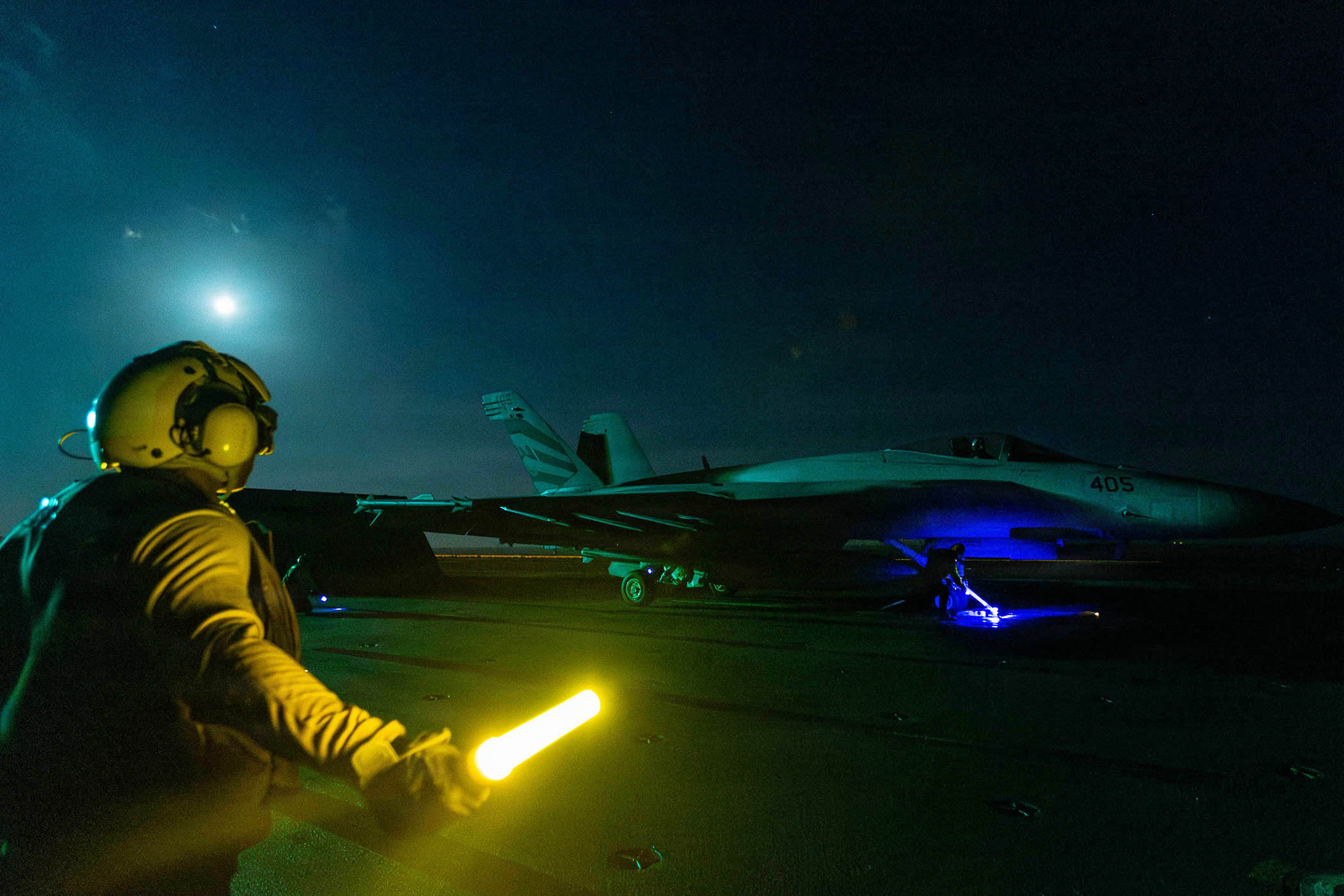
Photograph by US Navy via Getty Images
Newsletters
Choose the newsletters you want to receive
View more
For information about how The Observer protects your data, read our Privacy Policy