

Jonathan Heeney is horrified by the Ebola outbreak in the Democratic Republic of the Congo (DRC) for two reasons. First, he worked in Guinea in 2014, the last time there was a major outbreak on the continent and saw up close the devastation that claimed more than 11,000 lives. Second, because when the world’s health leaders say there is no vaccine against the Bundibugyo strain of Ebola, he knows they have missed chances to make one: his team has been working on it for the last decade.
“It’s just shocking that we’re going through it all again, and everybody’s thinking: ‘Why don’t we have a vaccine?’” he said. “Well, we do have a vaccine but we need to get that vaccine funded.”
Heeney is head of the viral zoonotics laboratory at Cambridge University, which has developed vaccine technology to cover Ebola, as well as similar viruses that cause the Marburg and Lassa haemorrhagic fevers.
The catch is that the prototype vaccine is aimed at the Sudan version of Ebola, not the Bundibugyo strain that so far has killed at least 177 people in the DRC, with nearly 750 suspected cases so far. But Heeney’s team is modifying the vaccine to also deal with Bundibugyo – something he said is “easy” using its technology. The vaccine could be ready in months.
There are six versions of Ebola, a virus family that largely affects fruit bats, but four strains have crossed over to humans. It spreads through contact with bodily fluids and causes the immune system to attack itself, weakening the walls of veins and causing them to leak blood, which some sufferers end up vomiting. Up to half of people who contract the virus die within about two weeks, usually from the shock of blood loss.
The most common version is the Zaire strain, for which there are two vaccines available. But they have not been tested on Bundibugyo, which is much rarer; there have been only two documented outbreaks previously – in 2007 in Uganda, and in 2012 in the DRC.
For the nurses and doctors in the DRC, the situation is complicated by the fact that it is hard to tell which virus patients have.
“In sub-Saharan Africa, almost annually there are different outbreaks of Ebola, Marburg, Bundibugyo, Ebola Sudan – all the variants – and some places where they have overlapping outbreaks,” Heeney said.
“So we thought: ‘Why make just one vaccine when you don’t know what disease you’re dealing with, and by the time they diagnose it the horse has bolted?”
The start of the latest wave of Ebola underlines the problem. The first patient, a healthcare worker in Bunia, the capital of Ituri province in eastern DRC, developed symptoms of fever and blood haemorrhaging on 24 April and died later.
Newsletters
Choose the newsletters you want to receive
View more
For information about how The Observer protects your data, read our Privacy Policy
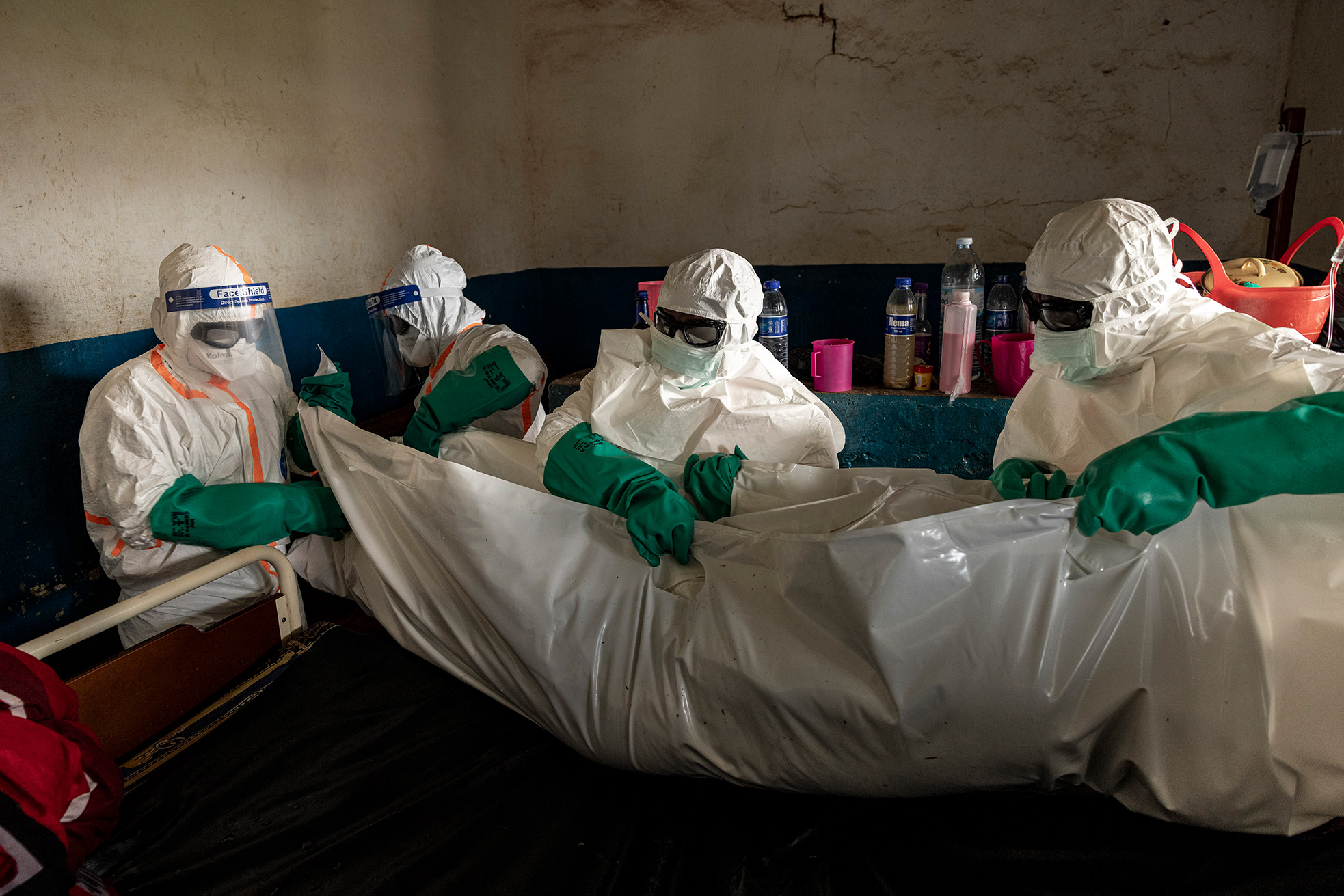
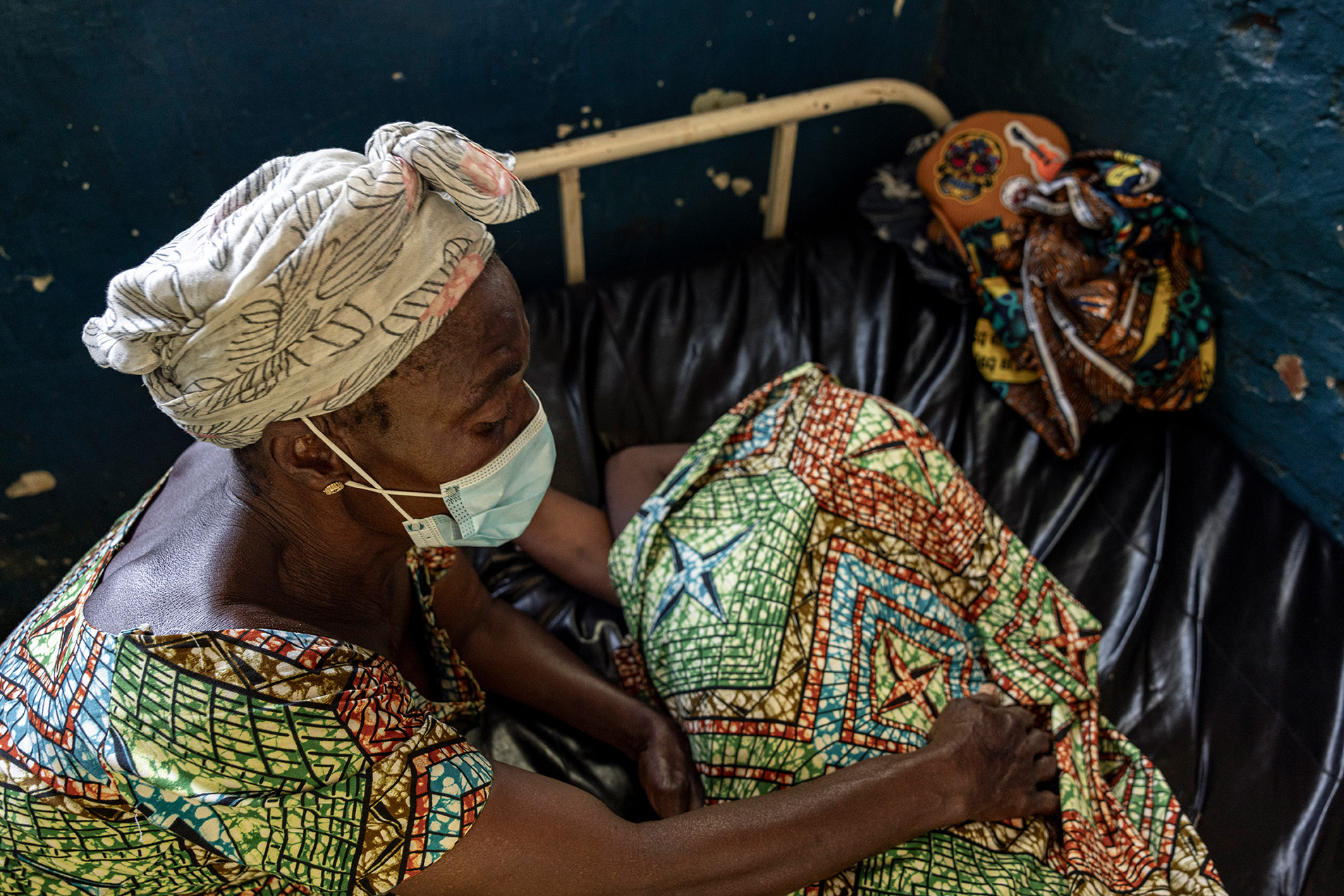
Workers in protective equipment move the body of someone believed to have died of Ebola at the General Referral Hospital of Mongbwalu, DRC
Health authorities in Ituri had been testing for Ebola but did not initially detect the virus because the kits they had were for the Zaire strain. Samples were eventually sent off to the capital, Kinshasa, more than 1,000 miles away.
On 15 May, the DRC’s health ministry declared an outbreak, but during the 21 days since the first known case, the virus had spread in the east of the country and into neighbouring Uganda. Last week, the head of the World Health Organization (WHO), Tedros Adhanom Ghebreyesus, dispatched 40 experts and declared a public health emergency of international concern without even convening the emergency committee.
“When we arrived, there [were] already more than 80 suspected cases,” said the WHO’s representative in the DRC, Anne Ancia, at a press conference. “It was already rampant and silently disseminating for a few weeks already, so of course, we are behind.”
The US secretary of state, Marco Rubio, accused the WHO of being “a little late” in identifying the outbreak. But aid workers say funding cuts by the US and other donors severely undermined their capacity to detect an outbreak – and respond to it. One of Donald Trump’s first decisions in his second term as president was to pull the US out of the WHO, leaving the UN body without one of its biggest donors.
One US government official said that, starting with the dismantling of USAID, cuts in American funding had stripped away critical early warning networks on the ground. “Not just healthcare, but any construction or agriculture project, particularly in remote areas,” he said. “Those networks of agencies and contractors all contribute to early detection of outbreaks. Everything gets reported back.”
A former USAID worker said an outbreak on this scale was “100% predictable” given the depth of funding cuts. “And they were told this would happen,” he said.
After funding was cut back in March 2025, the International Rescue Committee (IRC) was forced to reduce its programming from five health areas in Ituri province, where the outbreak began, to two. Supplies of personal protective equipment (PPE) to health facilities were significantly reduced.
“The fact that healthcare workers are being infected shows you that infection-prevention control in health facilities is not good,” said Dr Mesfin Teklu Tessema, the head of the health unit at IRC. “There is spread through the health system, basically, which is a big concern for us.”
Bunia is connected to other parts of the DRC by dirt roads, and supplies of hand sanitiser have run out in local pharmacies, according to a New York Times report from Ituri’s capital. Some supplies are being delivered by air.
The IRC is now rushing to deliver PPE to health facilities. Hospital beds, gloves, thermometers, wellington boots, transportation for health professionals and body bags are also in short supply.
“We’re all trying to figure out how do you mobilise in this corner of Congo the resources you need to respond,” said Greg Ramm, Save the Children’s director in the DRC, who was in Ituri when the outbreak there was confirmed on 15 May. “Getting this under control is going to be a very big task.”
Until a vaccine is available, public health measures are the only way to combat the virus. That means detecting cases as early as possible, isolating them for 21 days and tracing all the people they have been in contact with. That would be challenging enough in a country not riven by conflict. Some areas where the virus has spread are controlled by Rwanda-backed rebels and more than 5 million people are internally displaced.
“Working with the communities is very critical,” said Dr Saani Yakubu, manager of the ActionAid charity in the DRC. “It’s about how we ensure that we strengthen basic hygiene protocols and also enhance collaboration so that there can be enough information for contact tracing.” Health authorities are tracing more than 1,400 people in Ituri.
Safe burial practices are also key because the bodies of Ebola victims are highly contagious, but traditionally bodies are washed and touched before burial.
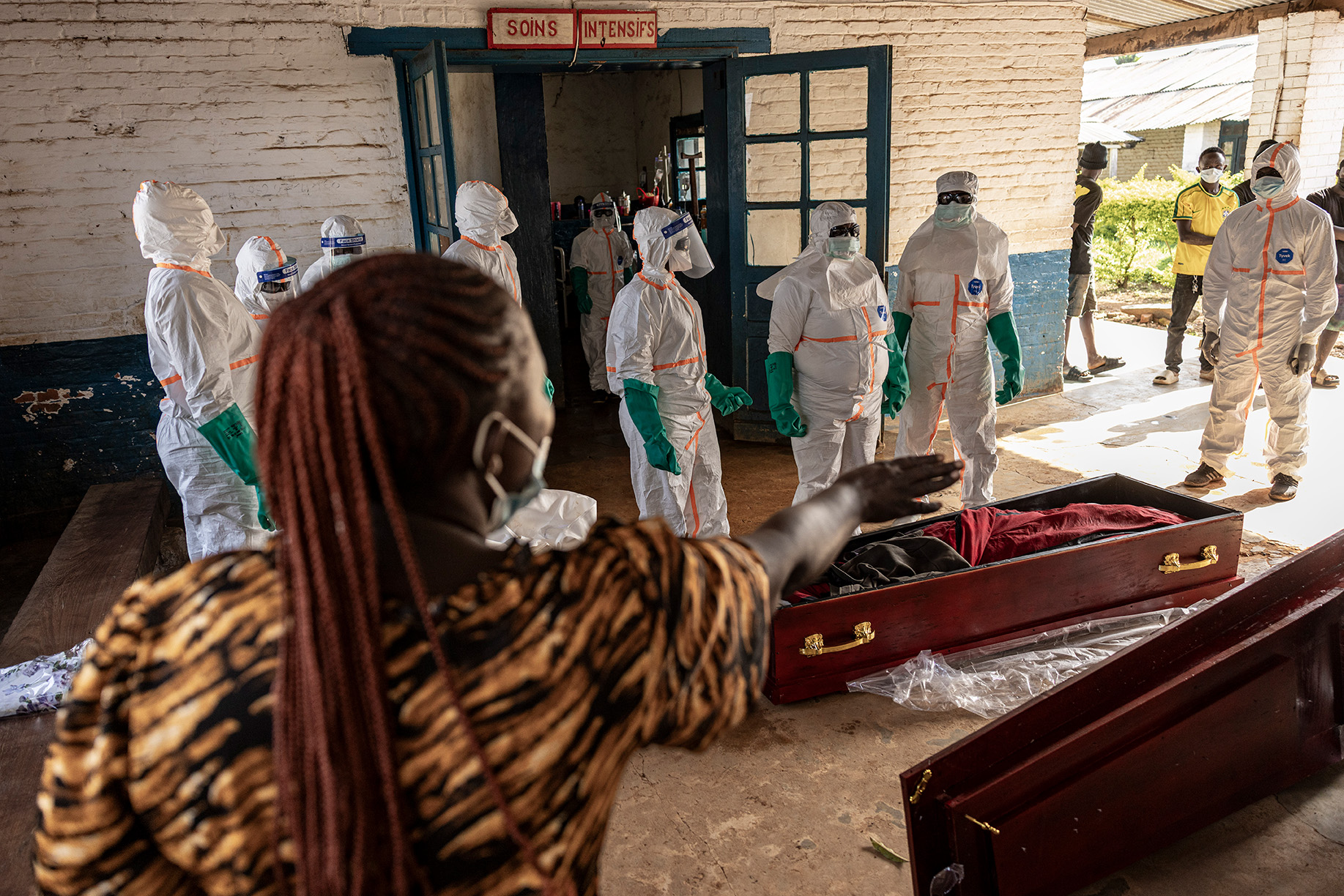
Coffins are prepared at the Mongbwalu hospital
Congolese healthcare workers are also having to deal with a potent combination of anger and misinformation over how the outbreak is being dealt with, which has already led to violence. In Bunia last Thursday, a crowd gathered outside a treatment facility on the outskirts of the city, demanding that medical staff hand over the body of a popular local man who had died. Police intervened and, in the unrest, the tents erected to house the Ebola patients caught fire. The WHO and its partners were forced to suspend activities.
Meanwhile, in the race for a Bundibugyo vaccine, Heeney has competition. The Oxford Vaccine Group, which developed the Oxford-AstraZeneca Covid vaccine, is working with Leipzig University researchers to create a vaccine that would attack the Bundibugyo and Sudan versions of Ebola as well as the closely related Marburg virus.
Other researchers are also working on modifying a version of the existing Ervebo vaccine, which works against the Zaire strain, so that it works against Bundibugyo.
Heeney’s team at Cambridge – now part of a biotech spinout company called DIOSynVax – is taking a broad approach to all the viruses in the region. It takes the genomic sequences of each member of the family of viruses and analyses them using algorithms created by Heeney and his Cambridge colleagues over the last 10 years. The algorithms spit out several vaccine designs – known as the “antigen payload” – which are then tested in the lab to make sure they create effective antibodies against the viruses.
After testing and analysis, Heeney’s team selects the best version. The antigen payload is like an antiviral bomb; it needs to be delivered, and there are several options. One is mRNA, which uses the antigen payload to teach our cells to make antibodies. Another option is viral vectors that deliver the payload using an inert virus.
So far the Cambridge group has demonstrated that its vaccine against multiple viruses is effective in guinea pigs. In a pre-print academic paper, which has not yet been peer reviewed, it found that the vaccine gave “significant protection” from Ebola Sudan, Marburg and Lassa fever.
Its vaccine is about to go into production so that it can go through a phase one clinical trial in humans to check first that it is safe. “That takes about four months at least,” Heeney said. Further phase two and phase three trials are needed to check the vaccine is effective, before it can be approved.
“By the time you finish, it’s about eight or nine months,” he said. Alternatively, he added, if the DRC authorities can make public health measures work by persuading people to “stay home, not go to funerals, and not touch [each other], and if they get people who are exposed to quarantine, this can be all over in six to eight weeks”.
The ashes of the treatment tent in Bunia show that is easier said than done. The day after, the authorities in Ituri banned funeral wakes, introduced restrictions on burials and suspended the local football league. The INRB (the DRC’s national institute of biomedical research), is working hard to analyse the Bundibugyo strain to establish whether it is evolving or spreading.
If the public health measures succeed, there will be no need for a vaccine. This time.
Photographs by Michel Lunanga/Getty Images