
Iran’s political chiefs and military commanders emerged from hiding to pay tribute to Ayatollah Ali Khamenei, as the country began days of funeral rites for its slain supreme leader intended to send a message of defiance to its enemies and of endurance to its supporters.
Conspicuously absent was Khamenei’s son and successor, Mojtaba, who survived the US-Israeli airstrike that killed his father and has ruled from the shadows since his elevation to supreme leader, fuelling reports that he was gravely injured.
Fears of further assassination attempts and rumours of his injuries have meant that the 56-year-old remains invisible, issuing only periodic written statements and declining even to attend his wife’s funeral. Iranian officials say he is fit to rule.
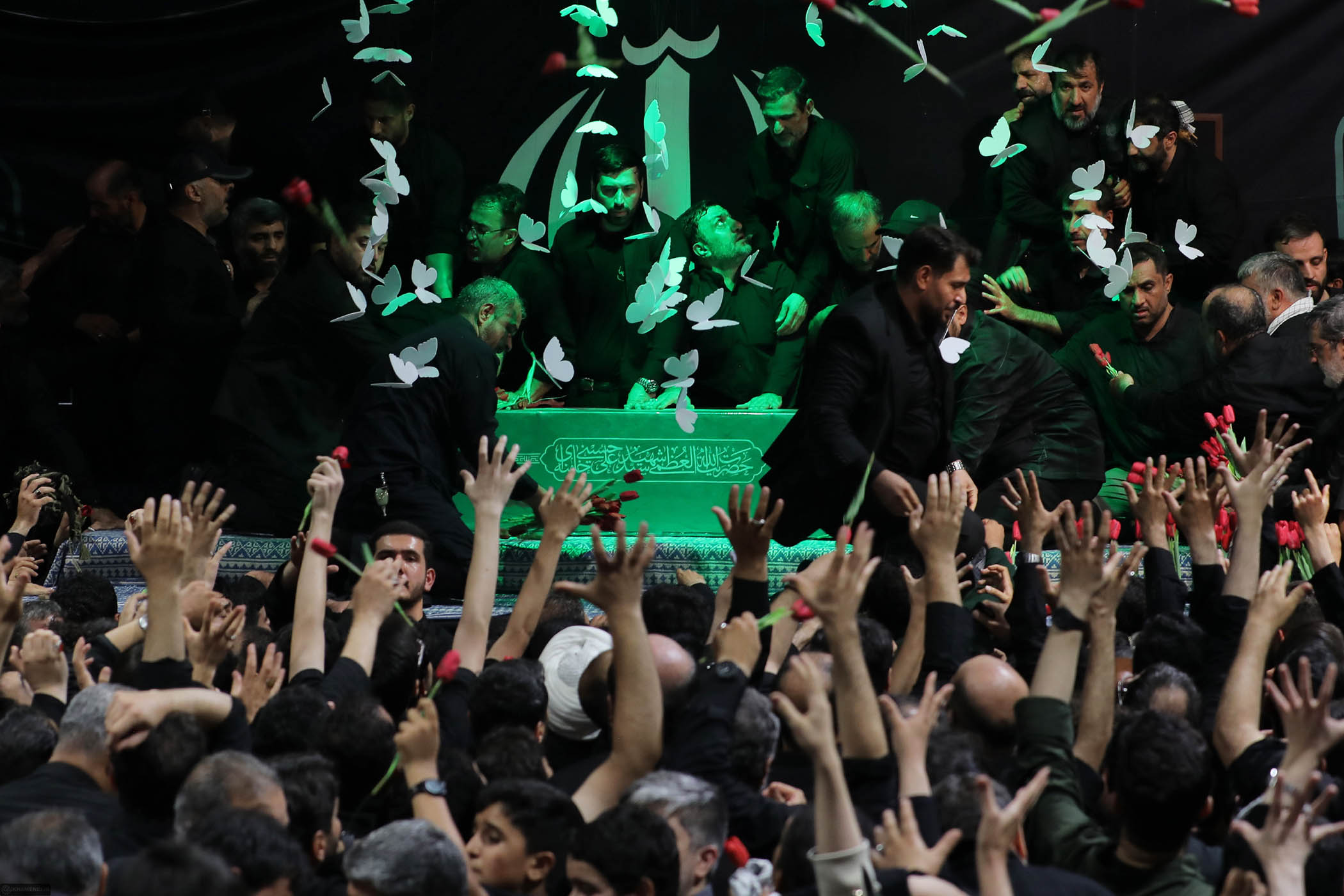
Making his first public appearance for months was the man who has steered Iran’s response to the war with the US and Israel. Ahmad Vahidi, the hardline head of the powerful Islamic Revolutionary Guard Corps (IRGC), broke cover to visit Khamenei’s coffin. State media showed him touching the coffin, bathed in emerald light.
Vahidi, who is sanctioned by the US, among others, and wanted by Interpol for his alleged role in the deadly 1994 bombing of a Jewish centre in Buenos Aires, pledged defiance against Tehran’s enemies. He has guided the regime’s military strategy since Donald Trump started the war in late February. Iran has launched thousands of missile and drone strikes across the region, closing the vital oil shipping lane at the mouth of the Gulf to impose a stranglehold on the global economy.
A procession of visiting foreign delegations aimed to underscore the strength and reach of Iran’s alliances, including its proxies across the Middle East and beyond. Representatives from militant groups Hezbollah, Hamas and the Palestinian Islamic Jihad arrived to mourn, as well as members of the Taliban.
Representing one of Tehran’s most powerful allies, former Russian president Dmitry Medvedev – attending as a special envoy for Vladimir Putin – bowed his head before Khamenei’s coffin. Beijing sent senior Chinese lawmaker He Wei, who later met the Iranian parliamentary speaker, Mohammad Bagher Ghalibaf. Beijing’s purchase of Iranian oil has sustained the regime, and Ghalibaf has frequently pushed for deeper economic ties with China.
Pakistan, which has chaired peace talks between Iran and the US, dispatched both its prime minister, Shehbaz Sharif, and its military chief, Field Marshal Asim Munir. Tasnim, a news outlet linked to the IRGC, reported that the US secretary of state, Marco Rubio, had warned countries against attending the funeral at all.
Small delegations from Saudi Arabia, Qatar and Oman also arrived in Tehran, gesturing at strained relations after Iran fired volleys of missiles at its neighbours across the Gulf and closed the Strait of Hormuz for four months.
Iran has called the week of ceremonies the “funeral of the century”, a showcase for the theocracy supported by a sprawling security apparatus that Khamenei built during his four decades as supreme leader.
Newsletters
Choose the newsletters you want to receive
View more
For information about how The Observer protects your data, read our Privacy Policy
Mourners flooded the streets of Tehran and streamed into the courtyard of the Grand Mosalla mosque, where Khamenei lay in state on Saturday. Beneath the glass-covered coffin, draped with the Iranian flag, was an empty chair, symbolising his long and frequent public speeches but highlighting the absence of Mojtaba.
Millions of Iranians are expected to turn out for the extravagant funeral. The procession next moves to the holy city of Qom before crossing the border for two days of ceremonies in neighbouring Iraq. The coffin then returns for burial in Khamenei’s home city of Mashhad on Thursday.
The ceremony was announced after a fragile ceasefire with the US. The tightly choreographed event aims to underline that the regime endures, despite Khamenei’s death.
“We view it as the beginning of a new era in the Islamic Republic,” said Iman Attarzadeh, a spokesman for the funeral planning committee.
Shoulder to shoulder beside Khamenei’s coffin on Friday, Iran’s political and military leaders put on a united front after weeks of public feuding over negotiations with the Trump administration.
The funeral was delayed over concerns that the US or Israel might attack during the event. Iran and the US have continued to exchange strikes in recent days, and Trump has threatened that the Islamic Republic “will no longer exist” if the violence continues and peace talks collapse.
Trump gave a nod to the funeral rituals in Tehran in a speech on Friday. The president claimed that the regime was “dying to settle” with the US as negotiations continue.
“We gave them a week off for a funeral because we’re nice,” Trump told an audience at Mount Rushmore on Friday evening at an event to celebrate the 250th anniversary of American independence.
Photograph by Zuma Press / Avalon