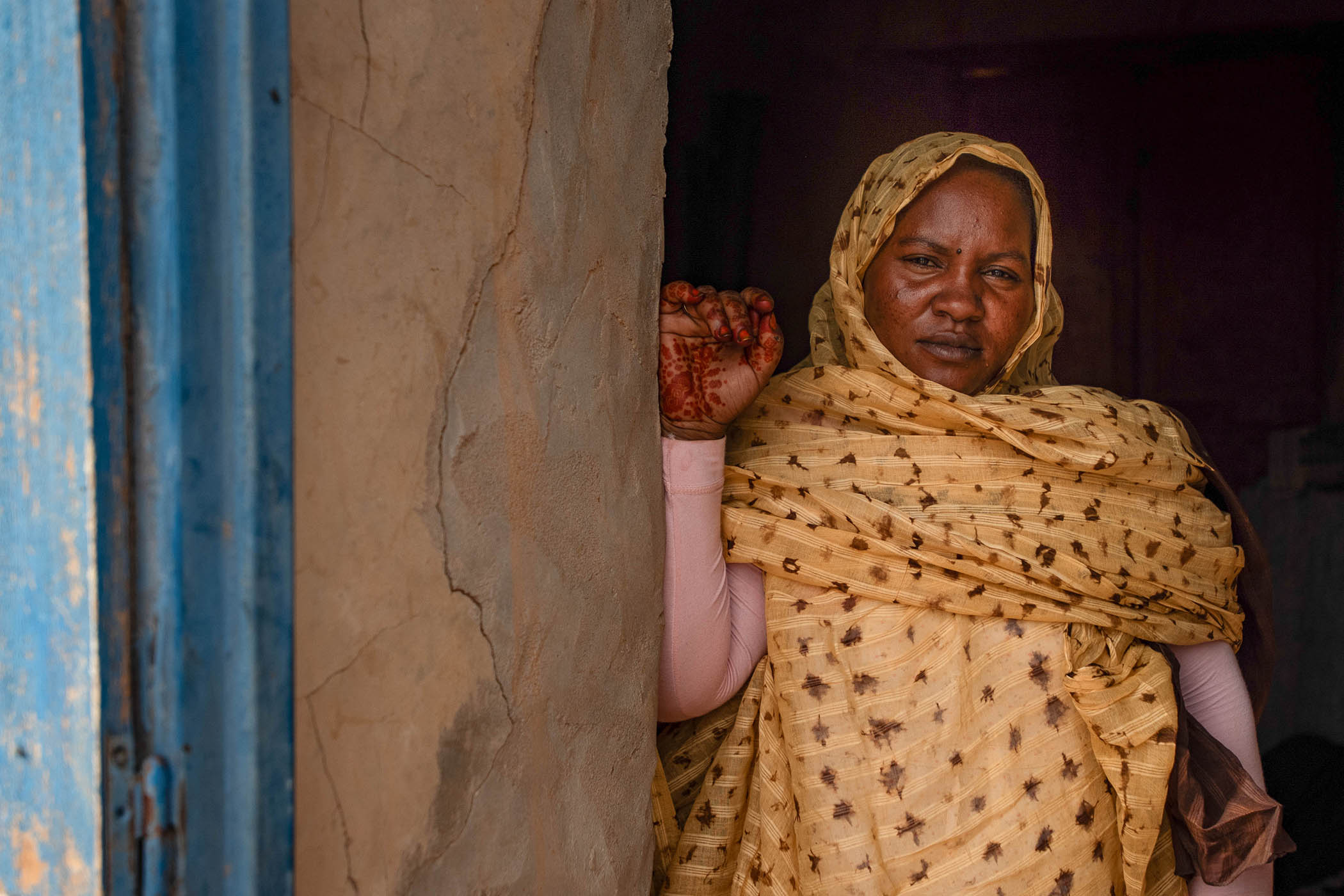
The night before her divorce party, Hajah Mohammed sits cross-legged on a straw mat in her courtyard. It is dusk and the air is finally beginning to cool in Ouadane, an ancient city in Mauritania – a large, desert country in west Africa. Hajah’s one-year-old daughter squats beside her, shaking a baby doll by its feet and murmuring to herself.
“Next, I want a rich man who will build me a house,” Hajah says, with a giggle, before adding that he should also be “kind and very gentle”. At 29, she has already been married three times and has a child from each husband. In a country where divorce is common and carries little stigma, Hajah appears untroubled by her circumstances. In fact, she is preparing to celebrate them.
Having observed the customary three-month waiting period after the end of her last marriage (known as Iddah), Hajah will host her divorce party the next day – a tradition that has been practised for centuries among Mauritania’s majority Moor population. Female friends and cousins will gather at her house to eat, sing and dance together, marking what they perceive as a new beginning.

Family and friends at Hajah’s divorce party.
“I want to show everyone that I am free and ready to marry again,” Hajah says, hoping that when word spreads through Ouadane that she is newly single, suitors will start to present themselves.
At some divorce parties, women entertain each another by giving satirical impressions of the host’s former spouse, impersonating him and exaggerating his defects. They might overstate his limp, receding hairline or bulging stomach. However, Hajah has little intention of mocking her ex-husband, even though he ultimately abandoned her. She just hopes the next partner to come forward will be better than the last, she says.
I want to show everyone that I am free and ready to marry again
I want to show everyone that I am free and ready to marry again
Hajah Mohammed
In Ouadane, her optimism is not misplaced. Hajah’s prospects improve with every divorce. “According to our traditions, if a woman is married many times then she is celebrated and beautiful,” says Haiba Mohamed Anna, a local tour guide. Each marriage, he explains, is evidence that she has been chosen before, adding to her allure. Men are judged differently, he adds, with a hint of regret. “If a man keeps remarrying then he is seen as untrustworthy.”
Mauritania is believed to have one of the world’s highest divorce rates, though official data is patchy as most marriages are never formally registered. The country, an Islamic republic with a legal system grounded in sharia law, owes its strikingly liberal attitudes towards divorce to ancient Berber customs.
“Unlike other Arab and Muslim societies where a divorced woman is damned and stigmatised, Mauritanian culture celebrates and even idealises her,” explains Elhadj Ould Brahim, a researcher in cultural anthropology at the House of Human Sciences in Paris.
“The Berbers were very matrilineal,” he says, referring to the people who dominated much of North and West Africa before the arrival of Arab tribes. “The woman not only managed the house, she controlled nearly everything.” For generations, he says, Mauritanian poets have romanticised divorced women as beguiling seductresses, free from both the watchful eyes of their parents and the strictures of marriage.

Hajah in her melhfa.
On the morning of her divorce party, Hajah sweeps out of her house at dawn wrapped in a billowing brown and orange melhfa – a lightweight cloth draped over her head and body. She makes her way to the henna parlour where her hands and feet are dyed in intricate orange patterns.
Newsletters
Choose the newsletters you want to receive
View more
For information about how The Observer protects your data, read our Privacy Policy
By lunchtime, the guests arrive. A dozen women stream into the house, two carrying drums, some holding children who settle into their laps as they take their places on the carpeted floor. One woman begins to sing – a traditional song praising a woman’s beauty – and the others clap along. The singer stands up and moves into the centre of the room where she whirls and wails, her white melhfa curling around her.
Even though the party is gathering momentum, Hajah seems distracted, her eyes fixed on her phone screen. She is busy posting photographs of her freshly hennaed arms on Snapchat and WhatsApp, keen that news of the celebration travels beyond her house.
When her sister brings in steaming plates of couscous and chicken, the women form circles and eat together, scooping up the food with their hands. Hajah alone is given a silver spoon – a small concession to her status as guest of honour.
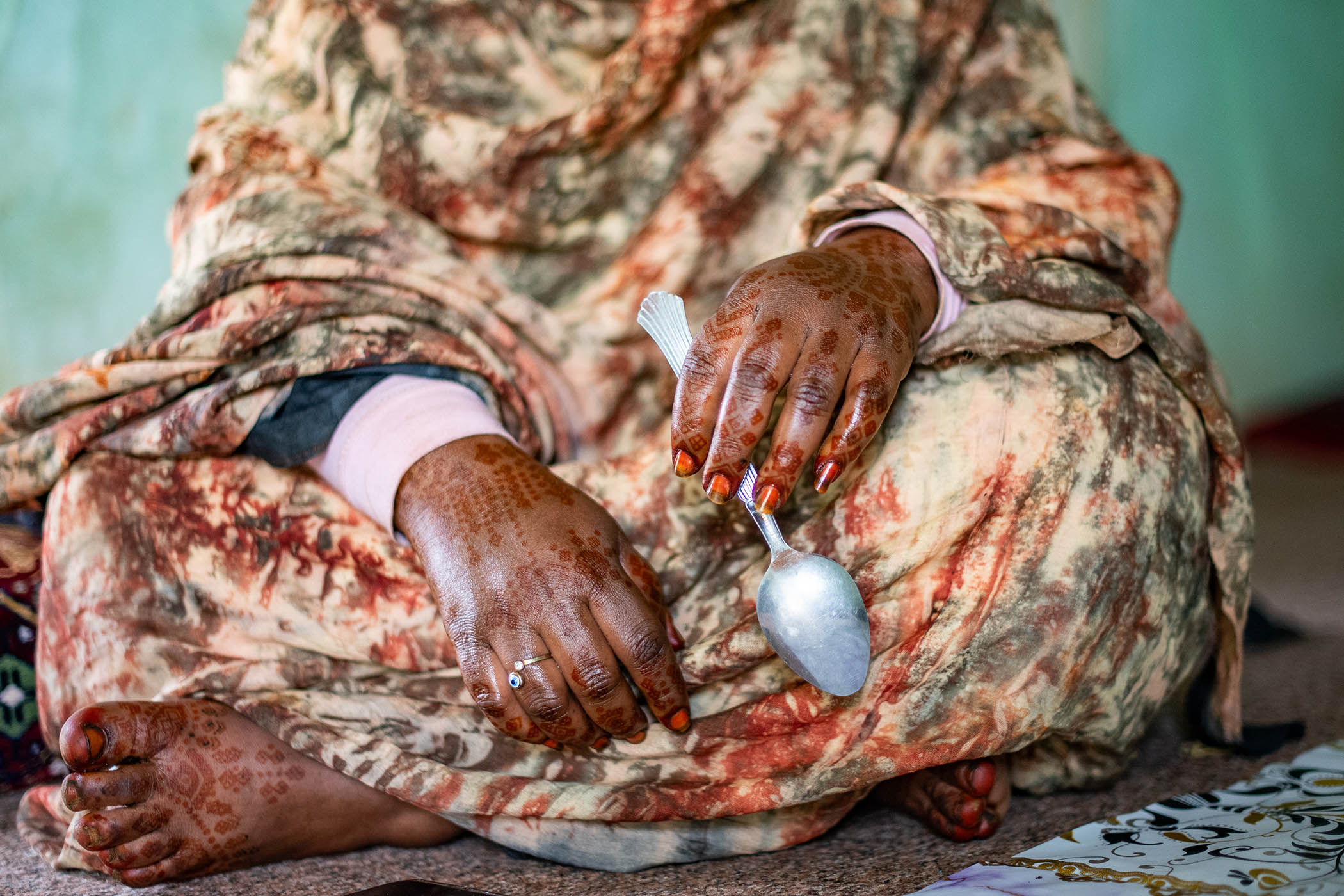
Hajah’s hennaed hands and feet at her divorce party.
Later on, as the party dies down, Hajah admits that she is already preoccupied with thoughts about the future. “Straight after my first divorce, I received a lot of proposals,” she says, explaining that she needs another husband to support her children. It is not easy for a woman to find a job in Mauritania, she adds.
Aminetou Mint El-Moctar, a feminist campaigner based in the capital, Nouakchott, is keen to stress that Mauritania’s relaxed attitudes towards divorce do not necessarily translate into female empowerment. Divorce, she says, is still governed by legal and social rules that largely favour men.
A husband may renounce his wife verbally, while a woman can only seek divorce in limited circumstances, typically if her spouse is violent or unfaithful. Disputes over money and child custody frequently end up in court, where most judges are male and rulings tend to favour men.
Even so, Moor women rarely leave a marriage destitute. According to tradition, the contents of the household are passed to the wife after divorce. “It is shameful for a man to take the property,” says Ould Brahim. “Everything that furnishes the house belongs to the woman, even if the man bought it.”
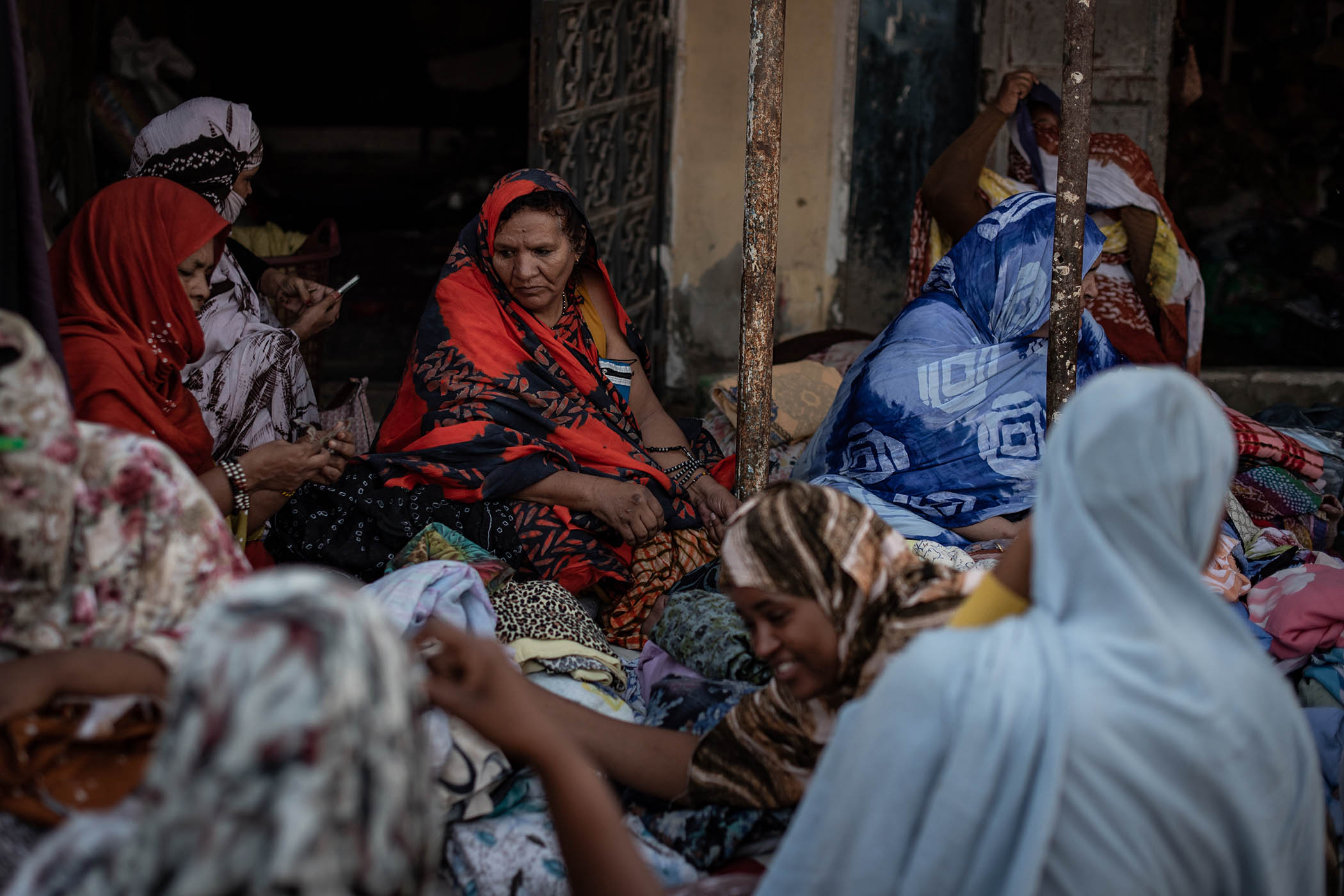
Market of divorced women, Nouakchott.
This custom is most visible at the “marché des divorcées”, the “divorced women’s market” in Nouakchott. Along a wide, dusty road, women sell off the accumulated contents of their marriages. Fridges and carpets, kettles and saucepans, chairs and sofas, are stacked up in tall, precarious piles. The traders are women, many divorced several times over, who also buy goods from newly separated wives. Taxis pull up at regular intervals with mattresses and bed frames strapped to their roofs.
At one shop, run by 53-year-old Zainab Baba, a group of six women sit on the floor gossiping as they wait for customers. When asked how many times they have been divorced, they start to call out answers. “Four times,” shouts an elderly woman in a pink headscarf. “Five,” says another, tapping her chest and laughing.
“This time I am looking for a real man, a handsome one with money,” declares 60-year-old Maina Mint Sidi-Mohamed. Her younger friend cuts in: “No, we don’t need men anymore.” The women laugh and tease each other until Maina speaks up again. “A divorced woman here is the best,” she says. “That’s just our culture.” At this, the women fall quiet and several nod their assent – on one point, the group is unanimous.
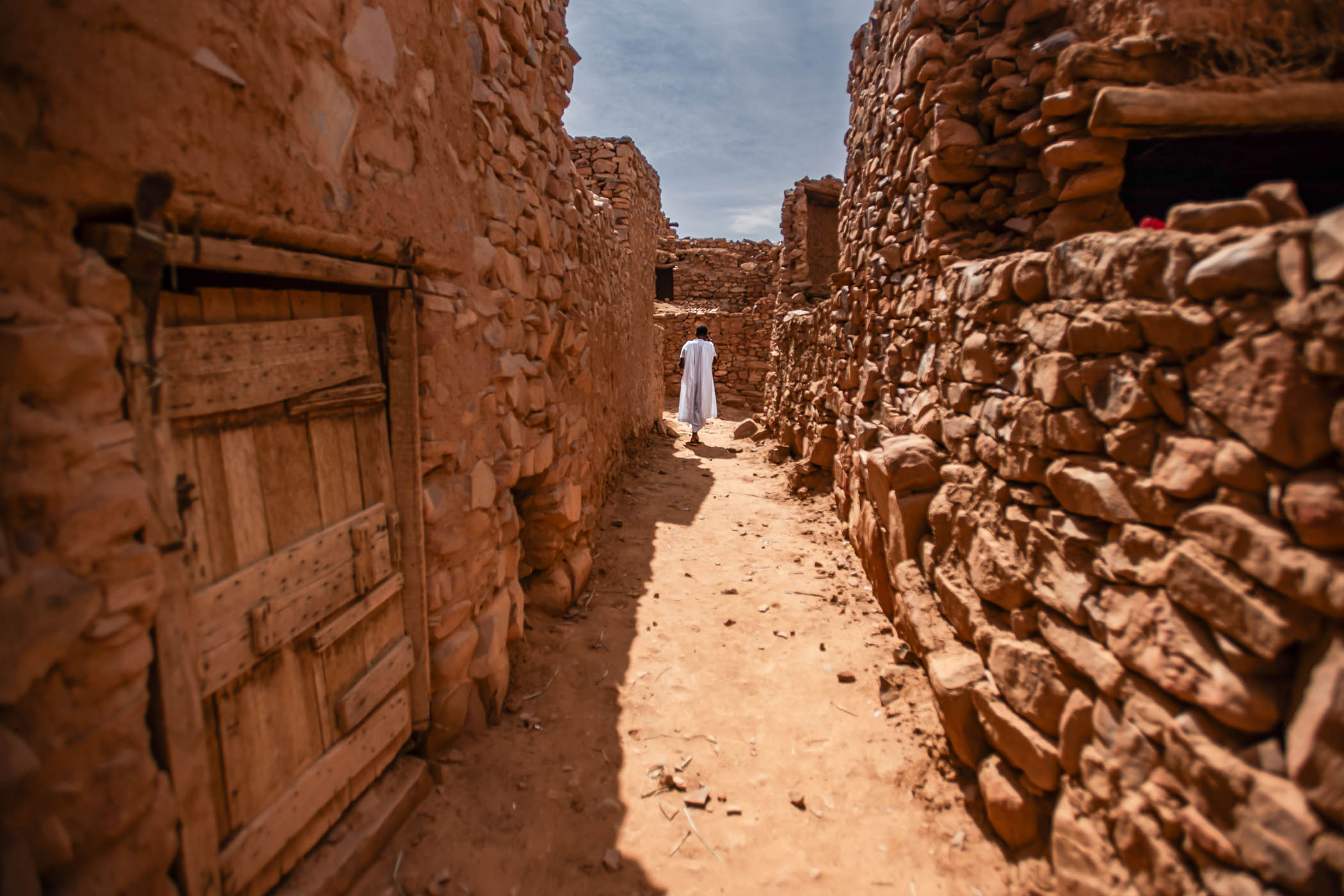
Haiba Mohamed Anna walks through Ouadane.
Rumour has it that men from across Nouakchott make their way to the marché des divorcées’ in search of a wife who has been married, and divorced, several times over. “They know where to find us,” is how one trader puts it. The market’s primary purpose, she says, is not matchmaking but mutual support. It is a place where divorced women help each another to make a living.
In Ouadane, some 400 miles to the north-east, deep in the Sahara, there is no such marketplace. Solidarity takes other forms, in parties held in courtyards and in female relatives living together. Hajah says she does not mind divorce (“I am used to it”), but hopes that her next marriage will stick. She has been through enough separations, and enough parties. “I hope to find another man who agrees to stay calmly by my side,” she says.
Photographs by Olivia Acland