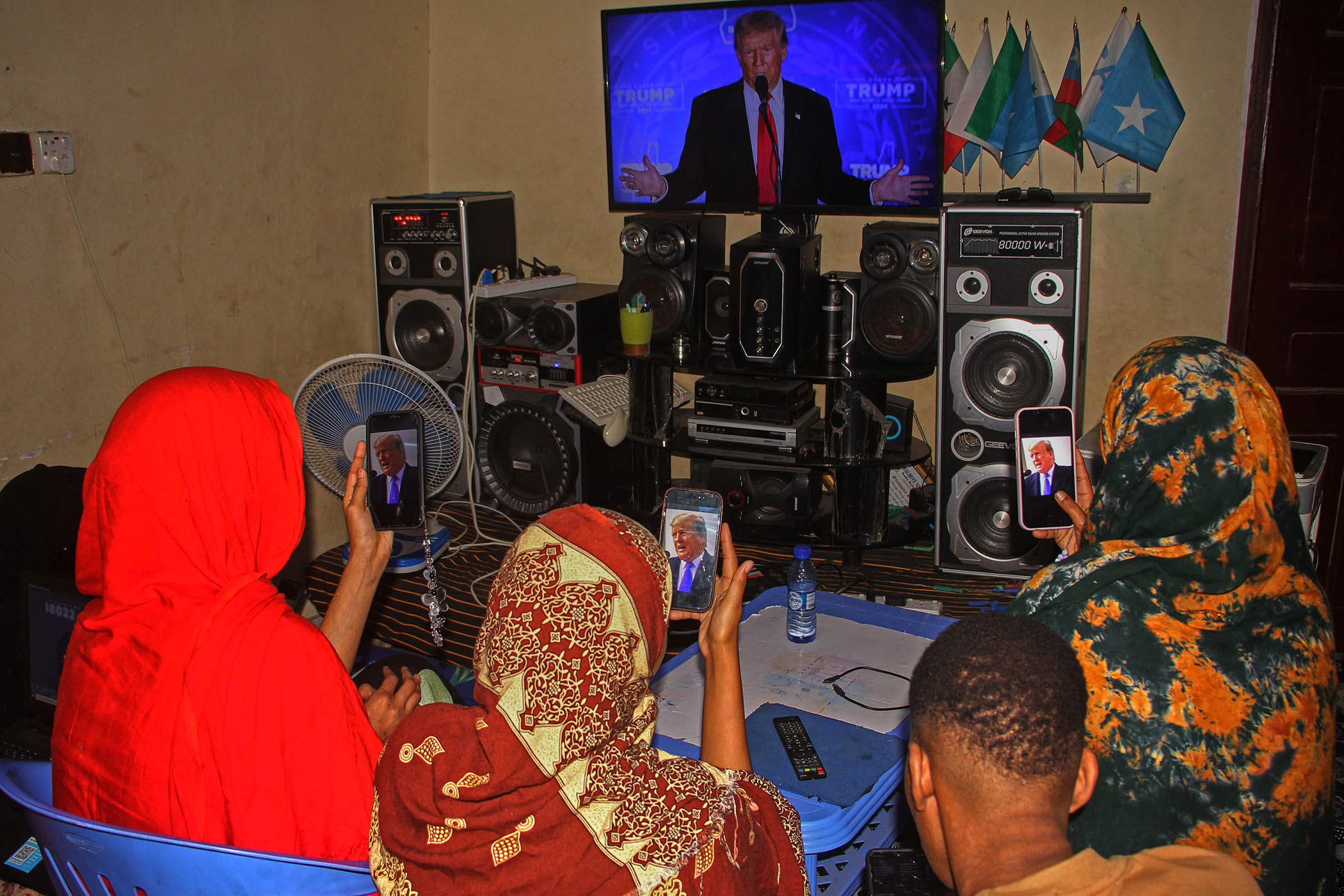

Since he returned to power just over a year ago, Donald Trump, the self-styled “president of peace”, has bombed Syria, Iran, Iraq, Yemen, Nigeria and numerous boats in the Caribbean, not to mention launching an attack on Venezuela to capture the country’s president.
But by far and away the largest military campaign has been in Somalia. Over the past 13 months, the US has carried out 157 airstrikes, drone strikes and ground raids in the east African country. The rate has dramatically increased since the start of the year – an airstrike on Friday in the Golsp mountains was the 31st attack in 2026.
The Somali campaign is not just the most intense, it is also the most opaque. While Trump boasts of attacks elsewhere, and Pete Hegseth’s renamed Department of War releases grainy video of boats being bombed in the Caribbean, the Somali strikes tend to go unmentioned. The US Africa Command releases a brief statement after each attack, noting who it was aimed at and roughly where it took place, but since May these statements have omitted any mention of a death toll.
“It’s a huge problem for transparency,” said David Sterman of the New America foundation, which has been keeping track of the strikes.
The US targets are al-Shabaab and the Somali arm of Islamic State (IS), both of which have been terrorising citizens. The airstrikes are not, on the whole, unpopular inside Somalia. The threat posed by jihadists is real. Most Somalis want democracy; all of them want peace. But without a well-thought-out political and economic plan, airstrikes alone will do nothing to turn Somalia into a safe and functioning state.
Depressingly, this sentence could have been written at any time in the past 25 years. (In fact, I’m fairly sure I’ve written it several times myself.) Successive US governments have been carrying out regular military operations inside Somalia since the start of the “war on terror” in 2001. But the US is no closer to an endgame. The government it supports in Mogadishu is unable to extend its control outside the capital, while the threat that al-Shabaab and IS pose to the region is not diminishing.
If anything, the situation feels messier and more dangerous than ever. The US is the only international actor. Turkey is carrying out drone strikes alongside the Somali military, while the United Arab Emirates – whose influence across east Africa has grown dramatically over the past few years – is providing military support to the semi-autonomous Somali state of Puntland. IS is a Somali-led operation, but it too relies on outside forces; its ranks include foreign fighters from Kenya, Tanzania, Ethiopia and Morocco. It has also developed links with the Houthis in Yemen on the other side of the Red Sea – another reason why Trump has been so keen to ramp up the airstrikes.
Another potential flashpoint on the horizon is the future of Somaliland, which claimed independence from Somalia in 1991. No nation had been willing to recognise that status until Israel became the first in December. That decision has prompted concern in Mogadishu that more nations - maybe the UAE, possibly the US - could eventually follow its lead.
For almost four decades, since the civil war that brought down the regime of Mohamed Siad Barre in 1991, Somalia has been riven by overlapping conflicts and wars – some involving outsiders, others not.
Through it all, Somalis have tried to live their lives to the fullest, whether they have stayed or emigrated. It is a country with an incredible storytelling tradition, where poets are more popular than pop stars. Despite decades of war, the nation’s culture has thrived, spreading its influence to different corners of the world as Somalis have found new places to call home, from Minnesota to the UK.
Newsletters
Choose the newsletters you want to receive
View more
For information about how The Observer protects your data, read our Privacy Policy
But talking to Somalis – both those who have stayed and those who left – the dream of Somalia becoming a free, safe and thriving nation seems further away than at any time since it won its independence from Italy and Britain in 1960.
Like Libya and Sudan to the north-west, Somalia is now not only a nation state, but also a battleground over which foreign players fight for control of minerals, oil and influence. The almost daily US airstrikes are just one part of a dangerous new scramble for Africa.
Photograph by AP Photo/Farah Abdi Warsameh