The announcement that Mojtaba Khamenei would succeed his father as Iran's supreme leader came without him speaking to the nation or being seen in public. Instead, Iranian state television carried footage of a man in a black cap grandly declaring the outcome of a "decisive vote of the council of experts," while a crowd of hundreds cheered and waved flags in a square in northern Tehran. Video footage showed hundreds of men chanting in allegiance to Iran's new young leader in the Iranian seminary city of Qom.
This elation was far from universal. Other footage emerged from Tehran of people leaning out of their balconies to decry Mojtaba's ascension to power and call for the death of the regime he now rules, drowning out the cries of "God is great” that echoed from minarets below.
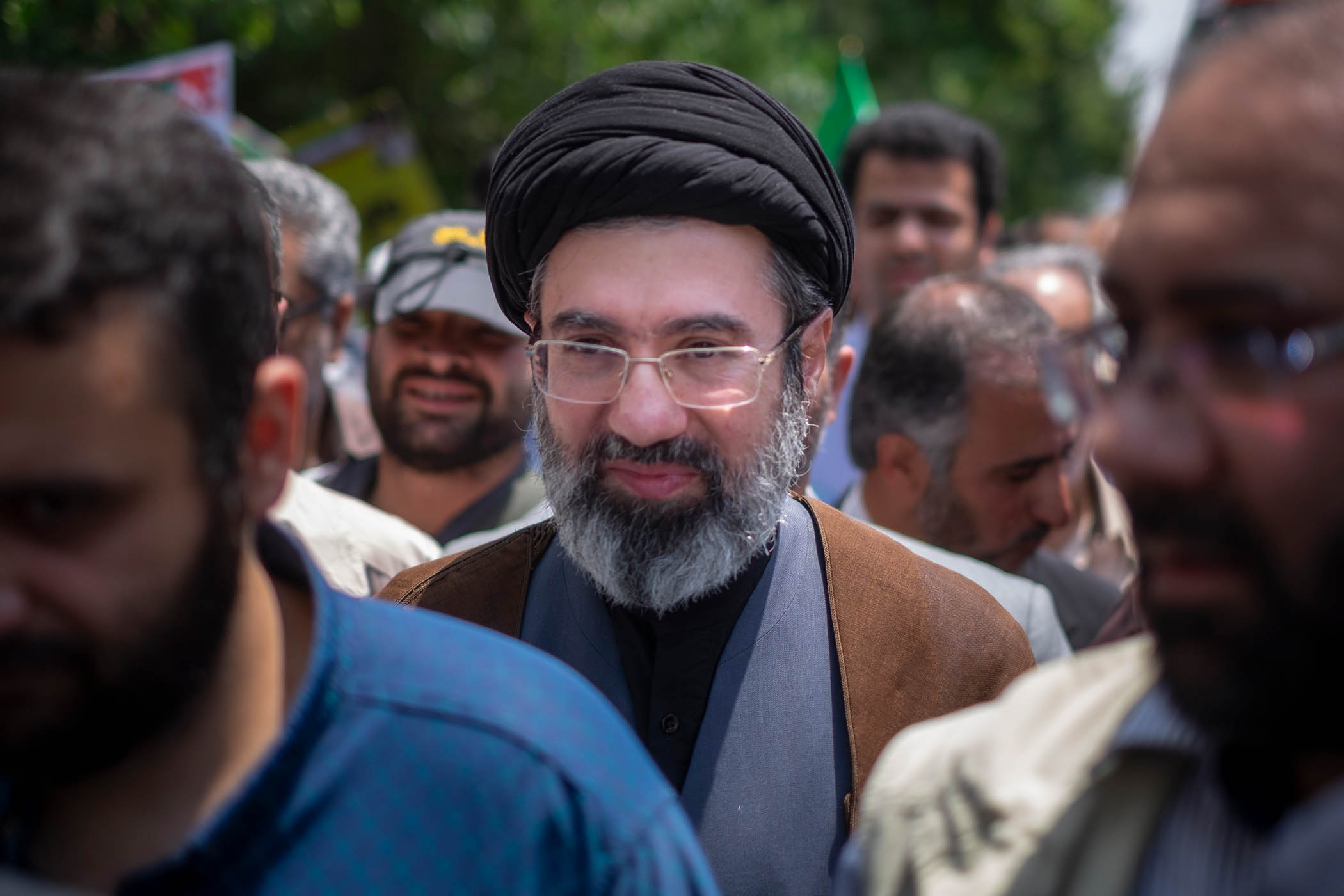
Little is known about Ayatollah Ali Khamenei's second-eldest son, other than his backing from the powerful Islamic Revolutionary Guard Corps (IRGC), garnered during his years working in his father's office. His public appearances have been limited to glimpses of him at annual rallies. Ali Alfoneh at the Arab Gulf States Institute pointed out that the younger Khamenei has never given an interview and “most Iranians have never heard the sound of his voice.” Ali Vaez of the International Crisis Group describes him as someone who “operates from the shadows”.
Iran's hardliners, like the parliamentary speaker and former IRGC commander Mohammad Bagher Ghalibaf, have expressed their delight. Ghalibaf called the younger Khamenei "pious, revolutionary, popular, brave, competent”, someone who understands Iran's enemies and lives a simple existence. This is not quite true. A recent investigation by Bloomberg found that the younger Khamenei was the ultimate beneficiary of an international property empire "stretching from Tehran to Dubai and Frankfurt," and including mansions in London, evading US sanctions placed on him in 2019.
Now installed as Iran’s ultimate guardian, Mojtaba Khamenei seems unlikely to suddenly develop a public presence. The Israeli strike that killed his ageing father, Ayatollah Ali Khamenei, also killed Mojtaba Khamenei's mother and his wife, and reportedly other members of his family. There are unconfirmed reports that the 56-year-old new supreme leader was also injured in the initial wave of Israeli and American strikes that killed most of his family. He is considered a wanted man by Israel, whose defence minister said any new leader "will be an unequivocal target for elimination." Lying low appears to be the only safe option for now.
Donald Trump has previously dismissed Mojtaba Khamenei as an “unacceptable” candidate and insists the US must have a hand in picking a new leader, stating that anyone trying to rule without Washington's prior approval won't "last long”. Trump appears to want a repeat of his operation in Venezuela, where the capture of Nicolás Maduro paved the way for a more pliable politician to take charge. But Iranian security chief Ali Larijani has repeatedly denied that anyone in Tehran is willing to break ranks and speak with Washington, and Mojtaba Khamenei's accession is a signal of continuity from a regime determined to withstand Israeli and US pressure.
"Due to his affiliations within the IRGC and the company he keeps, I think we have a fairly good sense that his politics are equally hardline to that of his father," Farzan Sabet, an Iran expert at the Geneva Graduate Institute. "But elevating him to the position of supreme leader within such a relatively short period of time, and without more deliberate consensus-building within the system, creates the risk that the new leader has legitimacy within his hardline social base and the security establishment, but not the wider regime."
The Islamic republic's founder, Ayatollah Ruhollah Khomeini, could draw on his status as the leader of Iran's 1979 revolution and as a powerful cleric. When the older Khamenei was chosen to fill Iran’s highest office in 1989, he had spent two terms as president and drew on this political experience to consolidate his position as supreme leader, playing rivals off each other. Although the younger Khamenei has filled a power vacuum at the top of the regime in a move to prevent defections and discontent below, he lacks both the political and religious stature of his predecessors, Sabet pointed out. This means he could find it difficult to project authority within Iran’s broader political system.
"Not only is he not a senior religious figure, he's barely a political figure – he has operated in the background, with plenty of mythology about his role in suppressing the 2009 Green Movement protests," he said. "So he may wield a lot of authority for his hardline base, but it could be harder for him to gain broader legitimacy."
Mojtaba Khamenei's ascension appears intended as a strong signal that the Iranian regime is unlikely to consider negotiations with Washington or capitulate to the Israeli and American assault. Alfoneh called the younger Khamenei's selection "a middle finger to Israel from the regime," in a social media post. "A person that has had their entire family wiped out by a foreign adversary is unlikely to sit down for negotiations and make major concessions," said Sabet.
Newsletters
Choose the newsletters you want to receive
View more
For information about how The Observer protects your data, read our Privacy Policy
Photograph by Morteza Nikoubazl/NurPhoto via Getty Images