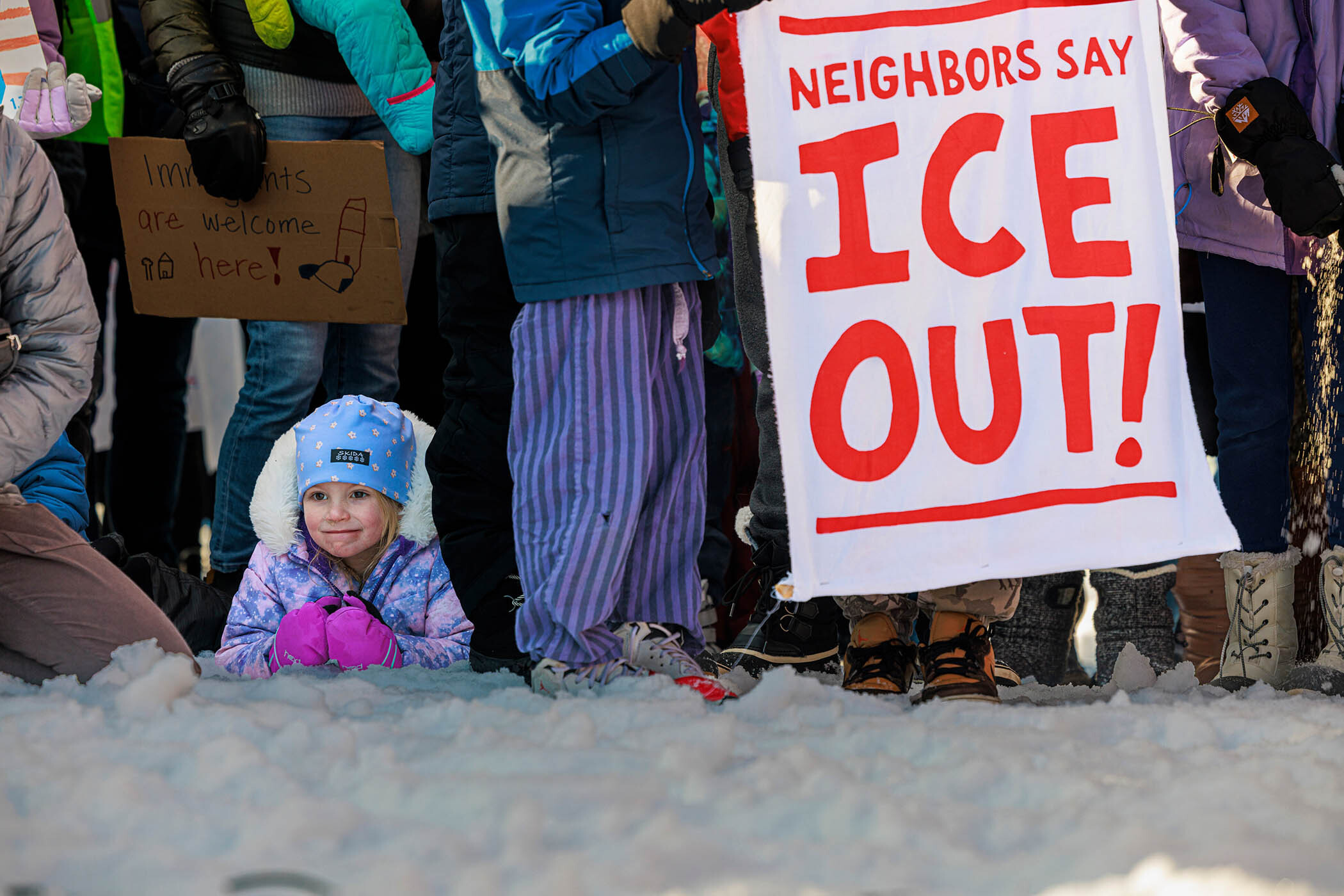



It’s an inevitably snowy January day in Minneapolis, and many children are taking advantage of an unexpected day off school. The yells of a boisterous snowball fight fill the air by Lake Hiawatha, and youngsters in snow boots pull sledges along the pavement.
But in many homes, children can only experience the snow through the window as they sit behind locked doors with terrified parents who will not even leave the house to buy food. Others go to school fearing that when they return, their parents will be gone.
For weeks, immigrant families in the Midwestern city have been living in fear after Donald Trump dispatched Immigration and Customs Enforcement (ICE) agents as part of a crackdown on people he describes as “garbage”.
The situation in Minneapolis, which has a large Somali population, has intensified in the past week since the shooting of Renee Nicole Good by an ICE agent on 7 January, which sparked widespread protests.
On Thursday, Trump threatened to invoke the Insurrection Act, which would allow him to deploy the military to Minneapolis, raising the stakes in a city that has become the epicentre of opposition to his migration policy.
All too often, it’s families who are caught in the crossfire.
“It’s very hard – we want to go out but the couple of times that I have gone out I’ve seen the immigration agents taking people,” said Martha, 65, a mother and grandmother originally from Ecuador. “It’s hard being shut in the house all the time, but why take the risk and go out?”
Martha used to look after her two-year-old granddaughter and the children of four other families at her home while their parents worked. But when the ICE deployment started in December, she noticed a different look in their eyes as they kissed their children goodbye.
“They were very scared, hugging their children tighter than ever, looking at them with more tenderness,” Martha said.
Each parent was leaving their child with the knowledge that they may not be there to pick them up later. Eventually it became too much. The children don’t come to Martha’s house any more. Their parents don’t risk leaving the house to go to work.
Newsletters
Choose the newsletters you want to receive
View more
For information about how The Observer protects your data, read our Privacy Policy
Now it’s just Martha and her granddaughter, trapped in the house each day. “We used to dance and sing and play, and now I can’t do that. I want to, but I can’t,” said Martha, choking back her tears.
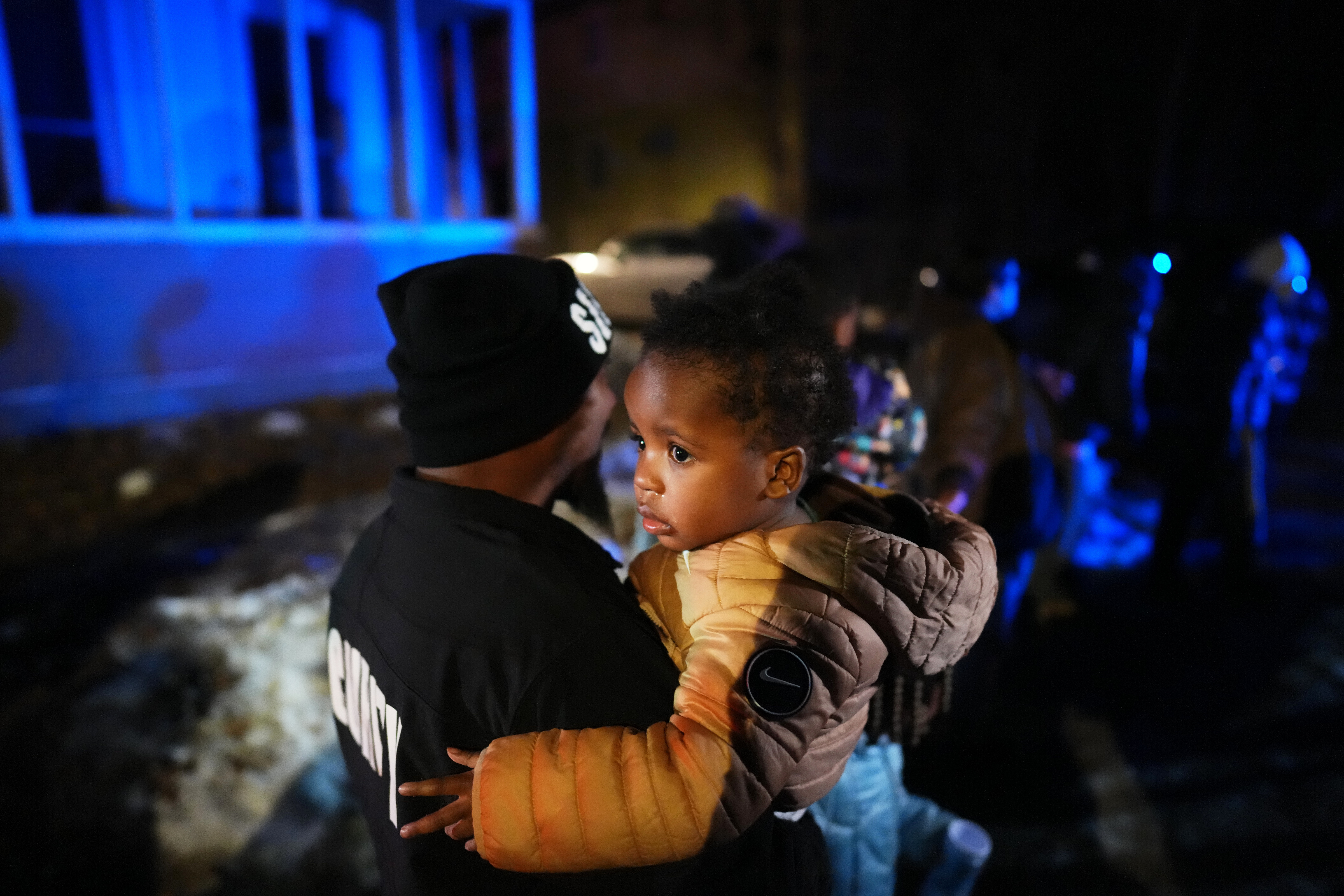
A child and her family are escorted away after ICE agents deployed teargas during a protest on 14 January
Martha and her children are all legal US residents, but her husband is still in the process of getting his residency papers, causing great concern for their 16-year-old son. “He is always asking, has dad got to work OK? When is he coming back?” said Martha.
Trump and his administration repeatedly say their migration crackdown is targeting “the worst of the worst” and post mugshots on social media of people arrested along with lurid details of alleged child sex crimes and gang offences.
But research by multiple independent organisations shows that most people detained for deportation are not violent criminals. Analysis last year by the Cato institute found that 73% of those detained had no criminal convictions. The White House argues that being in the US without correct documentation automatically makes people criminals, but this is disputed by civil rights and legal experts.
What is indisputable is the sense of terror felt by an entire community, regardless of their migration status. In the Minneapolis-St Paul area, about 200,000 children – one in four – have at least one immigrant parent.
“They come [to school] and they’re just crying… the level of anxiety and stress that kids are feeling is palpable right now,” said Kristen Melby, who teaches at an elementary school and is a member of Minnesota Educators Against ICE. “Kids are going home and finding that their parents are no longer there.”
About 150 people are being detained every day in Minneapolis, as masked and heavily armed ICE agents patrol the streets, targeting locations where members of migrant communities go to fulfil their most basic day-to-day needs.
“They’re picking people up in the grocery store, they’re picking people up at the bus stops – at their child’s bus stops,” said Kate, an early years teacher who gave her first name only to protect her students. She teaches predominantly migrant communities. Just 10% of her students are now showing up for class.
Despite the fear, resistance to the ICE deployment in Minneapolis and Minnesota has been fierce. City and state government officials vocally oppose it and are launching various legal challenges; volunteer networks coordinate to alert citizens to ICE raids; noisy protests continue at locations where federal agents gather.
‘This is not safety. This is indiscriminate violence intended to stoke fear and division’
‘This is not safety. This is indiscriminate violence intended to stoke fear and division’
Kristin Crabtree, Minneapolis Families for Public Schools
In response, the White House has sent hundreds more federal agents to reinforce the 2,000 already deployed.
Trump’s senior advisor, Stephen Miller – an architect of his migration policy – said the ICE officers have “immunity” to perform their duties. “No one – no city official, no state official, no illegal alien, no leftist agitator or domestic insurrectionist –can prevent you from fulfilling your legal obligations and duties,” he told Fox News.
But the optics are not favourable for the president. Countless videos filmed by citizens show ICE agents violently confronting both protesters and migrants, dragging people screaming from cars and threatening bystanders who are filming. This week a YouGov poll found the majority of US adults view ICE unfavourably and think it has a fundamental problem that needs to be fixed.
“Americans do not like images like this,” said Muzaffar Chishti, a senior fellow at the Migration Policy Institute thinktank. “They don’t like it at the border, and they certainly don’t like it in Minneapolis and Chicago.
“The country is saying, this is not what we had in mind.”
He said that any attempt to invoke the Insurrection Act would cause an immediate appeal to the supreme court, which has already ruled against the deployment of national guard troops to other cities. But Trump is showing no sign of backing down, which means Americans could see more scenes of chaos, including at schools and other locations where children gather.
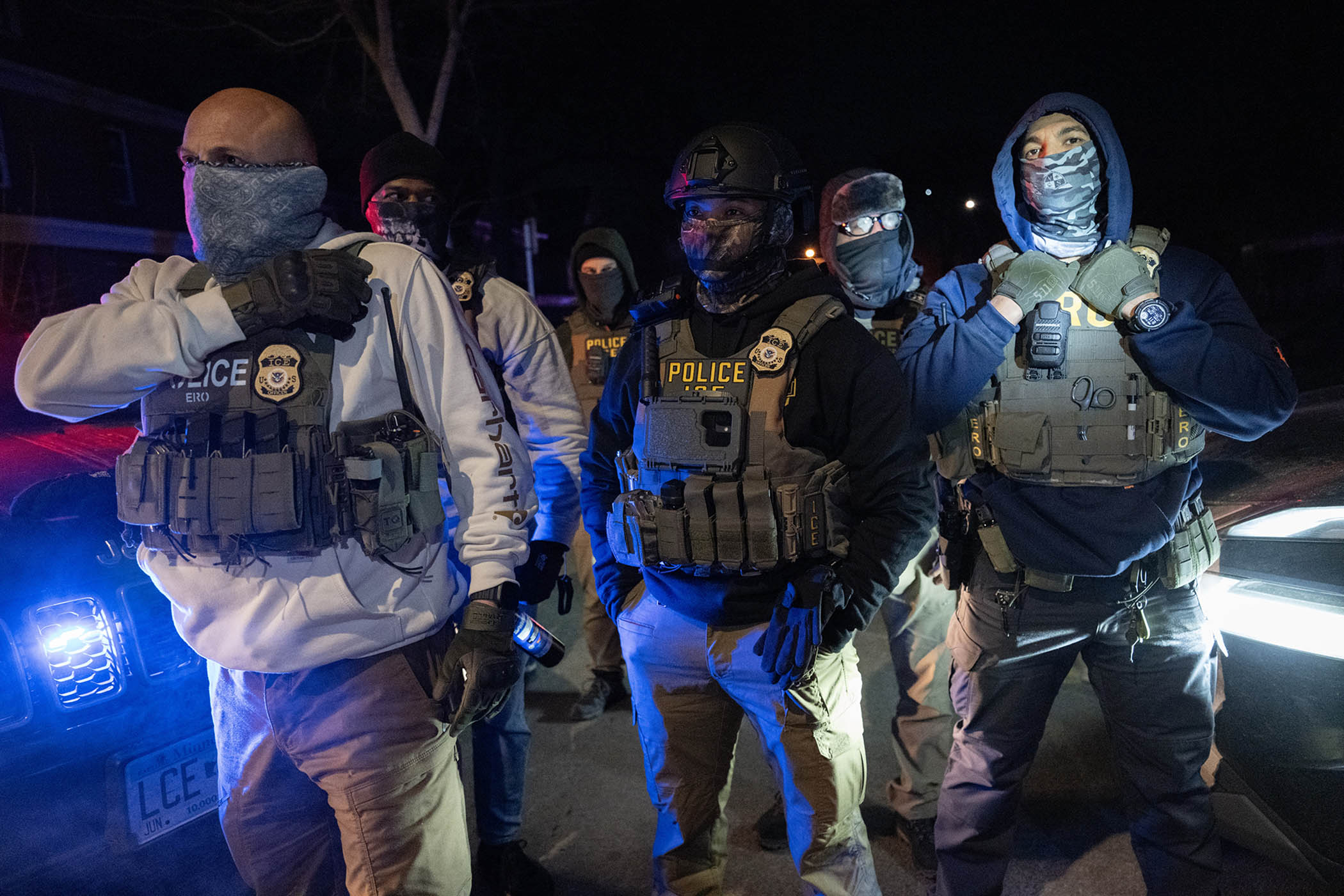
ICE agents during a confrontation with residents following a shooting in Minneapolis on 14 January
On 7 January, hours after the killing of Good, ICE agents used a chemical irritant and scuffled with a person outside Roosevelt high school as pupils were being dismissed. One special education assistant was detained by ICE during chaotic scenes witnessed by children.
“This is not safety,” Kristin Crabtree, a member of the Minneapolis Families for Public Schools, told a protest on Friday morning. “This is indiscriminate violence intended to stoke fear and division.”
This incident, along with the killing of Good, prompted the closure of schools last week. The schools district announced that children could continue schooling online until 12 February if they wanted to.
As well as the immediate safety concerns, there is the lasting emotional impact of families being torn apart – and the financial toll of losing a breadwinner and paying legal fees.
Nearly 5 million families in the US are like Martha’s, with members who have different migration statuses, and there are cases across the country of parents being separated from their children. Many of those at risk of detention are now completing legal documents designating a person to look after their child if they are detained.
“As a parent it is nauseating to think about having to make these decisions,” said Melby. “But if you don’t have that documentation, the scenario is worse.”
Children can be placed in care or even detention. The investigative news outlet ProPublica reported that ICE sent more than 600 children from immigrant families to federal detention centres in 2025, more than in the previous four years combined.
There have also been multiple reports of children being left alone in cars after ICE takes a parent from the vehicle. The New York Times reported nine cases in which a child has been separated from parents who refused to comply with a deportation order – a tactic apparently used to coerce the family to leave.
The Department of Homeland Security has repeatedly said they do not force families to separate as the deportee is always given the option of taking their children with them. But when these children are US citizens who have lived in the country their whole life, leaving to a place that may be unsafe or unknown is not viable.
Martha just wants to be able to give her son an answer when he asks when it will all be over. But right now she doesn’t have one. “You feel sad not knowing what to do,” she said. “This isn’t a life for anybody.”
Photograph by Adam Gray, Victor J. Blue, Bloomberg via Getty Images