

More than 1,800 US companies filed lawsuits seeking refunds for the tariff duties they had paid before the supreme court’s decision on Friday to strike down Donald Trump’s signature trade policy.
On 28 November, a few weeks after justices first expressed doubt over Trump’s authority to impose tariffs under emergency law, Costco, America’s largest warehouse retailer, sued the US government seeking a “full refund” for the tariffs it paid last year, warning that the deadline for US customs to finalise the amounts it owed is imminent.
Multinationals including Goodyear Tires, Barnes & Noble, GoPro, J Crew, Dole, Diageo, Staples and BYD have also launched proceedings in a widening legal fight over whether the US will need to pay back an estimated $175bn in customs revenue raised since last April.
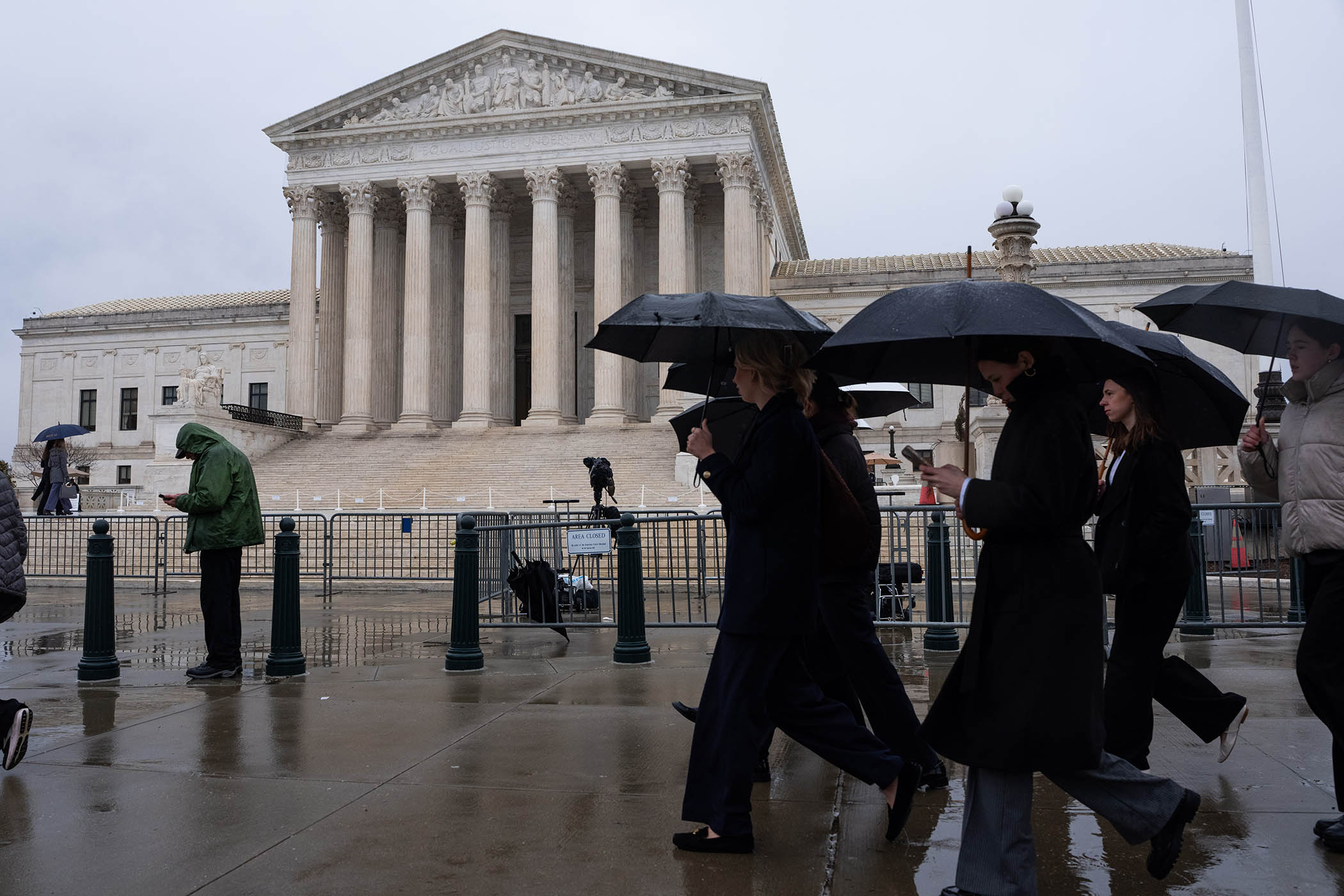
The supreme court ruled 6-3 that the president could not use the 1977 International Emergency Economic Powers Act (IEEPA) to impose tariffs on dozens of countries. But it stopped short of ruling on whether US firms, which pay the import duties, are entitled to refunds, delegating the question to a lower court.
At a press conference after the ruling, the president expressed annoyance at the omission: “They take months and months to write an opinion and they don’t even discuss that point… I guess it has to get litigated for the next two years.”
Law firms are expected to benefit significantly from the ruling. Typical fees for a complex corporate case often come to more than $200,000, according to the Association of Corporate Counsel. One 40-lawyer trade firm based in New York has taken on more than 300 cases linked to tariffs, and is representing luxury fashion brands Prada and Dolce & Gabbana in claims filed last year.
“The time to do it was yesterday. The next best time to file is today,” one lawyer told Reuters.
Trade bodies have expressed concern that the lack of clarity over a repayment process will create a particularly unfair burden for smaller importers. Meanwhile, US consumers, who according to a study by the New York Federal Reserve last week have borne 90% of the cost of tariffs so far, are unlikely to see redress for increased prices.
Trump intends to reimpose most, if not all, of the IEEPA tariffs by using different legal authorities
Trump intends to reimpose most, if not all, of the IEEPA tariffs by using different legal authorities
Trump has signalled that he intends to reimpose most, if not all, of the IEEPA tariffs by using different legal authorities. Under section 122 of the 1974 Trade Act, the president will implement a global 15% tariff that starts on Tuesday and expires in 150 days. It’s expected this will be accompanied by sector-specific tariffs under section 232 of the Act on goods such as robotics, drones, pharmaceuticals, solar panels and aircraft.
At an event on Friday, Treasury secretary Scott Bessent claimed that the use of these tools would “result in virtually unchanged tariff revenue in 2026”. But there is scepticism over how soon the administration can get a new regime in place, given that the new methods require trade investigations that often take up to 90 days.
Newsletters
Choose the newsletters you want to receive
View more
For information about how The Observer protects your data, read our Privacy Policy
Ahead of the midterms, there are questions over how much volatility the administration will want to create through new policies. There is also the looming question of debt.
“It’s a significant widening of the fiscal deficit if the administration doesn’t do anything,” said Michael Pearce, chief US economist at Oxford Economics. “A jump in government borrowing costs would run counter to other parts of the administration’s agenda, particularly around housing affordability and bringing mortgage rates down.”
The dollar weakened and US Treasury yields floated higher on Friday as markets contemplated a new tariffs regime. It’s estimated that the IEEPA tariffs would have raised over $1tn over the next decade. The US government’s budget deficit stands at $1.8tn.
Photograph by Aaron Schwartz/Getty Images