

Up against one of the most powerful politicians in the state of Utah, Stephanie Hollist’s chances of winning the Republican primary looked slim at first. She was a political newcomer, while her rival J. Stuart Adams was the longest serving president of the state senate.
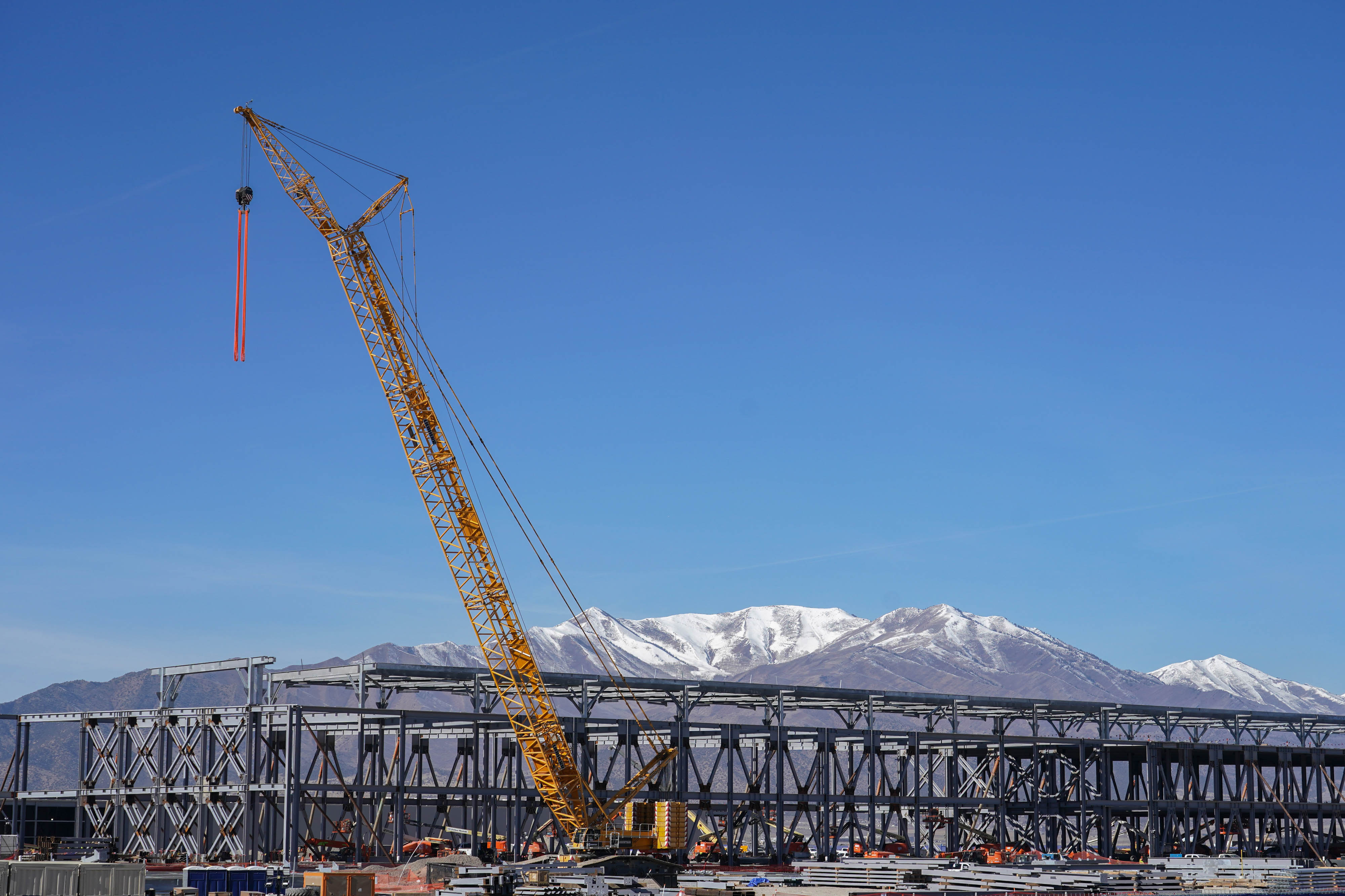
Then, just as the race was heating up this year, a controversy emerged that would prove a major liability for Adams. Plans to build America’s largest AI data centre on the northern end of the Great Salt Lake were provoking a backlash – and Adams had approved them.
The Stratos project, backed by celebrity investor Kevin O’Leary, had received a greenlight from the state in a deal that reinforced the main premise of Hollist’s campaign: that local authorities weren’t listening to the people of Utah.
“I really do see this as a symbol of how people have been frustrated with how government has been making decisions for a long time,” said Hollist in an interview. “This was sort of just the straw that broke the camel’s back with everything.”
Last week, she unseated Adams in an election that revealed the depth and increasing breadth of opposition to data centres across the US – and the growing headwinds to the buildout of the infrastructure needed to power artificial intelligence.
Seven in ten Americans oppose the construction of data centres in their local area, according to a survey conducted by Gallup in March – compared with just over half who would oppose the construction of a nuclear energy plant nearby.
The issue is mobilising Americans on both sides of the political spectrum, uniting conservative rural voters and progressive climate and consumer advocates behind a common cause, amid broader unease over the rapid changes being brought about by AI.
“The opposition isn’t really NIMBY-ism; it’s like a national AI backlash finding a body,” said Daniel Stone, a Cambridge-affiliated researcher who runs the AI policy consultancy Diffusion. “It’s the one part of the whole AI industry you can actually see – and the one place where ordinary people get a say”.
From Chile to Ireland to the UK, data centres and AI are increasingly at the forefront of environmental litigation, according to an annual review by the London School of Economics. But opposition is particularly strong in the US, where data centres are mushrooming due in part to looser copyright and planning laws. In the first three months of the year, at least 75 projects worth roughly $130 billion across 29 states were blocked or delayed by local opposition – the highest number since Data Center Watch began tracking in 2023. There are now groups actively opposing data centres in 49 states, nearly all of them motivated by concerns over water use, electricity demand and cost, noise and air quality, land use – and transparency.
Aiming to protect their own areas, they risk amplifying inequalities by pushing data centre projects into others where there is less resistance. “It’s shaping the buildout into places where maybe the local administration is not as sophisticated or is extremely cash-strapped and looking for any sort of incoming investments, or where the local population is disempowered,” said Vili Lehdonvirta, a professor of economic sociology and digital social research at the Oxford Internet Institute.
Newsletters
Choose the newsletters you want to receive
View more
For information about how The Observer protects your data, read our Privacy Policy
While opposition has been localised, Data Center Watch noted increasing signs of coordination between different groups, and the issue has made its way onto the federal agenda.
In April, Senators Bernie Sanders and Rep. Alexandria Ocasio-Cortez proposed a temporary ban on AI data centres with power demand of 20 MW until the government creates strong federal safeguards for AI. Although unlikely to advance in either the House or Senate, the legislation has created a focal point for a national movement.
With the midterms approaching, widespread opposition creates an incentive for challengers and opposition candidates to run on an anti-data-centre platform. Incumbents may be compelled to take stronger positions against data centres to avoid losing their seats. Disputes over AI data centres have already tilted elections in Alabama, Missouri and Wisconsin – as well as Utah.
Faced with mounting resistance, tech companies and their political allies have sought to deflect blame. The company behind the world’s most popular AI chatbot said in a recent research paper it had banned a cluster of accounts likely based in China for attempting “to manipulate a legitimate debate about American AI”. OpenAI said “China-based actors” were likely using ChatGPT to stoke opposition to data centres in the US .
Four congressional Republicans wrote to the director of the FBI requesting information about “foreign influence campaigns working to slow American AI progress”, citing research by the Bitcoin Policy Institute. The Institute identified a shadowy network of nonprofits and media outlets funded primarily by Shanghai-based US expatriate Neville Roy Singham, linking Chinese-backed state media with Sanders and Ocasio-Cortez.
“The fact that Chinese Communist Party-backed entities and other foreign adversaries may be attempting to influence decisions related to American data centre infrastructure puts into perspective how serious of a fight we are in,” read the letter.
Recognising voter concerns over the impact of data centres on the cost of energy, Donald Trump extracted a pledge from Google, Microsoft, Meta, Oracle, xAI, OpenAI and Amazon to build, provide or buy any power their infrastructure needs.
But this month, he intervened against a lawsuit over emissions tied to xAI data centres in Tennessee, asking a federal judge to squash it. The National Association for the Advancement of Coloured People, which filed the lawsuit, slammed the move as a “blatant attempt to take power away from local communities, the courts and Congress and consolidate it with the Trump administration”.
In Utah, as the backlash over the Stratos data centre threatened to derail his reelection campaign, Adams petitioned the celebrity investor behind the project to scale it down. O’Leary initially refused, accusing data centre opponents of serving a foreign agenda.
“Who would want to stop us from having comput[ing] capacity to develop AI? Which adversary would want that? There’s only one. It’s China,” O’Leary told Fox News last month, pointing the finger at two non-profits that led the charge against the data centre. He subsequently clarified he had no evidence to support the claim.
Days ahead of the vote, several dozen people gathered in a high school auditorium in Layton to hear the candidates speak and air their concerns about Stratos.
One resident reminisced about her childhood bobbing in the Great Salt Lake. “If you want to dip your toe in the Great Salt Lake now, start hiking because it’s 4.5 miles to get to the water,” she said. “People like Kevin O’Leary are treating the water out here kind of like how the federal government treats the deficit: it’s just money we’ll make more! It’s just water, we’ll dig deeper!”
A poll of the audience, including some 100 people who joined online, identified water as the number one concern. A member of the audience held up a sign with the words: “We live in a desert”. He had nothing to do with China, he clarified, making a joke of O’Leary’s claim that opposition to his project was fomented by Beijing.
Asked how he planned to manage the state’s water resources, Adams embarked on a rambling speech about a trip to Israel and a scheme to build desalination plants on the California seaboard in exchange for water from the Colorado river.
Hollist responded: “I might start by not proposing the largest data centre in the country,” to whooping and whistling from the audience.
On data centres Adams said: “the country that controls AI is going to control the world.” But he sought to distance himself from O’Leary, saying they had only met once and underlining the fact he had convinced him to downsize the project.
It was too late. Hollist won about 43% of the vote to Adams’ 35%. Two members of the Box Elder County commission who were seen to have supported the data centre project also lost their seats.
Hollist will now face candidates from the Democratic and Constitution parties in the midterms this November.
The status of the Stratos project is unclear. Two lawsuits have been filed against it.
“Even if the environmental concerns weren’t there, there’s still a whole lot of concerns about who’s benefiting from this,” said Hollist, noting that O’Leary had been offered generous tax rebates.
Photograph by George Frey/Bloomberg