International

Wednesday, 3 December 2025

SAS leaders suppressed war crimes claims, Afghanistan inquiry hears

A senior UK special forces officer says he passed information about killings to his superiors – but they hushed it up

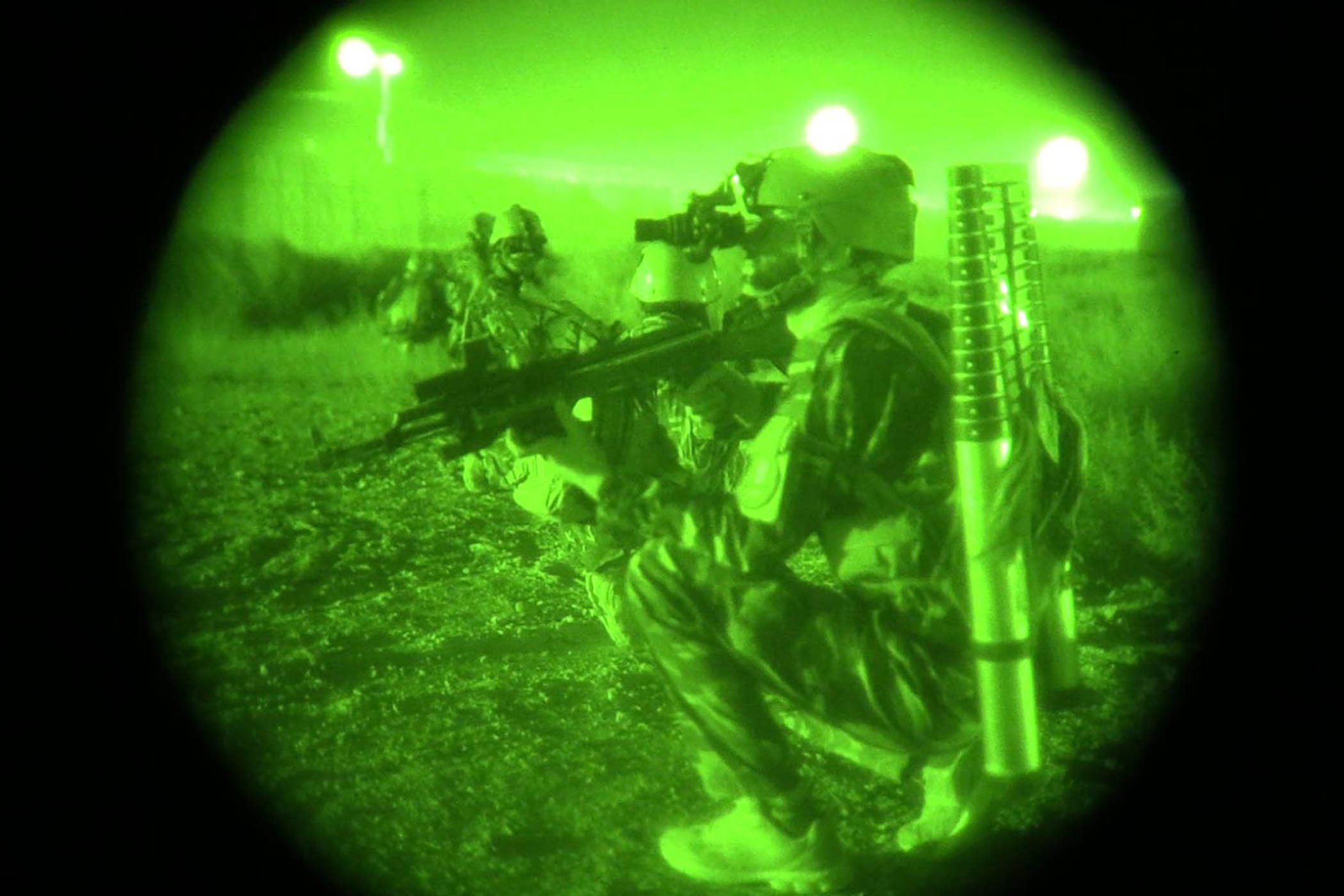
This week, the Independent Inquiry relating to Afghanistan released new evidence about the allegations it was set up to investigate: that the SAS carried out war crimes between 2010 and 2013, and that senior officers hushed them up. A high-ranking member of the regiment told the inquiry he had passed information about illegal killings to his superiors, and that the leadership of UK special forces was “very much suppressing” the allegations.

The proceedings of the inquiry can be a salad of ciphers and codes. In the public hearings, and when crucial new evidence is published, as happened this week, witnesses are referred to by numbers; the same protection is granted to the people they testify about. This is the story of three men: N1466, N1785 and N1802. For legal reasons The Observer is not allowed to identify them.

While there may be good and understandable reasons for the anonymity – national security as well as personal – there are downsides too. The verdict of the inquiry will be built on judgments about systems, yes, but more than that, about people: the responsibility they hold for decisions they took in some of the most consequential actions in the history of UK special forces. Picking out the people behind the code numbers will matter enormously in the end.

And there is a question. Within the regiments concerned, in the corridors of power, even among journalists covering the story, the identities of the people behind the code numbers are not secret. Is it still justifiable, in public, to draw a thick veil over everything the SAS does when it stands accused of murdering noncombatant men and children?

The allegations that the SAS carried out illegal killings on night raids between 2010 and 2013 come in the usual two parts: crimes and cover-up. The importance of the new batch of evidence released this week is that it adds weight to suggestions of a cover-up.

N1466, a senior SAS officer based at its headquarters, testified that in 2011 he passed evidence of potential war crimes that he described as “explosive” to the director of special forces, who goes by the code number N1802. According to N1466, the director, N1802, made “a conscious decision that he is going to suppress this, cover it up and do a little fake exercise to make it look like he's done something”.

N1466’s evidence has moved N1802 centre-stage in the inquiry. His testimony, and that of others, starts to paint a character study of N1802 and the atmosphere within the special forces headquarters he ran: a portrait of a cipher, if you like.

N1466’s intervention was not the only time the director of special forces had been given a heads-up about alleged SAS war crimes. Earlier this year, The Observer reported on a moment that has become central to the charge that senior officers knew a lot about the allegations and did little.

We wrote: “In April 2011, Gen Sir Gwyn Jenkins was commander of the Special Boat Service, sister squadron to the SAS, when one of his officers came to him with a report about the killing of unarmed men and boys on night raids in Afghanistan. He wrote it up in an email to Lt Gen Jacko Page, director of special forces… 'The implications were clearly stark,’ Jenkins said – these would be war crimes if proven.”

N1466 was not involved in that moment. He appears to have made his own decision to bring evidence of war crimes to N1802’s attention, and it was fraught. He feared he would be ostracised, or that his annual appraisal might be affected. He appeared a little frightened of N1802 himself.

“He’s a very distinct personality. I wouldn't ever say I had a close working relationship with him. He was probably the hardest boss I’ve ever had to work for in some ways… He was quite a harsh character. As I said, very, very attention-to-detail, always seemed to me to be sure that someone was doing something wrong or letting him down in some way, shape or form, and he held the headquarters on a very, very tight rein and rode it very hard. He always wanted more detail than was available, be that in intelligence or in staff work… I remember I went on a visit where we, we were talking to another senior officer of the same rank as N1802 who he knew, and there was talk about leadership styles and N1802 said: ‘Yes, well, I believe in intimidation. That’s my style.’ And, to a degree, it was.”

Outside the Afghanistan inquiry, some SAS veterans who were not in the regiment with N1466 take his version of events with a pinch of salt. One who spoke to The Observer this week is scathing about his lack of combat experience and suitability for the senior role he occupied. But N1466 is not the only officer who found N1802 tricky. N1785 did too.

N1785 is now very senior, but in 2011 he was junior to N1802. “He was very good at expressing his unhappiness," he says of N1802. “In fairness, he never lost his temper, but he was an awkward man to deal with as a subordinate, so he was quite austere and quite definite in his position and decisions once he had had time to deliberate.”

Again, critics point out that N1785 might have his own reasons for painting N1802 in an unflattering light. When he came across evidence of SAS war crimes, he was concerned that N1802 might not investigate them as fully as he should, so he put them in writing in order to force his hand. This is an extract of the inquiry’s summary of N1785’s evidence:

“N1785 recognised that he was putting N1802 in an awkward position [by writing to him]. When asked whether N1802 might be reluctant to carry out an inquiry, N1785 stated that: ‘Whether he would be reluctant, N1802 was an exceptional leader with a great eye for detail, who often took a long time to come to decisions. I thought that the fastest route to compelling him to conduct some kind of investigation was to put my concerns in writing.’”

N1785 realised that twisting a senior officer’s arm would go down badly. “It demonstrates a certain lack of trust in him from his subordinate that I felt that I needed to put him in that position, whether that was well founded on my part or on his part... That is, he is a clever man and he will see that that is a slight against him as a commander… So I can see why he would have been disgruntled with me writing to him in such a way.”

After the moment in 2011, reported by The Observer, when Gen Sir Gwyn Jenkins wrote to Lieut General Jacko Page, director of special forces, to report his concerns that the SAS had committed war crimes, the information Jenkins shared was put in a safe and stayed there for years, undisturbed. Jenkins, who is now head of the Royal Navy, has been criticised for not passing on what he knew to the police.

Perhaps because he retired more than 10 years ago, Page – who, metaphorically if not literally, held the keys to the safe – has avoided the same level of scrutiny. When the Afghanistan Inquiry delivers its final report, he may find the spotlight more fully upon him.

Photograph by Barney Low/Alamy

Share this article

Follow

The Observer
The Observer Magazine
The ObserverNew Review
The Observer Food Monthly
Copyright © 2025 Tortoise MediaPrivacy PolicyTerms & Conditions