
The Washington Post’s publisher and CEO William Lewis has stepped down from his role days after the newsroom laid off more than 300 journalists.
On Wednesday around 30% of the paper's employees were let go during a Zoom call, leaving the sport, local news and international desks gutted.
Lewis did not attend the call – but was spotted on the red carpet a day later at a pre-Super Bowl event in San Francisco.
The former News International and Daily Telegraph boss was hired by Washington Post owner Jeff Bezos in 2024 to turn around the paper's falling revenue and audience numbers.
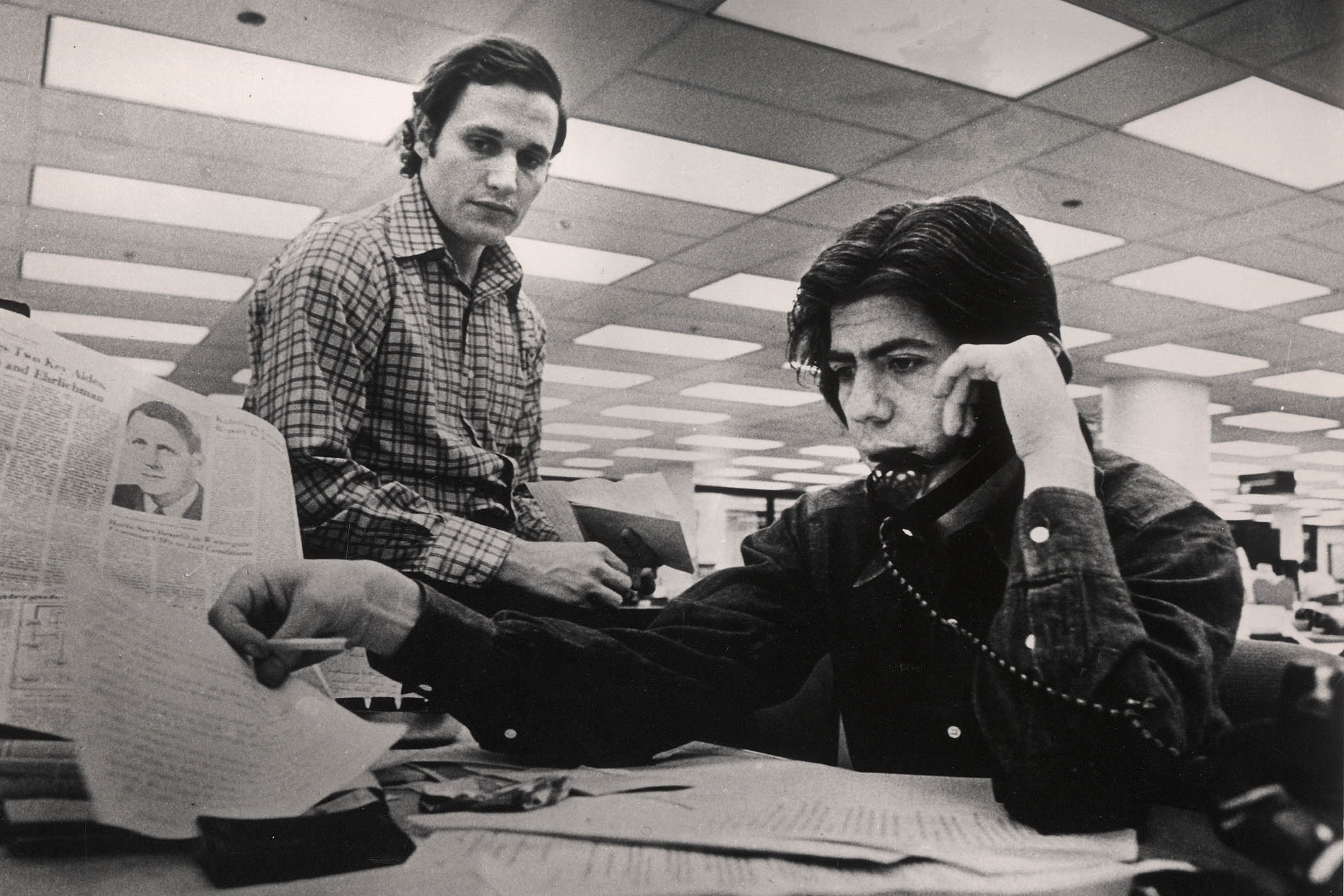
Staff believe Bezos was infuriated at Lewis's appearance at the NFL event. In the days since the mass layoffs, the Amazon founder has faced public attacks from senior Post figures, including Bob Woodward and Carl Bernstein of Watergate fame.
Former editors Don Graham and Marty Baron also criticised the layoffs.
“The behaviour of Jeff Bezos has suggested to the readers that he is not independent at all,” said Baron. “He’s actually dependent on Donald Trump.”
The paper's chief financial officer, Jeff D'Onofrio, will replace Lewis on an interim basis.
In a memo announcing D'Onofrio's new post, Bezos didn't mention Lewis or thank him – as is traditional in even the most ill-willed corporate departures.
“Obviously he was fired,” said one staffer. “He claimed he had seven years to reorient the Post and he lasted two. It was the straw that broke the camel’s back. Lewis was behind lots of failed projects, and was always overpromising. When Don Graham was making cuts he was in the newsroom alongside top editors making the announcement. He felt our pain. He was not on the NFL red carpet.”
Newsletters
Choose the newsletters you want to receive
View more
For information about how The Observer protects your data, read our Privacy Policy
The fallout from the workforce cuts was all over social media. On 25 January Lizzie Johnson, the Washington Post’s Kyiv-based correspondent, posted a picture on X, huddled in the back of a car with helmet and head torch.
“Waking up without power, heat, or running water. (Again.)”, she wrote. “But the work here in Kyiv continues. Warming up in the car, writing in pencil – pen ink freezes – by headlamp. Despite how difficult this job can be, I am proud to be a foreign correspondent at the Washington Post.”
On 4 February she posted: “I was just laid off by the Washington Post in the middle of a war zone. I have no words. I’m devastated.”
That morning, staff received an email. “We will be announcing some significant actions across the company today,” it read. “We are asking everyone to stay at home this morning for a Zoom webinar at 8.30am”. Executive editor Matt Murray and human resources chief Wayne Connell spoke briefly and, by the end of the call, 300 journalists – roughly 30% of the newsroom –were unemployed.
This is a story of cuts, lack of strategy and political cowardice that has gutted one of the most important newspapers in the world.
“It’s like Jeff Bezos took lessons from Elon Musk about how to treat people,” says Glenn Kessler, the long-serving editor who created the Fact Checker section, which gave “Pinocchios” to politicians who didn’t tell the truth about their policies.
He recalls one of the spurs that led to him taking redundancy in 2025 – an hour-long conversation with publisher Will Lewis, the British former News International and Daily Telegraph boss hired by owner Bezos to reorganise the paper. Lewis was trying to work out how to attract more viewers from Fox News to read the Post – known for its political investigations and reputation as a writer’s paper.
“There was never any sense of what the strategy for the paper actually was,” Kessler explains.
He points to the sacking of staff at the Metro section, covering local news in Washington DC, Maryland and Virginia. It had 200 journalists at its peak, now reduced to 12. John Kelly joined the paper in 1989 and took a buyout at the end of 2023. He points out that it was Metro journalists, monitoring police scanners, who showed up at the Watergate burglary. The last of that team, Martin Weil, was let go last Wednesday after 60 years – the final tie to the Watergate era.
“The Post had a higher penetration in Washington than the New York Times (NYT) ever had in New York,” says Kelly. “Washington has a very sophisticated audience that has a love-hate relationship with the government. The Metro section meant you were rubbing shoulders with the people who made the government work; if you called from the Post, they would take your call.”
“I was just laid off by the Washington Post in the middle of a war zone. I have no words. I’m devastated”
“I was just laid off by the Washington Post in the middle of a war zone. I have no words. I’m devastated”
The rationale for the savage cuts is unclear – despite requests, The Observer received no response from Lewis or Bezos. Although the Post has seen circulation and digital subscription dip, the reason for the fall is clear, according to statistician Nate Silver. It coincides with Bezos’s volte face as Donald Trump became president for the second time.
Under Trump 1.0, according to then editor Marty Baron, Bezos backed his staff in reporting the administration's activities – enraging Trump. As Trump’s second term loomed, Bezos faced a torrent of criticism in late 2024 after the newspaper pulled its endorsement for Kamala Harris days before the election. A reported 250,000 subscribers cancelled their subscriptions.
The Post’s paid average daily circulation is now down to just 97,000, according to the Alliance for Audited Media. Just before the Harris incident, paid digital was thought to be around 2.5 million, but has fallen since. It’s now the 19th largest online news brand in the US, behind the Guardian and the Daily Mail with 65 million website visits in December, down 22% year on year.
The paper had enjoyed profitable years, especially during Trump’s first term when journalists such as Josh Dawsey and Ashley Parker were publishing scoop after scoop from the White House, but began losing enormous sums after he left office: $77m in 2023, $100m in 2024. Two rounds of voluntary redundancy in 2023 and 2025 reduced its 1,000 newsroom staffers to under 800 .
When Bezos bought the paper in 2013 from the Graham family, he told staff: “I finally concluded that I could provide runway – financial runway – because I don’t think you can keep shrinking the business. You can be profitable and shrinking. .. but it ultimately leads to irrelevance, at best. And, at worst, it leads to extinction.”
It’s tempting to write papers off as legacy, loss-making businesses in the age of TikTok, but on the same day the Post announced its lay-offs, the NYT reported a 10% rise in revenue and 450,000 new digital subscribers.
“I feel Bezos is not engaged, and he may have given a number to Lewis and said, ‘you’ve got to save this amount of money, and it’s up to you how you implement it,” says one staff member. “It’s not about the money, it’s about winning favour with Trump. There’s a reason every Middle East [reporter] was laid off .”
In one sense, the Post is used to trouble. Founded in 1877, the paper struggled until financier Eugene Meyer bought it out of bankruptcy. Meyer, a Republican, made the paper profitable by the 1950s and steered its political coverage. After he died in 1959, he passed the paper to his son-in-law Philip Graham, rather than his daughter, Katharine. After Philip’s suicide in 1963, Katharine took charge and oversaw the Post’s attacks on the Vietnam War, including publishing two of the century’s biggest scoops: the Pentagon Papers, exposing US deception over fake attacks on US ships used as propaganda to drag the country further into the war; and the Watergate scandal, which brought down President Nixon.
“Any world leader that came to Washington, they went to the White House, and then they went to the Post,” Kessler explains. “ When I was diplomatic correspondent, people that spoke to me knew that what I wrote was read by the president.”
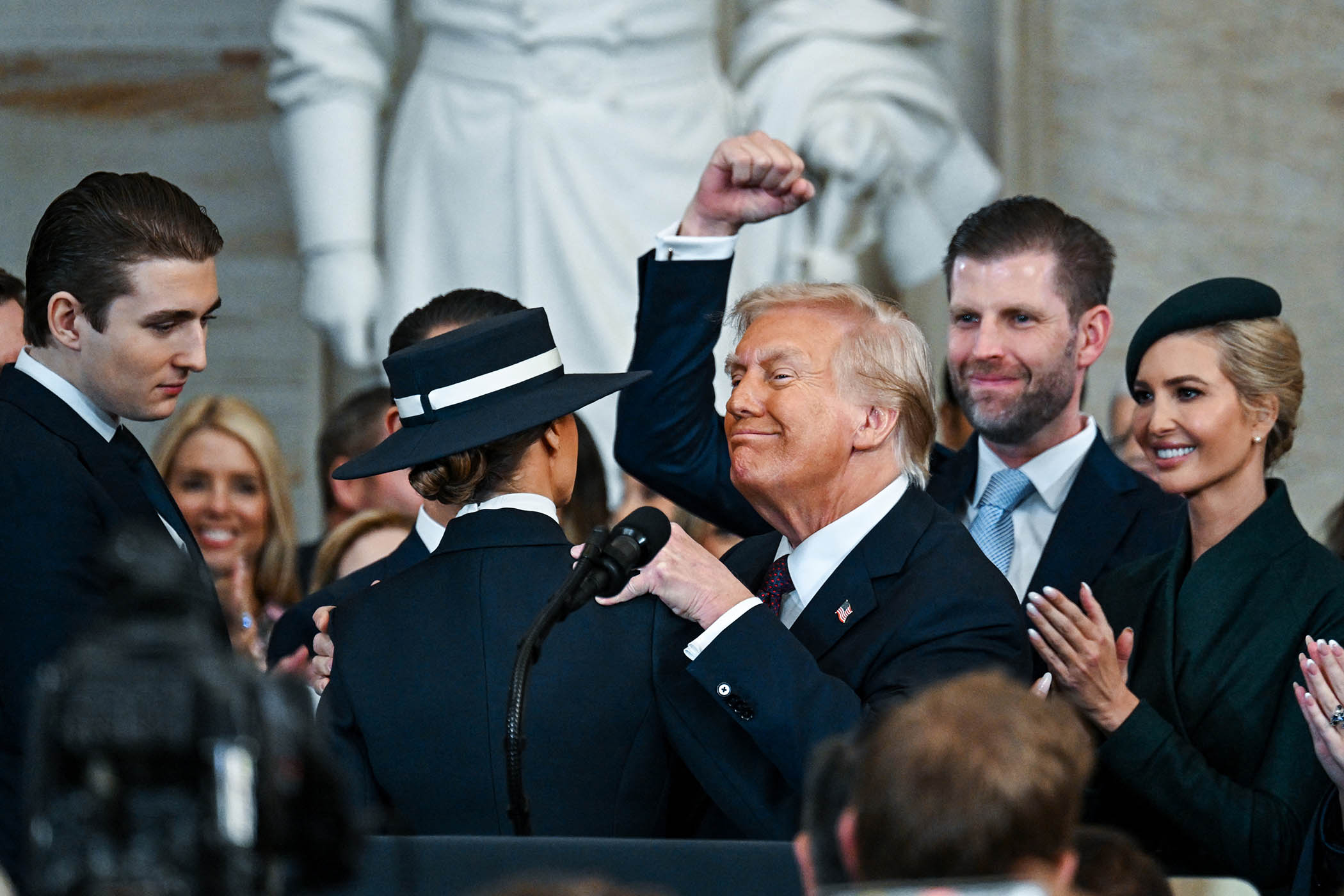
These days Trump only wants to read media that agrees with him, and Bezos is apparently trying to shape the Post into that form – which is why the appointment of D’Onofrio has not reassured staff.
“Lewis would have been ousted long ago if Bezos had really wanted the paper to succeed,” said one staffer.
D’Onofrio doesn’t have extensive experience in news media, nor many notable successes on his CV. He was briefly general manager of Yahoo News, before shifting to Tumblr.
Under his leadership, Tumblr banned adult content and the site's traffic fell by 30%. D’Onofrio moved to Raptive, a company that places ads on small media websites.
Despite this ongoing turmoil, its journalists still cause trouble. On 14 January, the FBI raided the home of Hannah Natanson. Pam Bondi, the attorney general, said in a post on X that the raid was conducted at the request of the Pentagon as Natanson was “reporting classified and illegally leaked information from a Pentagon contractor”. Natanson’s phone is also locked down. The FBI reported they couldn’t hack the phone due to her watertight security.
You can’t kill the Washington Post swagger, it would seem.