
In February 2018, during Donald Trump’s first term as president, his son, Donald Jr, visited India to promote a series of luxury residential projects owned by the family real estate business, the Trump Organization. At the time, the family had pledged not to start any new foreign deals, lest they represent a conflict of interest for the presidency, so Don Jr spent the week trying to boost sales for the business’s existing portfolio.
Later that week, when he was accused of profiting from his father’s presidency on CNBC–TV18, a local news channel, Don Jr complained the public scrutiny was unfair. “We put all these impositions on ourselves, but essentially got no credit,” he said. “We can do so many more [deals] and we’re not.”
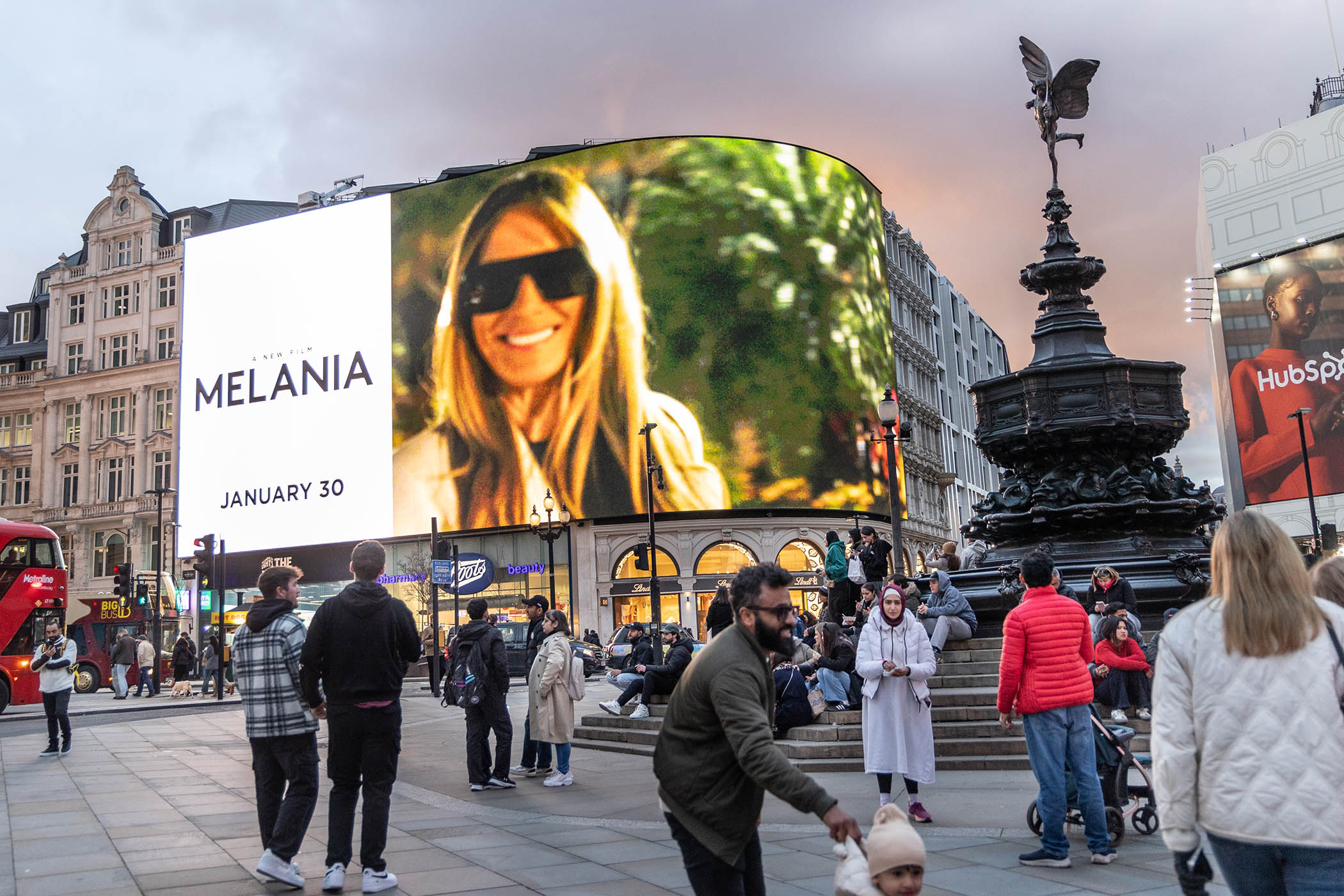
That restraint has seemingly not carried over into Trump’s second term. The latest example came this week with the release of a documentary about Melania Trump. Amazon confirmed it paid about $40m (£29m) for the project, and while it has not disclosed how the proceeds were split,industry sources say the president’s wife is expected to receive as much as $28m.
Amazon’s founder, Jeff Bezos, also owns the aerospace company Blue Origin, which holds major US government contracts, including a $3.4bn Nasa award to build a lunar lander. Bezos is also the owner of The Washington Post, a paper Trump has repeatedly attacked over its coverage. Richard Painter, who served as chief White House ethics lawyer under George W Bush, says the Melania documentary represented a way for Bezos to “fall in line” with the new administration and protect his business interests. An Amazon MGM Studios spokesperson told The Observer: “We licensed the film for one reason and one reason only – because we think customers are going to love it.”
But, Painter adds, “this Melania movie is the tip of the iceberg”. The scale and breadth of Trump’s profit-making is in the billions, say congressional investigators and watchdogs, spanning cryptocurrency ventures, real estate, merchandise and media projects, many of them promoted or managed by his sons.
A report by Democrats on the House Oversight Committee, released in January, estimated that at least $436m flowing into Trump-linked accounts during the current term could be traced to foreign sources – a likely underestimation, given the opacity of cryptocurrency transactions and the use of shell companies. In July 2025, The New York Times estimated that crypto ventures, including his memecoin $TRUMP, added as much as $7.1bn to the Trump family’s net worth.
Lawyers and ethicists say the arrangements raise serious conflict of interest concerns, if not possible violations of the constitution, even if no court has yet ruled on their legality. Many of these conflicts lie in plain sight. Despite multiple congressional reports and years of scrutiny, regulators and lawmakers have failed to impose meaningful consequences. Since The Observer reported on the expansion of the Trump family’s business interests during the second administration, in May 2025, analysts estimate the family’s net worth has increased by several billion dollars. The New Yorker this week calculated that the Trump family had made $4bn off the presidency – so far.
Taylor Rogers, a spokesperson for the White House, said: “The media’s continued attempts to fabricate conflicts of interest are irresponsible and reinforce the public’s distrust in what they read. The President is and always has been motivated solely by what is best for the American people.”
“The majority of the wealth Trump has collected from the presidency is directly related to his crypto businesses,” says Corey Frayer, a former US government crypto policy adviser. “And it's not even close.”
At the heart of these deals is World Liberty Financial (WLFI), a crypto firm founded in 2024 and backed by the Trump family. When it was founded, in 2024, WLFI promised to liberate Americans from “the big banks and financial elites”. The firm lists President Trump as “chief crypto advocate”; his three sons as “visionaries and ambassadors”; and the two sons of his Middle East envoy, Steve Witkoff, as co-founders. Witkoff Sr is listed as “cofounder emeritus”, though a White House counsel said he is “taking steps” to divest from the company.
Newsletters
Choose the newsletters you want to receive
View more
For information about how The Observer protects your data, read our Privacy Policy
According to a disclosure on the WLFI website, a company affiliated with Donald Trump and certain of his family members is entitled to take 75% of the money raised from selling WLFI crypto tokens. WLFI has sold at least $2.2bn in tokens to date, netting the Trumps as much as $1.6bn, according to the House Committee report.
WLFI’s most controversial deals involve Binance, the world’s largest cryptocurrency exchange. In November 2023, Binance’s founder, Changpeng Zhao, pleaded guilty in the US to federal money laundering charges. The Department of Justice found that Binance acted as a “colossal money-laundering hub”, processing transactions linked to groups including Hamas, al-Qaeda and Isis. Binance agreed to a $4.3bn settlement, and Zhao was sentenced to four months in prison. On 23 October 2025, President Trump granted Zhao a “full and unconditional pardon”. Leading up to the pardon, Binance provided key technical infrastructure to WLFI.
One transaction in particular has drawn scrutiny. In May 2025, MGX, a state-backed investment firm based in the United Arab Emirates, invested $2bn into Binance using WLFI’s stablecoin, USD1. Because WLFI earns interest on the collateral backing these stablecoins, this $2bn purchase effectively generates tens of millions of dollars in annual revenue for the Trumps.
The MGX deal was announced publicly by Trump’s sons alongside Zach Witkoff at a conference in Dubai. Two weeks later, in a multi-million-dollar deal facilitated by Steve Witkoff, Zach’s father and Trump’s Middle East envoy, the White House agreed to allow the UAE access to the most advanced American AI chips, despite national security concerns.
There is no evidence that the WLF and chip deals were a quid pro quo, but multiple sources were struck by the timing. “It seems inescapable that the president compromised the national security of the United States for his own personal benefit,” the House Oversight Committee report said.
“Mr Witkoff, like all Administration officials, takes seriously his compliance with the government ethics rules. As special envoy for peace missions, he has not and does not participate in any official matters that could impact his financial interests,” says David Warrington, White House Counsel.
WLFI’s deal-making is extensive, but it is the foreign money that has drawn the most scrutiny. Reporting by the Wall Street Journal this week revealed that, just days before Trump’s second inauguration, representatives of Sheikh Tahnoon bin Zayed al Nahyan, the UAE national security adviser, secretly agreed to buy a 49% stake in WLF for $500m. Sheikh bin Zayed al Nahyan was also a key figure in the country’s push to secure advanced US AI chips, raising fresh conflict of interest concerns.
Another disclosed example is a $100m investment in December 2025 from Aqua 1, a fund linked to the UAE and individuals associated with China National Petroleum Corporation. But, Frayer cautions, “crypto is a completely opaque and almost entirely anonymous market,” making it difficult to know how much other overseas capital has flowed in, and from whom.
“We will not know the full extent of this corruption and this profiting off the presidency until after the administration,” says Kedric Payne, former deputy chief counsel of the Office of Congressional Ethics. “There are so many different government contracts and policy changes and secret deals that could be happening that just have not come to light.”
Trump has gone through the motions of distancing himself from his business empire by handing control to his sons. The White House has emphasised this several times. But perhaps he doesn’t have to – the main law prohibiting conflicts of interest explicitly excludes the president and vice-president.
Overall, Forbes estimates his personal wealth at $7.3bn.“The law’s totally on my side, the president can’t have a conflict of interest,” Trump said in 2016. In July 2024, the Supreme Court granted the president sweeping immunity for “official acts”.
Ethics lawyers say Trump’s outside business interests may violate the US constitution’s “foreign emoluments” clause, intended to prevent federal officials from receiving benefits from foreign governments. But the law remains untested. Every president since Lyndon B Johnson has chosen to sell his investments before taking office or seal them in a blind trust, except Trump. Citizens for Responsibility and Ethics in Washington (Crew) attempted to bring emoluments cases against Trump during his first term, only for the Supreme Court to dismiss them after he left office in 2021.
“Public service is a public trust. Once people lose trust in the government, that's when democracies slide,” says Jordan Libowitz of Crew. “And we've had generations of presidents go out of their way to separate themselves from their assets, doing significantly more than is legally required because they wanted the American people to never question whose best interest they were working for – the American people’s, or their own.”
Polls in 2025 indicate that 60% of Americans have not heard about the president’s family running a cryptocurrency business, and that nearly half of Trump voters believe he has not profited from the presidency at all. But Painter hopes the tides will soon begin to turn. “You combine this with the behaviour of the ICE agents out here in Minnesota… I think more and more Americans are perceiving we’ve got a president who’s out of control.”
Photograph by Andy Hall for The Observer